
Our species, Homo sapiens, is the most geographically diverse of all primate species, permanently living on every continent except Antarctica. We have achieved this through our unprecedented ability to develop adaptations that increase the odds of surviving and producing in different environments.
Highly localized adaptations, like those that enable people to survive at high altitude, arise when there’s a sustained environmental pressure driving the need to produce new biological solutions, Herman Pontzer, a professor of evolutionary anthropology and global health at Duke University, previously told Live Science.
The sophistication and control of the heart and lungs can make the system seem like a jewel of evolutionary perfection. But evolution is a tinkerer, a junkyard mechanic solving problems with the materials at hand. Trade-offs and limitations are inevitable. Just ask Jimi Hendrix.
Hendrix was a guitarist of otherworldly talent who revolutionized rock music in the 1960s. He was also an avid participant in the recreational chemistry of the era, indulging heavily in a range of legal and illicit pharmaceuticals. On September 18, 1970, in a hotel in London, after taking roughly eighteen times the recommended dose of sleeping pills after an evening of drinking, Hendrix died. But while the drugs were certainly responsible for his death, it wasn’t the chemicals per se that killed him. Instead, having passed out and vomited from the massive overdose, Hendrix fell victim to a much more common killer. He choked.
Humans are uniquely vulnerable to choking. More than five thousand die that way each year in the U.S. alone. Other species don’t have this problem, which is fundamentally a plumbing issue. Your larynx (also called a voice box) is the doorway to your lungs. It’s a stiff cartilage cylinder that can be closed off at the top by two fleshy lips called vocal folds and a flapping lid called an epiglottis. The human larynx sits in a precarious position, low in the throat, practically begging to be clogged with every bite of food or gulp of water. Why would evolution favor such a dangerous position for the larynx, threatening our breathing and access to oxygen, when every other animal (including our ape relatives) has theirs sensibly tucked up high and out of the way, behind their nose?
It turns out the dumb position of our larynx is the result of evolutionary tinkering to our breathing system to produce language. The sound of your voice is produced by squeezing air through your larynx with the vocal folds pushed together. This is similar to the way a trumpet player makes a ptbtptpbptptp! noise by pushing air through their pursed lips (what I’d call a raspberry and my children insist is a fart sound). The puff puff puff of air that escapes becomes pressure waves that travel through the air, which our ears register as sound. Higher or lower notes are achieved by pulling the vocal folds tighter or relaxing them. (Testosterone thickens the vocal folds, which is why men tend to have lower voices.)
You form that sound into vowels by manipulating the shapes of your mouth and throat, and cut it into consonants with your teeth, tongue, and lips. The low position of the larynx makes this possible. If it’s higher up, at the same level with the nostrils as we see in other apes, you could make noise, but the ability to shape that sound into words would be severely limited. That’s why it’s nearly impossible to get a dog, chimpanzee, or other mammal to form speech-like words. They can still communicate, of course, with a bark or a grunt, but the rich sonic landscape of human language is out of reach.
Our ancestors were so social, so cooperative, that the evolutionary benefits of better communication outweighed the increased risk of choking to death. Choking is the price we pay for the ability to speak.
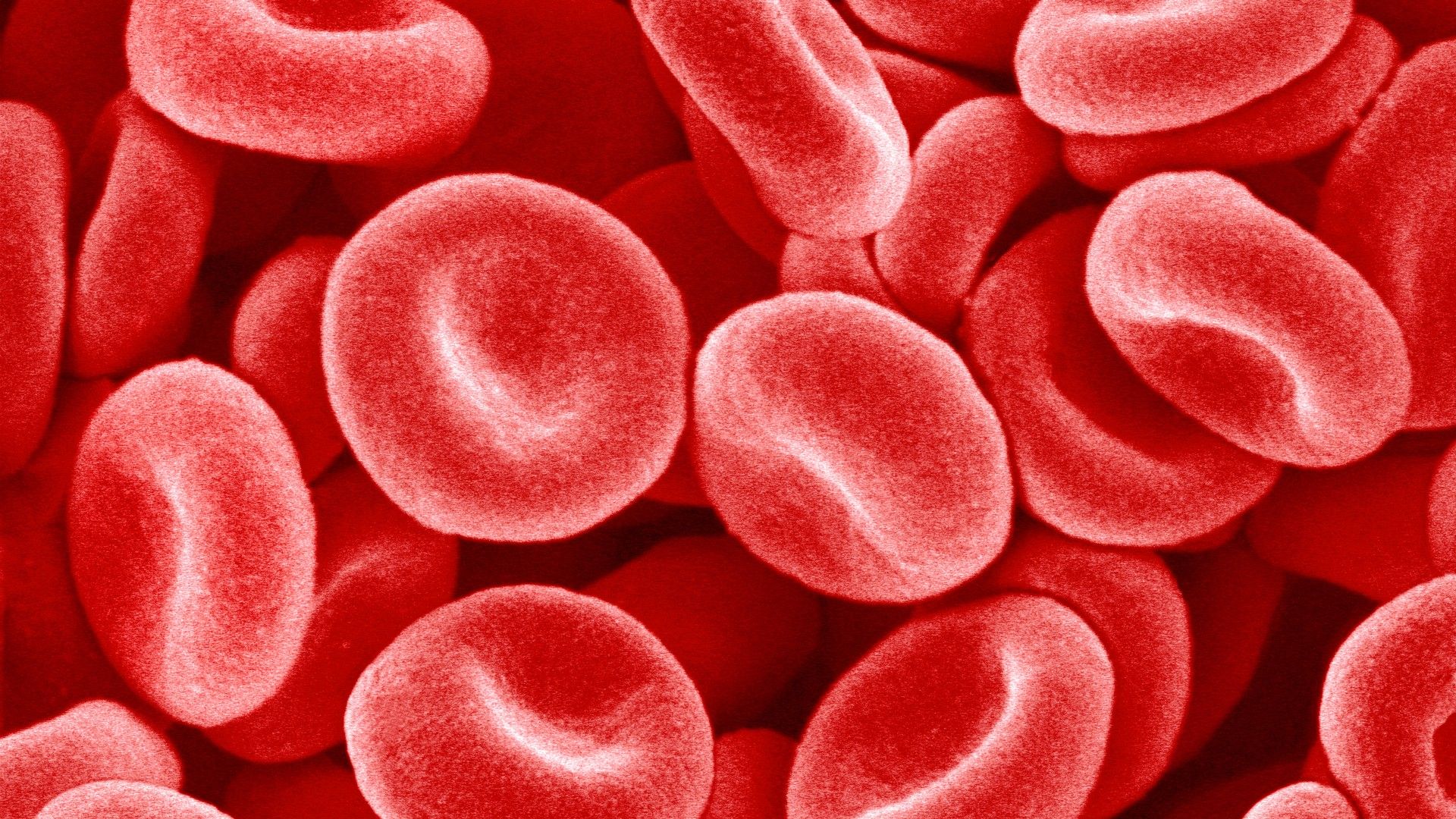
Other adaptations to our breathing and circulatory systems come at a cost as well. When we travel into the mountains, we’re faced with the challenge of extracting enough oxygen from the high-altitude air. The evolved solution is to produce more red blood cells. When the liver and kidneys sense low oxygen concentrations in the blood, they produce the hormone EPO [erythropoietin], which stimulates the bone marrow to crank out more red blood cells. (That’s why some endurance athletes cheat with EPO injections — it gives them extra red blood cells and oxygen-carrying capacity.) It’s a good solution, but it increases the ratio of cells to water in the blood, making it slightly thicker. That, in turn, can cause altitude sickness, which typically involves headaches and nausea, but can progress to dangerous and even fatal fluid buildup in the lungs and brain.
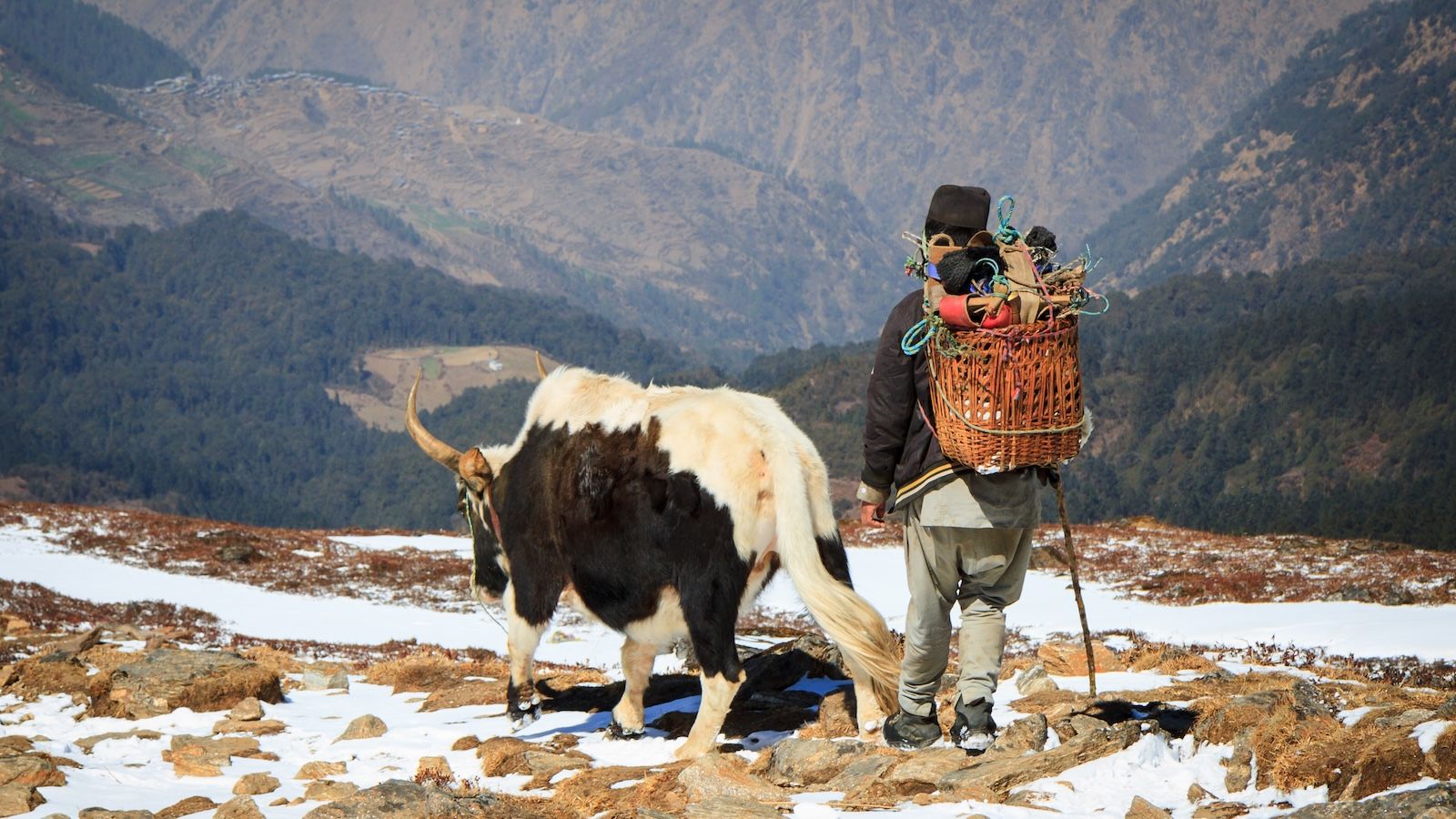
Native populations in the Andes, the highest mountain range in South America, live with elevated red blood cell counts their entire lives. They have larger lungs and rib cages as well, through what appears to be a combination of genetic adaptations for increased air exchange and the environmental pressures of growing up at high altitude. But while a number of genetic adaptations to altitude have been identified in Andean groups, they still struggle with altitude sickness. Approximately 15 percent of adults experience chronic mountain sickness. The physiological solution to low oxygen levels carries a steep price for many.
Intriguingly, altitude sickness isn’t as much of an issue for native high-altitude communities in the Himalayan Mountains of Asia. Himalayan and Andean populations are descended from different lowland groups thousands of miles and thousands of years apart. Their movements into the mountains were completely independent, and the adaptations they evolved solved the same set of challenges, but in different ways.
Most of these fragments don’t have any impact on how our bodies function — they’re just mementos from our ancestor’s wild affairs, like misspelled tattoos from some Paleolithic spring break
Himalayan populations carry a particular allele [version] of a gene called EPAS1 that’s involved in the production of red blood cells. This Himalayan allele has the effect of keeping EPO levels and red blood cell numbers low, allowing people to live with the chronic stresses of altitude without developing mountain sickness. This solution comes with its own downsides, as it also means their ability to carry oxygen is limited, but other adaptations in their vessels and breathing rate maintain oxygen delivery throughout the body.
Even more remarkable than the Himalayan EPAS1 allele is the story of how they got it. As our ancestors spread out across Africa and then Eurasia over the past two hundred thousand years or so, they encountered other closely related humanlike species, like Neanderthals in the Near East and Europe. And, like humans everywhere throughout history, some of our ancestors weren’t particularly picky, and slept with them.
Our species were so genetically similar that these couplings produced fertile children, hybrids of our species and others. (Some would argue that we should consider Neanderthals and other groups human because of this ability to interbreed — a semantic argument that’s fun to have over drinks with an anthropologist.) We can find the genetic evidence of these affairs scattered around our genome today, fragments of DNA from other species that allow retail genetics companies to calculate how much Neanderthal DNA you carry, for example. I’m a bit less than 2 percent Neanderthal, genomically speaking.
Most of these fragments don’t have any impact on how our bodies function — they’re just mementos from our ancestor’s wild affairs, like misspelled tattoos from some Paleolithic spring break, and a reminder that humans will sleep with just about anything. Using the distinction we discussed in the last chapter, these alleles would be considered neutral.
The Himalayan EPAS1 allele is a clear exception. That allele appears to have entered the human gene pool through a Paleolithic tryst with a group called the Denisovans, somewhere in Asia, roughly fifty thousand years ago. For tens of thousands of years it was just there in the mix, a neutral allele that had no strong effect on survival or reproduction. But around nine thousand years ago, as some of those populations started pushing farther and farther up into the mountains, that allele proved to be advantageous. Those with the Denisovan variant for EPAS1 were free from altitude sickness, and better able to thrive and raise families in the high mountains. It went from neutral to local and became the predominant allele in Himalayan populations, the adaptive EPAS1 allele we see in virtually everyone native to the Himalayas today.
Another remarkable case of local cardiovascular adaptation was discovered just recently, in a population known as the Sama (also called the Bajau). The Sama live on houseboats in the ocean around the Philippines, Indonesia and Malaysia, spending nearly all of their lives at sea. Theirs is a hunter-gatherer lifestyle, but in the ocean: they spearfish and collect food in the depths, sometimes more than two hundred feet below the surface, swimming or using weights to hold themselves down as they walk the seafloor. Like many Indigenous groups, their lifestyle is rapidly changing, but traditionally they could spend four or five hours per day underwater, foraging. It’s a lifestyle they appear to have maintained for thousands of years.
Life spent partially underwater poses similar oxygen-delivery challenges as life in the mountains. One evolutionarily ancient response to diving, common among mammals, is to contract the spleen, an organ the shape of a child’s slipper tucked up high in the left side of your abdomen, beside your stomach. The spleen is a monitoring station for the immune system, a spongelike organ that checks the blood for bacteria and other nasties. Since it’s normally full of blood, it’s essentially a reserve tank of red blood cells. When you dive into cold water, the spleen contracts, ejecting its payload of red blood cells to help oxygenate the rest of your body. If you train breath-holding, your spleen will grow to do this job more effectively. High-mountain groups, like those in the Himalayas, have larger spleens than lowlanders, apparently from a combination of genetic adaptation and a life spent at altitude.
Natural selection has favored an allele of the PDE10A gene that increases spleen size in the Sama, with nearly double the average volume for those carrying two copies of the allele compared to those with none. Other diving-response genes appear to be under selection in this population as well. Environment still matters — all that breath-holding also helps them increase the size of their spleens. But it’s a clear case of genetic adaptation, with natural selection responding to a consistent, strong, and localized challenge in the Sama population.
Excerpted from Adaptable: How Your Unique Body Really Works and Why Our Biology Unites Us (Penguin Random House, 2025)

“Adaptable” was a finalist for the 2026 PEN/E.O. Wilson Literary Science Writing Award.