





Ocean temperatures reached a near-record-breaking monthly high in April as forecasters warn that we could be on the cusp of one of the strongest El Niño events of the century.
El Niño is the warm phase of a multi-year natural climate pattern that increases global temperatures. Forecasters have predicted that there’s a one in four chance that an unusually strong, or “super” El Niño, could emerge this year, with new data suggesting that warming El Niño conditions will soon be upon us.
The European Union’s Copernicus Climate Change Service has found that sea surface temperatures in April reflected a transition to El Niño conditions. Across the extrapolar global ocean, which encompasses all oceans except for the icy Arctic and Antarctic regions, surface temperatures were the second highest for any April on record (21 degrees Celsius, or 69.8 degrees Fahrenheit), trailing only those seen in April 2024 (21.04 C, or 69.87 F) — the warmest April ever recorded.
Earth’s last El Niño ran from June 2023 to April 2024, delivering an injection of extra heat to our already warming world. Both years saw temperature records tumble, with 2024 ending up the hottest on record and the first to breach the 1.5 C (2.7 F) warming limit, a key guardrail set by the Paris Agreement before which the effects of climate change become increasingly disastrous. Notably, the 2023/2024 El Niño was on the cusp of the “super” threshold.
El Niño is marked by atmospheric and sea temperature changes in the tropical Pacific Ocean. Of course, Earth and its oceans are heating up anyway due to human-caused global warming, so the spike in sea surface temperatures last month is about more than natural climate patterns.
“April 2026 adds to the clear signal of sustained global warmth,” Samantha Burgess, the strategic lead for climate at the Copernicus Climate Change Service, said in a statement. “Sea surface temperatures were near record levels with widespread marine heatwaves, Arctic sea ice remained well below average, and Europe saw sharp contrasts in temperature and rainfall; all hallmarks of a climate increasingly shaped by extremes.”
The El Niño-Southern Oscillation cycle (ENSO) triggers a warm El Niño and then a cold La Niña around every two to seven years. Each phase tends to last around nine to 12 months, but the timing of their emergence and duration varies.
The National Oceanic and Atmospheric Administration (NOAA) recognizes El Niño conditions when the eastern tropical Pacific Ocean is 0.5 C (0.9 F) or more warmer than the historical average, while wind, surface pressure and rainfall in the region are also consistent with El Niño conditions.
Last month, NOAA’s Climate Prediction Center announced that there is a 61% chance of El Niño emerging between May and July, which would then very likely persist through the rest of 2026. The center also gave a one in four (25%) chance of a very strong El Niño (above 2 C, or 3.6 F) emerging during the upcoming Northern Hemisphere winter, which is when El Niño conditions typically peak.
NOAA declares El Niño when certain conditions are met.
(Image credit: NOAA Climate.gov)
NOAA is unusually confident in its El Niño forecast for this time of year, which tends to be less accurate in spring due to the season’s chaotic weather. However, the tropical Pacific Ocean appears to be rapidly moving away from La Niña conditions (0.5 C below the historic average), which occurred between September and January, through neutral conditions, and towards a potentially strong El Niño.
“If this does turn out to be a very strong El Niño, it might be one of the most rapid transitions that I’ve seen in the record — maybe the most rapid,” Nathaniel Johnson, a research meteorologist and member of the ENSO seasonal forecast team at the Climate Prediction Center, told Live Science in an interview published May 1.
The cause of this year’s potentially supercharged El Niño will be explored after the fact. However, Johnson noted that there’s some suggestion that climate change could potentially be playing a role in making El Niño and La Niña swings more rapid, though this has yet to be confirmed.
“Super El Niño”
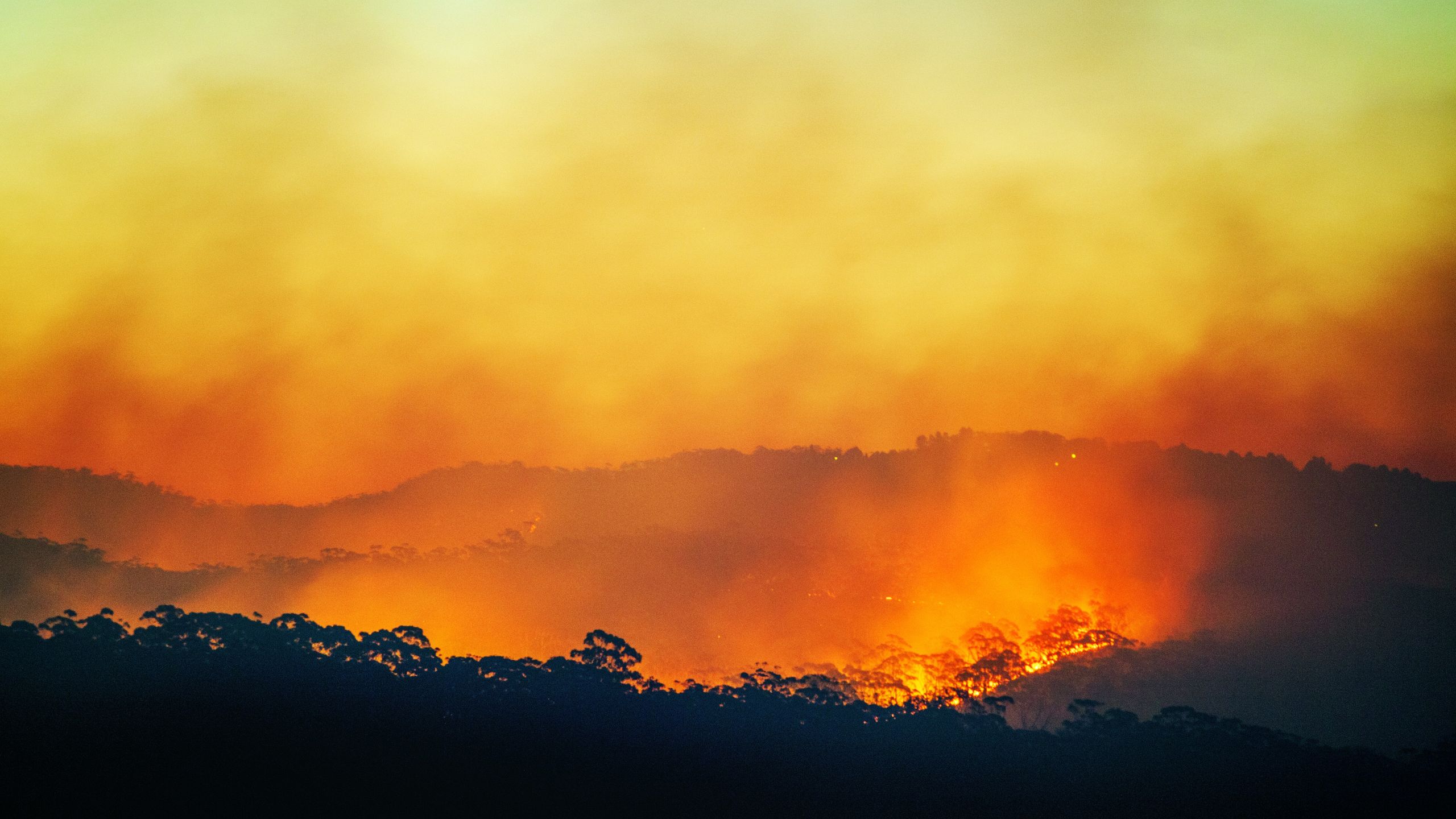
Many meteorological organizations don’t recognize the term “super El Niño,” but it’s an informal way of saying “very strong El Niño.” Potential impacts of such an event include a decline in fisheries, as well as droughts, wildfires and coral bleaching.
The Climate Prediction Center is one of several groups predicting El Niño and the potential for supercharged conditions. The U.K.’s Met Office is another, and has said that confidence is growing in projections that this upcoming event could be at the upper end of the historical range.
“A ‘super’ El Niño is not a term we subscribe to, but it does underpin the fact that this is likely to be a significant event,” Grahame Madge, a senior press officer and climate science communicator at the U.K. Met Office, said in a statement released April 15. “Scientists are telling us that this could be the strongest El Niño event this so far century, comparable to the notable El Niño event in 1998.”
The 1998 event, which began in 1997 and lasted for 13 of the NOAA’s overlapping three-month sea surface temperature averaging periods (between May 1997 and June 1998), saw temperatures rise up to 2.4 C (4.3 F) above the historical average, according to NOAA data. The only very strong El Niño to occur this century was of a similar magnitude. Between 2015 and 2016, El Niño conditions lasted for 20 overlapping three-month periods, and peaked at 2.8 C (5.04 F) above the historical average, according to NOAA. However, the 2015/2016 event was weaker than the 1997/1998 event in the eastern Pacific.
El Niño typically increases global temperatures by about a fifth of a degree Celsius, according to Madge. This is a temporary rise on top of global warming, which, regardless of its influence on the ENSO cycle, is the reason our planet is warming.
Will 2026 be the warmest year on record?
Carbon Brief has predicted that 2026 is likely to be the second-warmest year on record, while a strong El Niño developing later this year increases the likelihood that 2027 will be the warmest year ever recorded.
World leaders previously agreed to limit warming to preferably below 1.5 C and well below 3.6 F (2 C) in the 2015 Paris Agreement, a legally binding international treaty. The Paris Agreement is for temperature anomalies averaged over at least 20 years, so while 2024 was warmer than 1.5 C, the limit hasn’t technically been breached yet, though the United Nations Environment Programme expects warming to speed past the 1.5 C climate threshold in the next decade.