You may have watched the moon block out the sun during a solar eclipse, but have you ever seen it do that to a planet? Early Tuesday (Oct. 6) morning, skywatchers across much of eastern North America will have an opportunity to watch a crescent moon pass directly in front of Jupiter. The rare alignment won’t happen again for 11 years.
During the event, known as a lunar occultation, Jupiter will disappear behind the moon for up to about an hour before suddenly reappearing. The occultation will be visible before dawn from much of the eastern and central U.S., Canada and the Caribbean, while parts of Africa will experience the event during daylight, according to In-The-Sky.org.
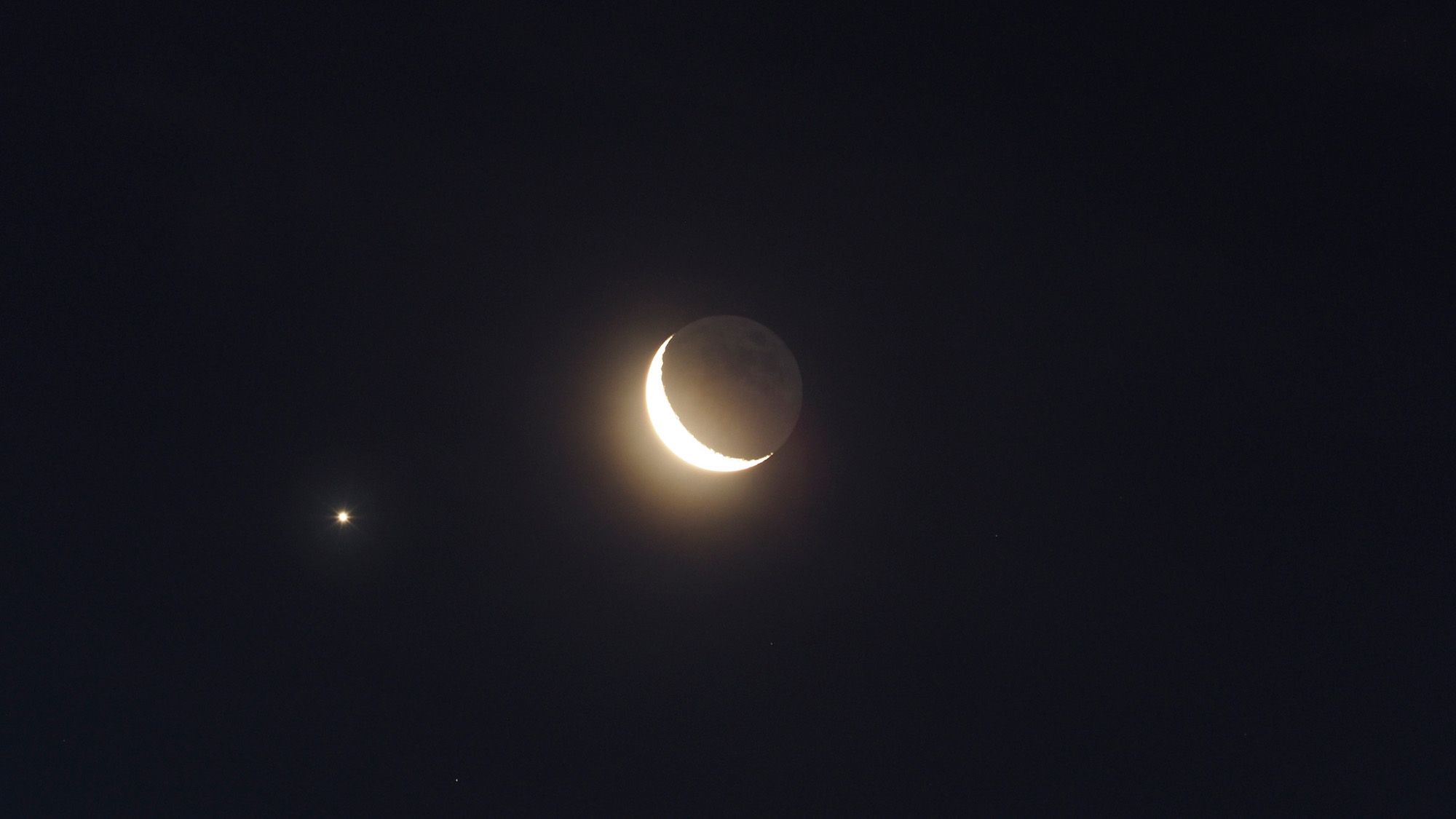
The moon will be a beautiful waning crescent, just 20% illuminated, and Jupiter will shine brightly alongside it. The pair will rise together in the east early Tuesday morning and gradually appear to move closer as the moon travels eastward against the background stars.
Latest Videos FromLive Science
When the occultation begins, Jupiter will remain hidden behind the moon for roughly an hour. No telescope will be needed to watch Jupiter disappear and reappear. However, a pair of binoculars or a small telescope will make the event much more dramatic.
Through a telescope, Jupiter will look like a tiny disc rather than a point of light and will take about a minute to disappear completely behind the moon. An easy way to photograph the event is to use a smart telescope to image the moon. (Here’s everything you need to know about lunar photography).
Below are the times when Jupiter will disappear and reappear in 10 major cities Tuesday morning, according to the International Occultation Timing Association.
- Chicago: 3:22-4:17 a.m. CDT
- Atlanta: 4:15-5:17 a.m. EDT
- Detroit: 4:16-5:20 a.m. EDT
- Miami: 4:20-5:09 a.m. EDT
- Washington, D.C.: 4:20-5:24 a.m. EDT
- Philadelphia: 4:22-5:26 a.m. EDT
- New York: 4:23-5:27 a.m. EDT
- Toronto: 4:25-5:22 a.m. EDT
- Boston: 4:26-5:30 a.m. EDT
- Montreal: 4:30-5:26 a.m. EDT
Outside the occultation path, Jupiter won’t disappear at all. Instead, it will appear to be skimmed by the crescent moon — still a potentially spectacular sight that could produce some amazing photos. From across much of the world, the crescent moon and Jupiter will appear exceptionally close together.
The next lunar occultation of Jupiter visible from North America will occur on Nov. 27, 2037, according to When The Curves Line Up.