



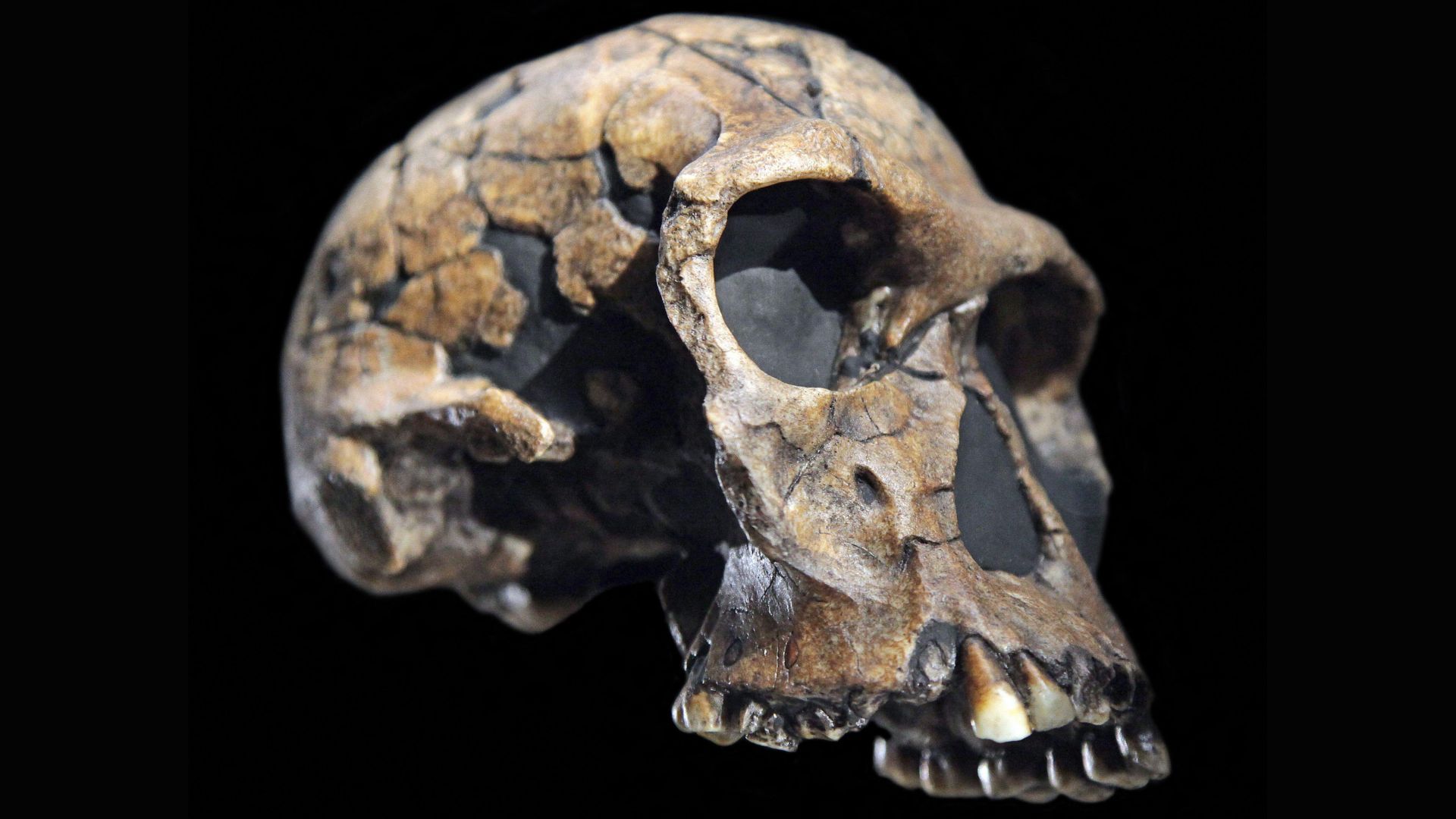

For 60 years, the earliest known human species has also been one of the most mysterious. Homo habilis was added to our family tree in 1964. But it’s long been unclear exactly what the ancient species, which lived between about 2.4 million and 1.65 million years ago, looked like.
That’s because, until recently, only three very incomplete fossilized skeletons had been unearthed.
Then in January, researchers described a fourth, more complete skeleton — and it revealed that H. habilis had an anatomy very unlike our own. The discovery has some researchers asking a big question: Is the earliest known human ancestor not human after all?
“As we have discovered more fossils, we’ve stretched the definition of the Homo genus,” Bernard Wood, a paleoanthropologist at the George Washington University in Washington, D.C., told Live Science. “Maybe this time we just stretched it too far.”
Obviously our species, Homo sapiens, belongs in the Homo genus. We also know that our closest living relatives, the chimpanzees and bonobos, don’t. This means that the human genus evolved at some point after our evolutionary lineage, which includes humans and our closest extinct relatives, split away from the chimpanzee line, an event that occurred more than 5 million years ago. So, when exactly did the human genus evolve?
One approach would be to argue that it dates to the split with the chimpanzee lineage. But the first creatures that appeared after the split don’t look much like we do. They include species, like Australopithecus afarensis, that had long, ape-like arms and relatively small brains.. This species existed in Africa between about 3.9 million and 2.9 million years ago, and includes the famous Lucy skeleton. Very few researchers consider Lucy to be human.
Most anthropologists, however, have historically considered H. habilis a member of the Homo genus.
Few skeletons
The first, very incomplete Homo habilis skeleton was discovered in Tanzania in the 1960s. The 1.75 million-year-old specimen included fragments of the skull, from which it was possible to estimate that they came from an individual whose brain had been roughly 45% the size of the average living person’s. This may sound small, but that was substantially bigger than the average australopithecine’s brain, which was about 35% the size of ours. Because of this evidence, the skeleton was placed in our Homo genus, and given the name Homo habilis, meaning handy or skillful human, it was a decision that most researchers have accepted.
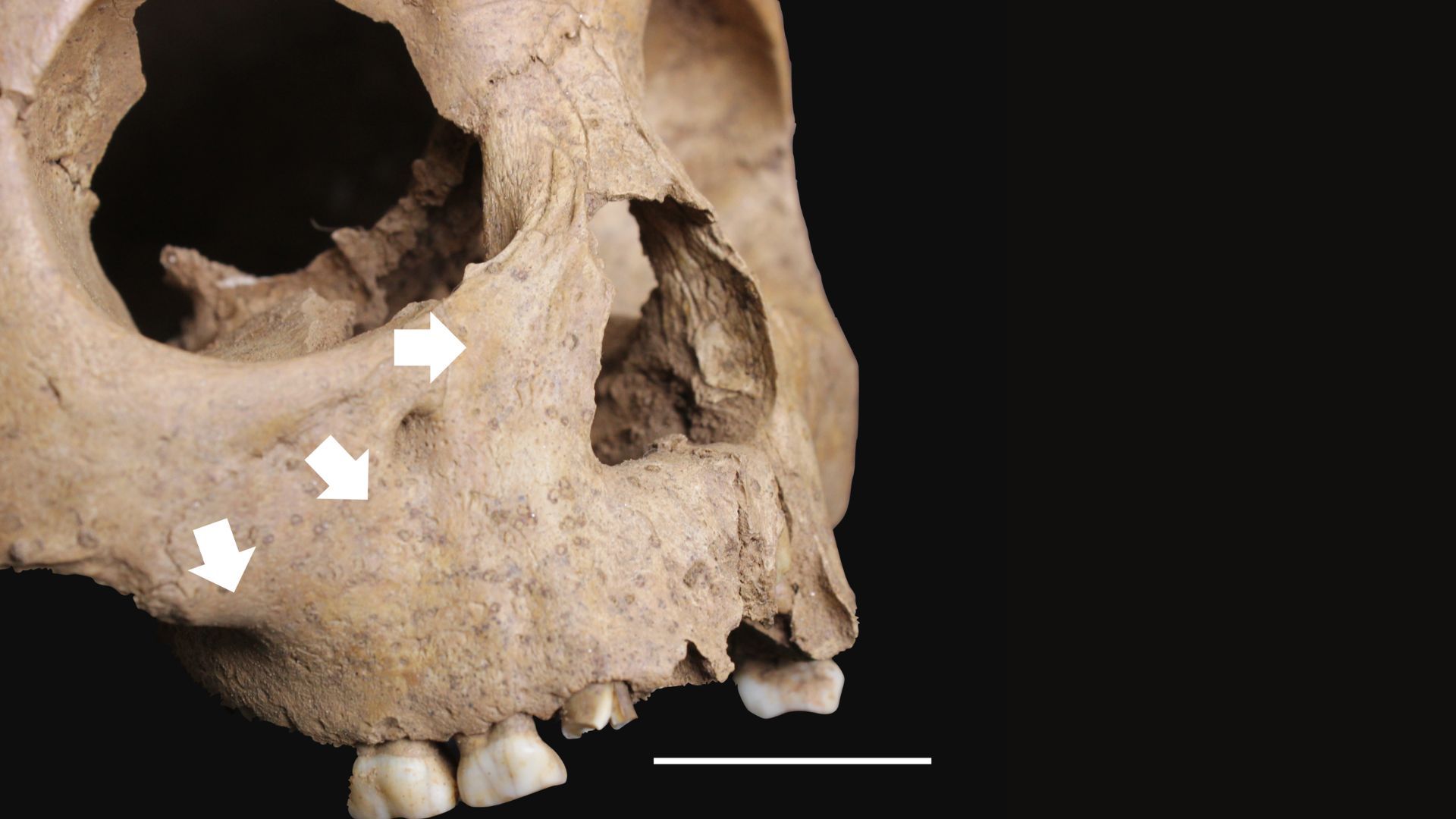
But the H. habilis skeleton described in 2026 complicates things. This skeleton is 2 million years old, and was found in Kenya, about 500 miles (800 kilometers) north of where the first H. habilis remains were unearthed. Just like the first skeleton, the Kenyan skeleton is far from complete. But the bones that survived give us our best ever look at H. habilis‘s arms, said study co-author Carrie Mongle, a paleoanthropologist at Stony Brook University in New York. The problem is that those arms aren’t like ours. Instead, they are long and ape-like, similar to the arms of our australopithecine relatives like Lucy.
“They are very much australopith-like,” Ian Tattersall, a paleoanthropologist at the American Museum of Natural History in New York City, told Live Science. In an article published earlier this year, Tattersall argued that these ape-like arms are a clear indication that H. habilis wasn’t a member of the human genus.
He isn’t the first to make this suggestion. Wood and his colleague, Mark Collard, an archaeologist at Simon Fraser University in Canada, argued in 1999 that H. habilis wasn’t a member of the human genus. By then, the second and third H. habilis skeletons had been discovered, and although extremely incomplete, they hinted that the species had limb proportions unlike ours — something that the fourth skeleton confirms.

Wood and Collard suggested transferring the species to the same genus as Lucy, which would mean renaming Homo habilis to Australopithecus habilis. Tattersall doesn’t think that’s a good solution, because the species had human-like brain size and teeth. He thinks habilis should be put in its own genus, although he hasn’t yet come up with a name.
A different approach
Other researchers, meanwhile, suspect that Wood and Tattersall are both wrong.
They think there is no need to rename H. habilis despite its arms. “Those ape-like limb proportions don’t necessarily tell us all that much,” Carol Ward, an anthropologist at the University of Missouri, told Live Science. This is because of the way most evolutionary scientists operate when they are defining species and genera.
We know that our very earliest ancestors, living just after the split with the chimpanzee line, spent plenty of time climbing trees, where long, ape-like arms would have been useful. Gradually, they adapted to spend more time walking on the ground before ultimately evolving into humans.
These bipedal ancestors probably no longer needed long, ape-like arms. But crucially, Ward said, long arms were almost certainly not a hindrance to survival either. Under those circumstances, even the first species in the Homo genus might have retained the long arms of their ancestors, because there was no strong evolutionary pressure to shorten them. Why arms eventually shrank is still not entirely clear, although some researchers think shorter arms may have brought some subtle advantages while running and using tools. This suggests there was weak evolutionary pressure for shorter arms, meaning they shrank, but at a relatively slow rate.
There’s a broader point here. “We want to think there was this big change with Homo, that we’re different from everything else that came before,” Ward said. “But this H. habilis skeleton supports the idea that maybe there was a more gradual transition from australopiths to Homo.”
This idea highlights an awkward problem that scientists are still grappling with.
Evolution is so complicated that it’s surprisingly difficult to divide living things into clear groups, such as species, which is one reason why there are now dozens of different ways to define species, and a heated debate on which one is the best. It turns out that genera are just as difficult to define, which means there isn’t actually any agreement on what a genus is, Wood said.
In other words, researchers will probably continue to debate whether or not H. habilis is in the human genus, for the simple reason that they still can’t fully agree what a genus actually is.
Grine, F. E., Yang, D., Hammond, A. S., Jungers, W. L., Lague, M. R., Mongle, C. S., Pearson, O. M., Leakey, M. G., & Leakey, L. N. (2026). New partial skeleton of Homo habilis from the upper Burgi Member, Koobi Fora Formation, Ileret, Kenya. The Anatomical Record, 309(3), 485–545. https://doi.org/10.1002/ar.70100