



Months before COVID-19 was officially declared a pandemic, public health leaders were poring over the early data coming out of China and preparing for the worst.
Dr. Seth Berkley — a renowned infectious-disease epidemiologist and former CEO of Gavi, an international organization aimed at improving children’s vaccine access — was among those leaders. In January 2020, Berkley and colleagues were working to establish an infrastructure so that, if and when scientists created vaccines for this novel virus, the shots wouldn’t be hoarded by high-income countries and denied to poor nations.
Now, Berkley has released a new book — “Fair Doses: An Insider’s Story of the Pandemic and the Global Fight for Vaccine Equity” (University of California Press, 2025) — that recounts how that initiative unfolded and what lessons were learned through the process, while underscoring why the broader fight for vaccine equity is far from finished.
On January 23, 2020, I was high up in the Swiss Alps in Davos, attending the World Economic Forum (WEF). I was at Davos as the CEO of Gavi, the Vaccine Alliance, the largest purchaser of vaccines in the world and which worked to provide new and underutilized vaccines to children in developing countries — countries in which about half the world’s children live. As usual, I was preoccupied with how we could do a better job protecting the world with vaccines for new and old diseases. And there were murmurs of a new epidemic of respiratory disease caused by a novel coronavirus in China on the horizon.
At the bar of the Hard Rock Hotel my wife, Cynthia [an academic physician and consultant], and I met with Richard Hatchett, CEO of the Coalition for Epidemic Preparedness Innovations (CEPI). Over nachos and drinks, we started to talk through what was likely to happen with the new coronavirus, which would later be named COVID-19. Discussion about the disease hadn’t really reached a high political level and was not formally on the Davos agenda, but concern was growing, and many people during that week asked us our opinions.
The first question we discussed was whether this was just going to be a worrisome outbreak or the Big One that epidemiologists had long warned might come. So far, we only had official confirmation of a point outbreak, spreading from animals at the Wuhan live animal market to humans. But on the nerdy LISTSERVs about infectious disease and epidemics, there was already a lot of chatter about how the virus might be spreading from person to person, which is a huge red flag in our field. We agreed that there was potential for the new virus to spread dramatically. Regardless of whether this was or was not the Big One, we needed to prepare.
Such a scenario creates a problem for all countries, even those with access to the vaccines. But to me a far bigger concern was the unfairness of high-income countries’ self-interest. People in developing nations without access to vaccines were historically already the most vulnerable to disease and the most likely to suffer complications if they got sick. They already had limited access to the most basic medical treatment.
Improving the delivery of existing vaccines and building up better delivery systems is the best way to detect outbreaks early, prepare communities for outbreaks of disease, and ensure health systems aren’t overwhelmed in an emergency — as well as strengthen our epidemic stockpiles.
If vaccines against the disease could be made — and at the time, we were far from certain they could be — we knew that stocks would be quickly bought up by the richest countries. The logical conclusion was that the bulk of the world’s population, and most especially those in lower income, developing countries, would be locked out of these deals, and so denied timely access to whatever vaccine supplies became available.
That was where we thought we could help. So, Richard, Cynthia, and I talked through a rough outline of what would be needed to ensure equitable access to any COVID-19 vaccines that emerged and the roles that various organizations — such as CEPI, Gavi, UNICEF, and WHO — as well as the pharmaceutical companies might play to make that happen.
Imagining ourselves in the place of government decision-makers, we envisioned that they would have an incentive to participate in a mechanism that pooled risk by making advance purchase commitments for a wide variety of candidate vaccines. Their buy-in could help us pool demand, generating enough scale to incentivize increasing production and to negotiate the best prices on everyone’s behalf. We wanted to promote solidarity, to publicize and meet lower-income country needs, and to create an early, strong global movement for equitable access.
Richard went from Davos back to London and talked with the CEPI team, I went back to Geneva to talk to the Gavi team and our Alliance partners WHO and UNICEF, and we started our collaboration. That joint effort became COVAX [COVID-19 Vaccines Global Access, an initiative to ensure equitable access to COVID-19 vaccines].
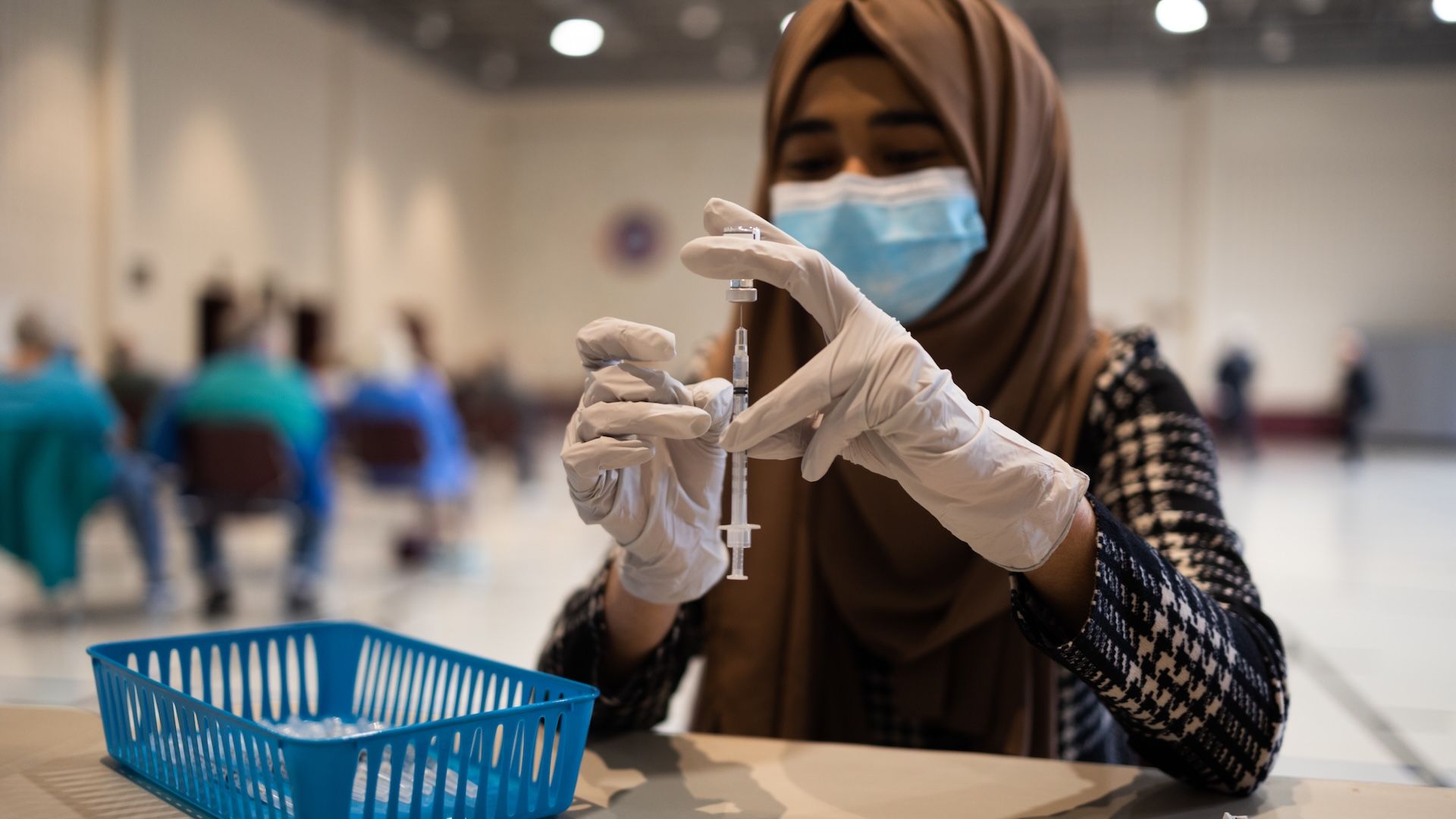
Our small team working on COVAX undertook what I believe was the most ambitious public health effort of the 21st century so far. The first COVAX dose was delivered to a COVAX-supported country 39 days after the first jab in the United Kingdom. Due to the time required for WHO to prequalify the vaccine, 43 days later the first doses were administered in Africa, in Ghana and Côte d’Ivoire. Forty-two days later, COVAX vaccines had been distributed to 100 countries. There were many delays due to export bans, vaccine nationalism, and manufacturing delays. But by the end of 2021, close to 1 billion doses had been distributed; by the end of 2022, COVAX had delivered more than 1.6 billion doses to people in the world’s poorest countries and was estimated to have averted 2.7 million deaths in those countries. That’s the fastest rollout of vaccines to developing countries ever.
WHO estimates that some 16 million people died during the first two years of the pandemic; we are still counting, and that number will doubtlessly grow. And COVID-19 is by no means the only infectious risk: Currently, about one in seven deaths, accounting for more than 7 million people a year, is due to an infectious disease. Millions of people die from diseases for which we already have vaccines.
It’s hard to put numbers on the deaths that have been prevented by vaccines, but some estimates say that vaccines have saved more than half a billion lives over the past 70 years, the time period they have been routinely available. And this only covers the 30 or so vaccines we have against the more than 300 infectious diseases known to plague humanity.
More and better vaccines need to be developed, particularly for major killers such as tuberculosis, malaria, and HIV, and, hopefully, more cancers. And in the meantime, the risks for infectious diseases are shifting.
Even those of us who had been working in the field for years were surprised at how poorly prepared the world was for an emergency of this magnitude. What’s more, we faced the perils of vaccine nationalism, vaccine diplomacy, and the sometimes-selfish behaviors of manufacturers and world leaders. It was clear from the start that we wouldn’t be able to do this work perfectly. But we did our best, and I’ve sought to set down both what we did and what I wish we could have done differently so that we can learn from our history.
As the world continues to recover from the worst of the pandemic years, we may not relish thinking about another pandemic ahead. We face complacency, fatigue, and a growing distrust of both science and institutions, fed by intentional disinformation that spreads rapidly online. But we also have an opportunity to harness what we’ve learned to do better next time — and there is epidemiologic certainty that a next time will come. When it does, we need to have robust public health systems in place, and ideally, vaccines.
Reprinted from Fair Doses: An Insider’s Story of the Pandemic and the Global Fight for Vaccine Equity by Seth Berkley, MD, courtesy of University of California Press. Copyright 2025.