Close Menu
  • Home
  • United States
  • World
  • Politics
  • Business
  • Lifestyle
  • Entertainment
  • Health
  • Science
  • Tech
  • Sports
  • More
    • Web Stories
    • Editor’s Picks
    • Press Release

Subscribe to Updates

Get the latest USA news and updates directly to your inbox.

What's On
Rapper Bhad Bhabie, 22, Cuddles Daughter Kali After Getting ‘Bad News’ About Her Cancer

Rapper Bhad Bhabie, 22, Cuddles Daughter Kali After Getting ‘Bad News’ About Her Cancer

March 1, 2026
Underdog promo code NYPOST: Play , get  in fantasy bonus entries for 76ers vs. Celtics

Underdog promo code NYPOST: Play $5, get $75 in fantasy bonus entries for 76ers vs. Celtics

March 1, 2026
Drugs like Ozempic may have a surprising benefit: study

Drugs like Ozempic may have a surprising benefit: study

March 1, 2026
Facebook X (Twitter) Instagram
Trending
  • Rapper Bhad Bhabie, 22, Cuddles Daughter Kali After Getting ‘Bad News’ About Her Cancer
  • Underdog promo code NYPOST: Play $5, get $75 in fantasy bonus entries for 76ers vs. Celtics
  • Drugs like Ozempic may have a surprising benefit: study
  • Berkshire Hathaway profit falls on lower insurance income, Occidental writedown
  • Texas GOP Rep. Tony Gonzales close to losing seat over alleged affair with aide who fatally lit herself on fire
  • School choice super PAC targets anti-school choice Republicans with $10 million
  • Ash Santos Found Out She Didn’t Get a Role in a Taylor Sheridan Movie the Same Day She Auditioned for ‘Marshals’ (Exclusive)
  • Sleeper Fantasy Promo Code NYPBONUS: Get free $20 + 100% deposit match up to $100 for Mavericks vs. Thunder
  • Privacy
  • Terms
  • Advertise
  • Contact Us
Join Us
USA TimesUSA Times
Newsletter Login
  • Home
  • United States
  • World
  • Politics
  • Business
  • Lifestyle
  • Entertainment
  • Health
  • Science
  • Tech
  • Sports
  • More
    • Web Stories
    • Editor’s Picks
    • Press Release
USA TimesUSA Times
Home » Do you weigh more when an elevator goes up or when it comes down?
Do you weigh more when an elevator goes up or when it comes down?
Science

Do you weigh more when an elevator goes up or when it comes down?

News RoomBy News RoomMarch 1, 20261 ViewsNo Comments

Elevators have a strange way of messing with your sense of gravity. The moment an elevator lurches upward, you feel it in your feet. For a second, the floor presses harder than usual. When the elevator slows, that pressure eases, leaving you briefly lighter.

If you stand on a scale inside an elevator going up, the number jumps. When it slows to a stop, the number dips. On the way down, the opposite happens.

So what’s really going on? Do you weigh more when the elevator goes up or when it goes down?


You may like

Sign up for our newsletter

(Image credit: Marilyn Perkins / Future)

Sign up for our weekly Life’s Little Mysteries newsletter to get the latest mysteries before they appear online.

The short answer is that you can feel heaviest at two points: when the elevator starts moving up (accelerating upward) and when it’s slowing down at the very end of a downward trip (decelerating downward). But the explanation depends on what “weight” actually means and what your body can feel.

“The word ‘weight’ in physics has different meanings,” Miguel Morales, a physics professor at the University of Washington in Seattle, told Live Science. In physics, weight can refer to at least three related ideas: your mass (how much matter you’re made of), the gravitational force pulling on you, or how hard the scale beneath you is pushing up, Morales explained.

“When you’re just standing still, those can all be the same thing,” Morales said. “But as soon as the elevator starts to speed up or slow down, you get three different answers. It’s just physics.”

Your mass never changes, no matter what the elevator does. Gravity near Earth’s surface also stays essentially the same between the bottom and top of a building. What does change is the third definition: how hard the scale pushes upward. That upward push is what a scale actually measures.

Looking at gravity

This distinction reveals something counterintuitive: “You can’t feel gravity. You never could,” Jason Barnes, a physics professor at the University of Idaho, told Live Science.

Barnes pointed to astronauts aboard the International Space Station. “The actual gravity of the Earth up there is almost the exact same as here,” he said. “But they don’t feel it.”

That’s not because gravity disappears in orbit. At the station’s altitude (about 250 miles, or 400 kilometers, above our planet), Earth’s gravitational pull is still about 90% as strong as it is at the surface. The difference is that astronauts and the space station are in continuous free fall toward Earth.


You may like

The station is moving sideways at more than 17,000 mph (27,300 km/h). As it falls, Earth curves away beneath it. Instead of hitting the ground, it keeps missing it. The result is a constant fall around the planet.

Because the astronauts and the space station are falling together at the same rate, the floor never needs to push up on them. And that upward push is what we actually feel as weight (also called the normal force).

On Earth, the ground constantly prevents you from falling by pushing upward against you. In orbit, there’s no such push. The astronauts are still under the influence of gravity, but nothing is stopping them from falling. Without the floor pressing upward, they feel weightless.

A view of the international space station in space with Earth below it.

Astronauts aboard the International Space Station (pictured here) are in continuous free fall toward Earth, which is why they feel “weightless.” (Image credit: NASA; CC BY-NC-ND 2.0)

Why do elevators make you feel heavier or lighter?

An elevator briefly changes how hard the floor pushes back on you. When the elevator starts rising, it must accelerate you upward, too. “To start going up, that’s when you feel heavier,” Barnes said. “The elevator pushes back harder than normal in order to accelerate you upward.”

In a typical building elevator, that extra acceleration might be about 1 meter per second squared. That is roughly one-tenth of Earth’s gravity. For someone who normally weighs 150 pounds (68 kilograms), that would briefly add about 10% to the scale reading. Instead of 150 pounds, the scale might show around 165 pounds (75 kg).

Morales described the same effect from the scale’s perspective. “The force of gravity hasn’t changed at all,” he said. “But now, in order for you to be speeding up, something’s got to be pushing you harder than gravity. And so your weight on the scale will go up.”

Once the elevator reaches a steady speed, the acceleration stops. Gravity and the upward push balance again, and the scale returns to its normal reading, even though you’re still moving.

At the top, when the elevator slows to a stop, the opposite happens. Even though you’re still moving upward, the elevator must accelerate downward slightly to slow you down.

Albert Einstein and his wife look out of a window in a black and white photo.

Albert Einstein (pictured here, with his wife Elsa in Chicago) did a thought experiment about how you would perceive gravity in a closed box on Earth versus a closed box in space, but on a rocket. He concluded that people would not be able to tell the difference. (Image credit: George Rinhart/Corbis via Getty Images)

The force of gravity hasn’t changed. But because the elevator is now accelerating downward, the floor doesn’t need to push up as hard to control your motion. With less upward push (normal force), the scale reading drops.

“You kind of feel yourself get a little light,” Morales said.

The same pattern repeats on the way down. When the elevator accelerates downward, you feel lighter because the floor pushes up less than usual. But as it approaches the bottom and slows to a stop, the acceleration flips upward again, making you feel heavy again.

This everyday experience turns out to be connected to one of the most important ideas in modern physics.

“It is an effect that Einstein first noted when he was developing general relativity,” Barnes said. That insight, known as the equivalence principle, helped Einstein understand gravity not as a force but as a consequence of acceleration and the curvature of space-time itself.

Share. Facebook Twitter LinkedIn Telegram WhatsApp Email

Keep Reading

Pain lasts longer in women, and immune cells may the culprit

Pain lasts longer in women, and immune cells may the culprit

The ‘sweet spot’ of overconfidence — project a bit to be perceived as competent, but don’t be ‘too seduced,’ a cognitive neuroscientist explains in a Q&A

The ‘sweet spot’ of overconfidence — project a bit to be perceived as competent, but don’t be ‘too seduced,’ a cognitive neuroscientist explains in a Q&A

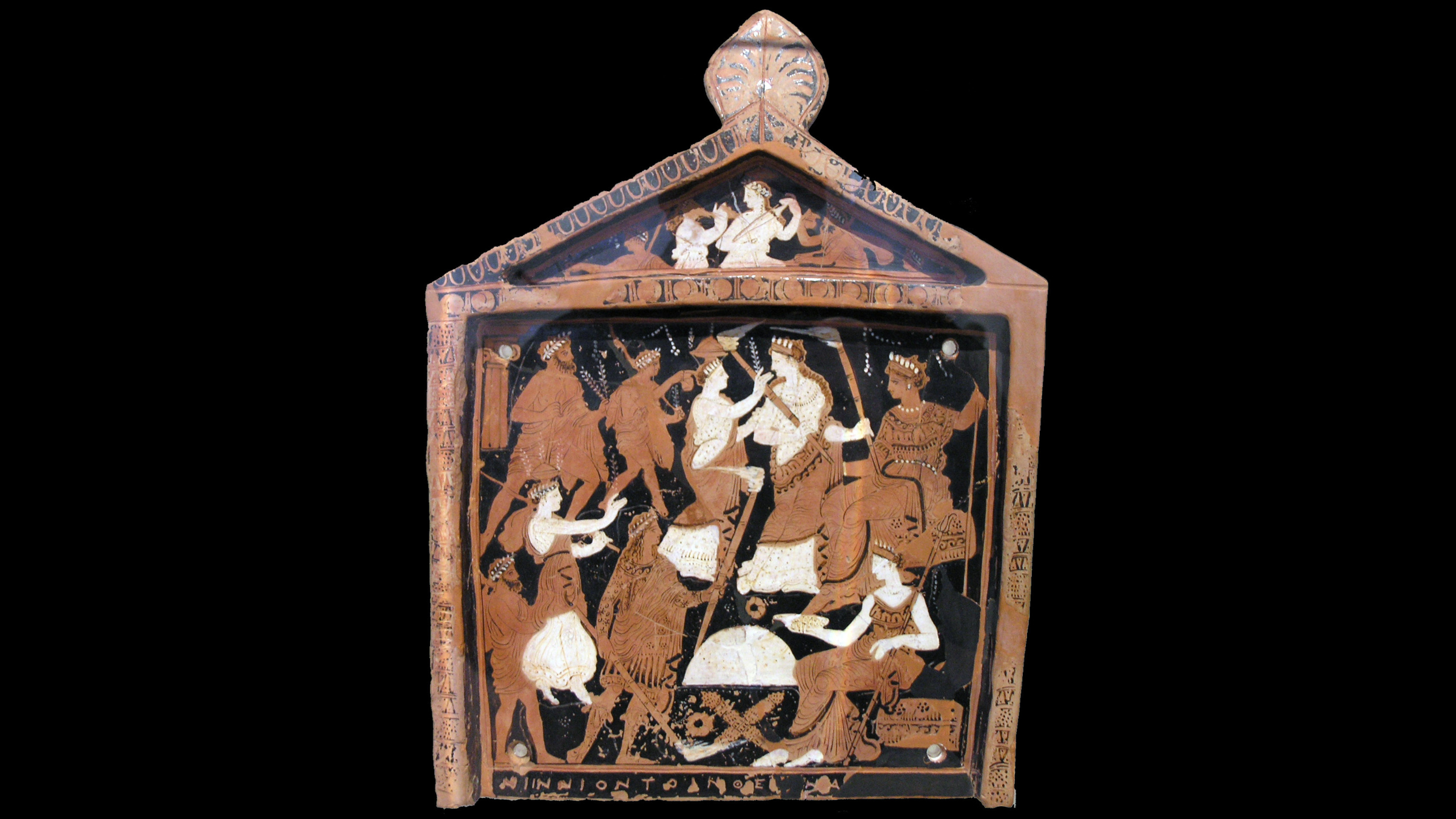
Ancient Greek mystery cult priestesses may have chemically tweaked fungus to induce psychedelic hallucinations

Ancient Greek mystery cult priestesses may have chemically tweaked fungus to induce psychedelic hallucinations

‘Equinox effect’ could supercharge auroras this March

‘Equinox effect’ could supercharge auroras this March

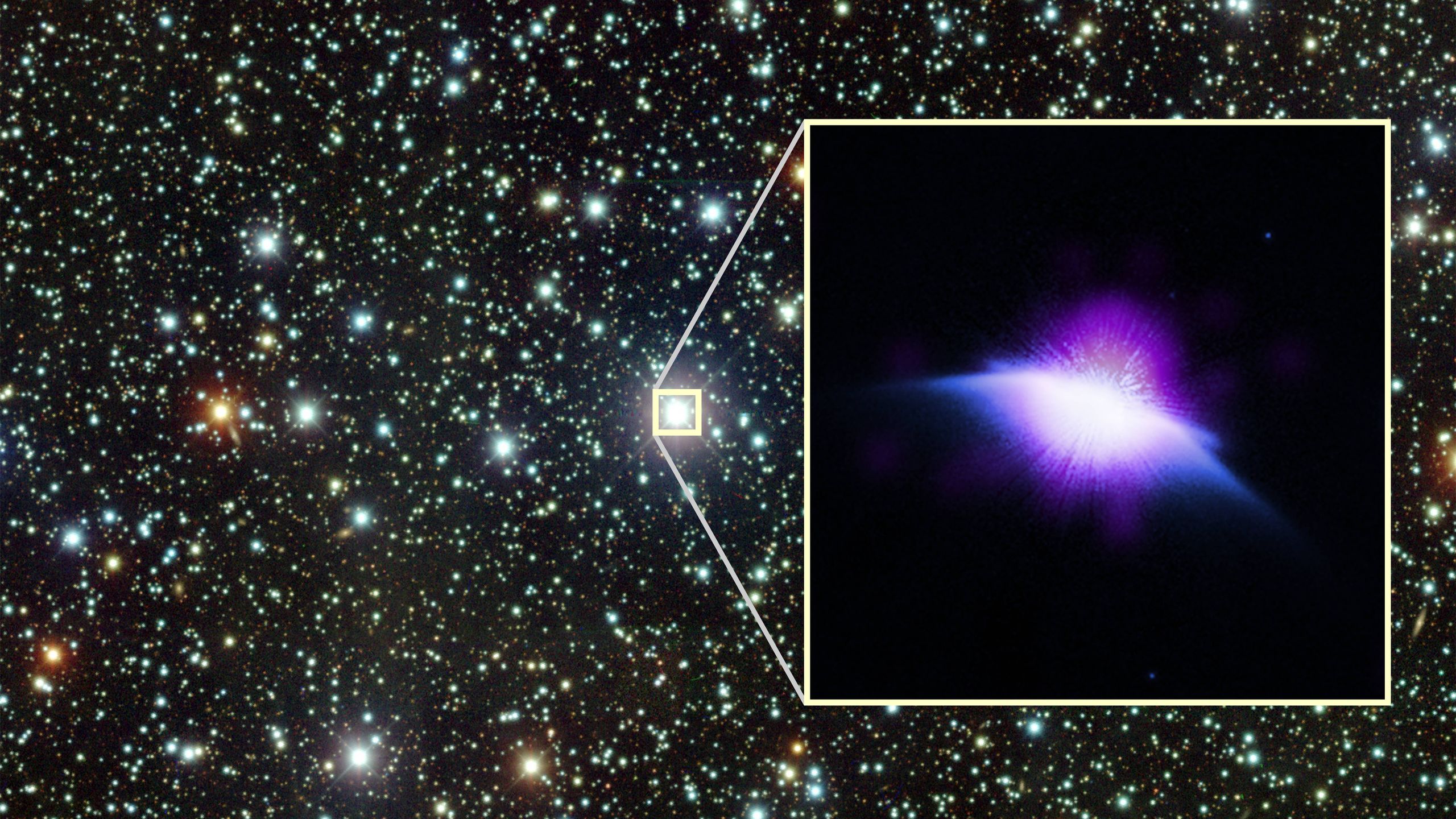
NASA telescope spots first alien ‘astrosphere’ around a sun-like star: Space photo of the week

NASA telescope spots first alien ‘astrosphere’ around a sun-like star: Space photo of the week

Scientists made AI agents ruder — and they performed better at complex reasoning tasks

Scientists made AI agents ruder — and they performed better at complex reasoning tasks

Giant string of organic molecules on Mars may be one of the best signs of life yet

Giant string of organic molecules on Mars may be one of the best signs of life yet

‘We’re starting to find a lot more weirdness’: These strange animals can control their body heat

‘We’re starting to find a lot more weirdness’: These strange animals can control their body heat

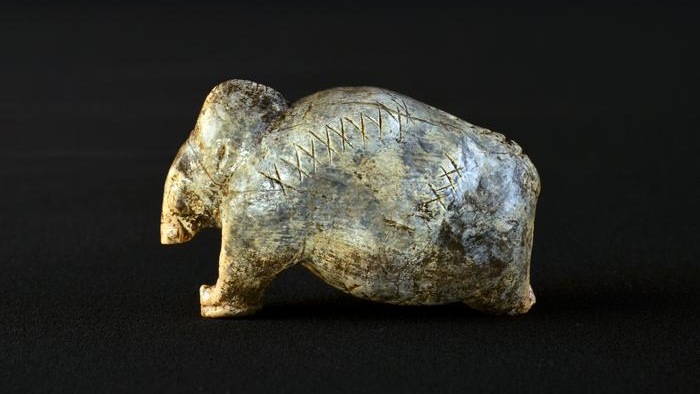
Paleolithic humans invented an ‘early predecessor to writing’ at least 40,000 years ago, carved signs suggest

Paleolithic humans invented an ‘early predecessor to writing’ at least 40,000 years ago, carved signs suggest

Add A Comment
Leave A Reply Cancel Reply

Editors Picks

Underdog promo code NYPOST: Play , get  in fantasy bonus entries for 76ers vs. Celtics

Underdog promo code NYPOST: Play $5, get $75 in fantasy bonus entries for 76ers vs. Celtics

March 1, 2026
Drugs like Ozempic may have a surprising benefit: study

Drugs like Ozempic may have a surprising benefit: study

March 1, 2026
Berkshire Hathaway profit falls on lower insurance income, Occidental writedown

Berkshire Hathaway profit falls on lower insurance income, Occidental writedown

March 1, 2026
Texas GOP Rep. Tony Gonzales close to losing seat over alleged affair with aide who fatally lit herself on fire

Texas GOP Rep. Tony Gonzales close to losing seat over alleged affair with aide who fatally lit herself on fire

March 1, 2026

Subscribe to News

Get the latest USA news and updates directly to your inbox.

Latest News
School choice super PAC targets anti-school choice Republicans with  million

School choice super PAC targets anti-school choice Republicans with $10 million

March 1, 2026
Ash Santos Found Out She Didn’t Get a Role in a Taylor Sheridan Movie the Same Day She Auditioned for ‘Marshals’ (Exclusive)

Ash Santos Found Out She Didn’t Get a Role in a Taylor Sheridan Movie the Same Day She Auditioned for ‘Marshals’ (Exclusive)

March 1, 2026
Sleeper Fantasy Promo Code NYPBONUS: Get free  + 100% deposit match up to 0 for Mavericks vs. Thunder

Sleeper Fantasy Promo Code NYPBONUS: Get free $20 + 100% deposit match up to $100 for Mavericks vs. Thunder

March 1, 2026
Facebook X (Twitter) Pinterest WhatsApp TikTok Instagram
© 2026 USA Times. All Rights Reserved.
  • Privacy Policy
  • Terms
  • Advertise
  • Contact

Type above and press Enter to search. Press Esc to cancel.