


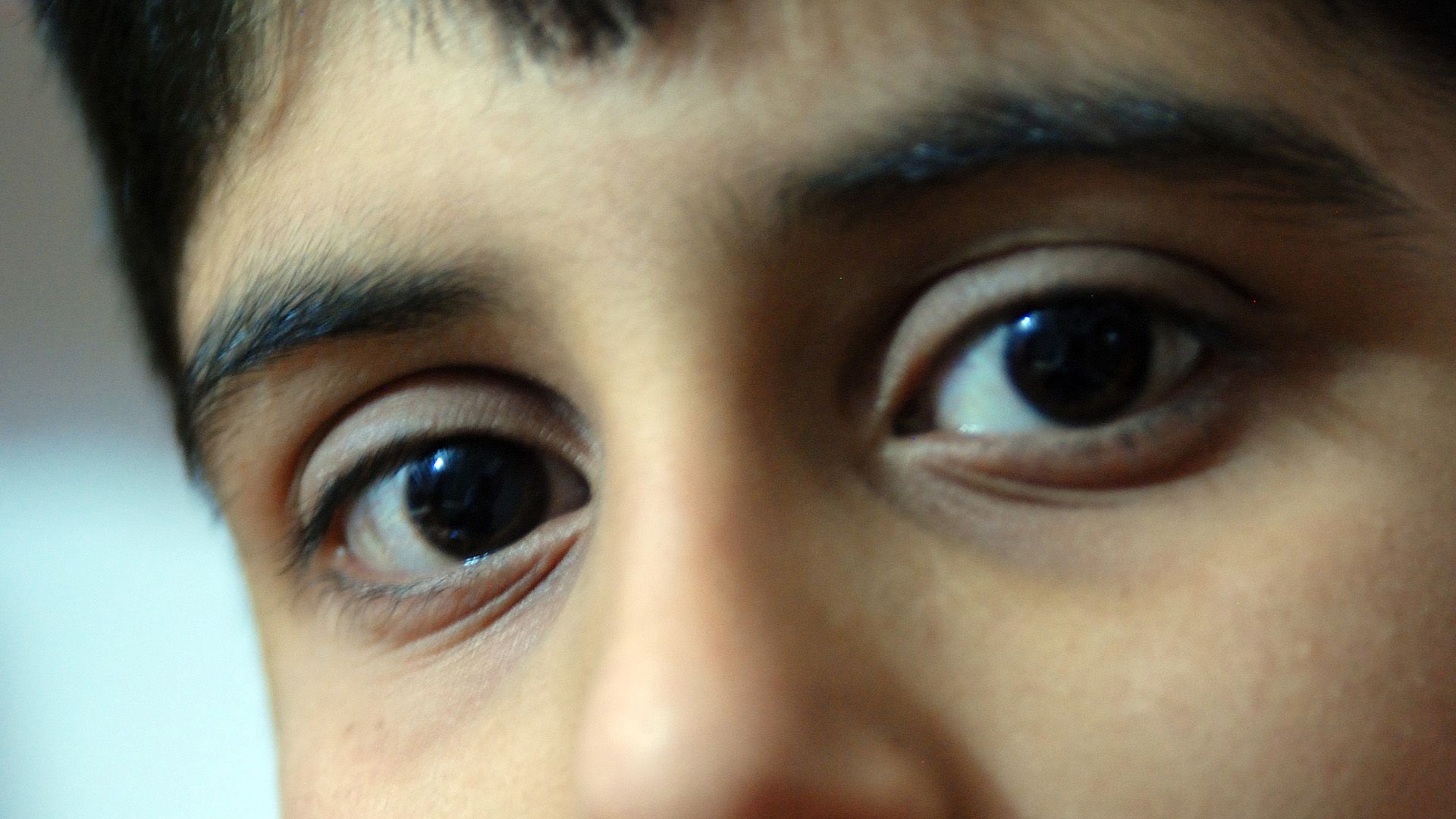


The patient: An 11-year-old boy in India
The symptoms: The boy’s parents brought him to a hospital after he had several episodes of bleeding from his eyes, nose and ears. The episodes, which had occurred for about a month, seemed to start for no obvious reason, caused no pain and typically stopped on their own within minutes.
What happened next: While evaluating the boy, doctors witnessed active bleeding from his eyes and ears. However, examinations revealed no injuries or structural abnormalities that could explain the bleeding.
Tests showed that his blood counts were normal, as were his levels of von Willebrand factor, a protein involved in blood clotting. Meanwhile, tests of the secretions from his eyes and ears confirmed that they did indeed contain blood.
In the end, the doctors could find no evidence of a bleeding disorder, local injury, self-harm or other obvious medical cause for the bleeding. Because the boy’s parents reported that the episodes often occurred during periods of “academic stress, peer pressure, or parental expectations regarding academic performance,” doctors also arranged a psychiatric evaluation, they explained in a report of the case.
A psychiatrist interviewed the child and his parents and also made behavioral observations during consultations. This assessment supported the idea that academic stress and parental expectations regarding school performance may have been contributing psychological stressors.
The diagnosis: Since extensive testing failed to identify a physical cause for the bleeding, doctors concluded that the symptoms were consistent with stress-associated hematohidrosis. This is an extremely rare condition in which people appear to sweat or secrete blood through intact skin or natural body openings. The secretions are sometimes called “blood sweat,” although evidence doesn’t suggest the fluid passes through the sweat glands.
Get the world’s most fascinating discoveries delivered straight to your inbox.
The treatment: Doctors treated the boy with propranolol, a beta blocker that can dampen the body’s fight-or-flight response. They also set him up to start cognitive behavioral therapy, a common form of talk therapy, to help him manage stress and develop coping strategies for academic pressure. His parents received counseling as well, including guidance on reducing academic pressure and creating a more supportive environment at home.
Within two weeks, the boy’s bleeding episodes had become much less frequent. Four weeks after treatment began, only occasional, mild episodes were reported. Three months after the start of treatment, he was symptom-free during his normal daily activities. (The case report doesn’t note how long treatment continued.)
What makes this case unique: There are fewer than 50 cases of hematohidrosis reported in the medical literature, the boy’s doctors wrote in the report of the case. Although the phenomenon has been reported for decades, its exact cause remains uncertain.
One proposed explanation is that intense emotional stress, fear, or psychological trauma triggers ruptures in tiny blood vessels surrounding sweat glands, allowing blood cells to leak into sweat ducts and emerge on the skin’s surface. However, the existing research doesn’t necessarily suggest that the secretions come from sweat glands.
The boy’s doctors cautioned that these observations do not prove that psychological stress directly causes hematohidrosis, although the condition has been linked to stress in several previous reports.
For example, in a 2017 report, doctors described a 10-year-old girl who developed episodes of bleeding from her scalp after being punished at school and repeatedly criticized over her academic performance at home. Her symptoms eventually disappeared after psychotherapy, medication and changes in parenting strategies. A report published in 2022 described a 14-year-old boy whose bleeding episodes appeared to worsen around school examinations and anxiety about returning to class. After receiving stress-management therapy and treatment with antidepressants, he stopped experiencing the episodes.
Both of these earlier cases had also occurred in India, and in general, many documented cases have originated in Asia, particularly in India and Pakistan, the case report authors noted.
The doctors stressed that methodical and structured psychological and psychological assessments are required to better understand the underlying mechanisms of this rare condition.
This article is for informational purposes only and is not meant to offer medical advice.
Tetta, V. S., Mattaparthi, J. K., Siripurapu, Y. S., Kandukoori, S. P., Doddapaneni, D. S., & Singh, T. (2026). Haematohidrosis in a young boy temporally associated with psychological stress: A case report. Clinical Medicine Insights: Case Reports, 19. https://doi.org/10.1177/11795476261446756
Can you guess the diagnosis in these strange medical cases? Find out with our diagnostic dilemma quiz!
TOPICS