


Imagine a single vaccine that protects against the flu, COVID-19, lung-invading bacteria and seasonal allergens all at once.
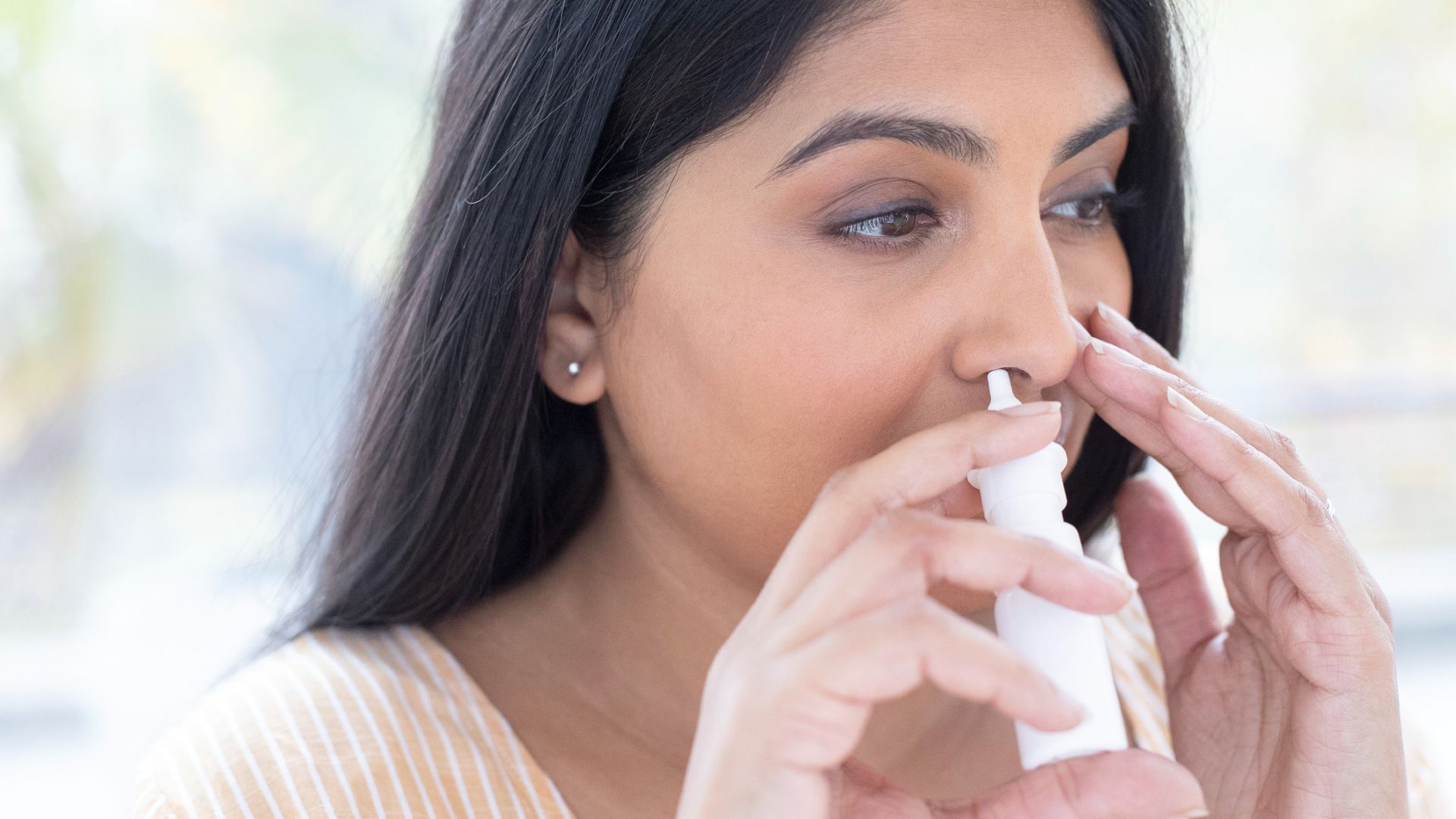
Scientists recently developed a nasal spray to protect against multiple respiratory diseases, including seasonal influenza and COVID-19, which they’ve so far tested in mice over a three-month period. They call the promising invention a “universal respiratory vaccine,” though it doesn’t stimulate the immune system the way classic vaccines do.
Chasing universal protection
Flu and COVID-19 shots need to be updated every year to remain protective, because influenza viruses and coronaviruses are constantly mutating.
“As they circulate, viruses mutate in big and small ways,” said Dr. Alfredo Mena Lora, medical director of infection control at Saint Anthony Hospital in Chicago, Illinois. “So antibodies that worked last season may not bind as well this season, leaving more people vulnerable to infection.”
What’s more, there are myriad respiratory viruses, bacteria and allergens floating around that aren’t the target of any existing vaccines. These problems have driven research into “universal” vaccines that could provide broader, longer-lasting protection against multiple respiratory insults — including even seasonal allergies.
This push for universal vaccines accelerated after the COVID-19 pandemic exposed how vulnerable the world is to new respiratory pathogens, as well as how quickly existing vaccines become obsolete in the face of mutations. Since then, researchers have focused on developing vaccines that could last longer and protect against more variants, potentially reducing the need for frequent updates of vaccine formulas.
Universal vaccines in the works
Many universal vaccines in development aim to target parts of viruses that change very little across strains.
For example, for influenza, researchers are targeting the hemagglutinin protein that sticks off the viral surface, but they are focusing on the “stalk” rather than the “head” of this protein, because the stalk mutates more slowly. The National Institutes of Health’s (NIH) FluMos-v2, which targets hemagglutinin from six flu strains, recently completed early-phase human trials and generated encouraging immune responses.
The NIH’s Generation Gold Standard initiative also aims to develop universal vaccines to protect against multiple viruses that are likely to spark future pandemics. One intranasal flu vaccine is already in later-stage human trials. It uses whole, inactivated viruses to spur the body to make antibodies, which block infection, and T cells, which attack infected cells. This approach could provide broad protection against multiple influenza strains and potentially block transmission — something current flu vaccines do not do.
Meanwhile, some scientists are working on pancoronavirus vaccines to protect against current and future coronaviruses, while others are exploring AI-designed vaccines. They build these by using computational tools to pinpoint regions of virus proteins that mutate very slowly and appear in many viruses. Both these efforts are still in early, experimental stages.
With no universal respiratory vaccines yet on the market, most of the R&D efforts have focused on developing vaccines for specific groups of viruses, such as influenza viruses or coronaviruses. The recent nasal spray study is unique in that it aims to protect against viruses, bacteria and allergens, rather than just one pathogen family.
Rousing innate immunity
Unlike traditional vaccines, the experimental nasal spray does not teach the immune system to recognize select proteins on a specific antigen, the researchers reported Feb. 19 in the journal Science. Rather, it revs up the immune system’s first-line defense, known as the innate immune system, study senior author Bali Pulendran, a pathologist at Stanford University, told Live Science in an email.
This acts like an early warning system in the lungs, ready to detect and respond quickly to a wide range of pathogens, even ones the body has never encountered before.
“These [lung] cells are the first to sense infection and help determine how the immune response unfolds,” said Pulendran. “And we’ve learned over the past decade that innate immune cells can also be ‘trained’ to respond faster and more effectively to future threats.”
The concept builds on research with the Bacillus Calmette-Guérin (BCG) vaccine, which prevents tuberculosis. In 2023, Pulendran and colleagues found that mice given BCG saw T cells flock to the lungs. There, they released signals that kept innate immune cells active in the lungs for months, protecting the mice against both COVID-19 and influenza.
This new nasal spray rouses similar immune protection. It combines two adjuvants, or substances that trigger an immune response, to activate T cells and draw them to the lungs. These T cells send chemical signals that mimic natural infection cues, keeping the lungs’ innate cells activated and on high alert. If a pathogen makes its way into the lungs, innate immune cells will be primed to nip the infection in the bud.
In experiments, mice received four doses of the nasal spray, spaced one week apart, and were exposed to coronaviruses 21 days to 3 months after their final dose. Vaccinated mice had about 700 times less virus in their lungs than unvaccinated mice and also maintained their weight and survived the infections. Unvaccinated mice, in contrast, lost significant weight, experienced lung inflammation, and, in some cases, died.
We’ve learned over the past decade that innate immune cells can also be ‘trained’ to respond faster and more effectively to future threats.
Bali Pulendran, pathologist at Stanford University
The vaccine also helped mice fight off bacterial infections caused by Acinetobacter baumannii and Staphylococcus aureus weeks to months after dosing. For example, levels of S. aureus in the kidneys were about 200 times lower in vaccinated mice than in unvaccinated mice.
The vaccine also reduced the severity of allergic reactions caused by house dust mites. The vaccine seeds the lungs with long-lived T cells that alter the lung environment such that it suppresses the immune pathway behind allergies, the researchers reported. As a result, when vaccinated mice encountered dust mites, their immune systems didn’t recruit inflammation-driving cells or generate mucus as they might have otherwise. Removing the T cells abolished this protection.
From mice to humans
“This concept sets up a stronger, faster immune posture in the respiratory tract,” Mena Lora, who was not involved in the study, said of the nasal spray. Although the results are still early, he added, the work offers an important proof-of-concept.
The study only tested a handful of pathogens, so although the vaccine raises broad defenses, it’s too early to declare it a universal respiratory vaccine. And in the long run, translating these findings to humans will be complex.
“The human immune system varies greatly,” said Mark Cameron, an associate professor of population and quantitative health sciences at Case Western Reserve University School of Medicine. “Whether this vaccine can generate broad protection without side effects will require careful clinical trials,” said Cameron, who was not involved in the study.
Pulendran agreed, adding that spurring the immune system in this way carries potential risks, such as triggering excessive inflammation. “In our animal studies, we did not observe pathological inflammation, but these questions will need careful examination in human studies,” he cautioned.
The team is now preparing for early-stage trials in humans. The exact timeline to potential approval remains uncertain.
“If successful, such a vaccine could reduce hospitalizations, ease ICU [intensive care unit] strain, and protect populations during seasonal outbreaks and future pandemics,” saidMena Lora.
The World Health Organization estimates next‑generation or universal influenza vaccines could prevent up to 18 billion flu cases and save millions of lives globally if widely used from 2025 to 2050. However, as no universal flu vaccine has reached the market yet, these ambitious goals are still on hold.
“Their ultimate impact will depend on effectiveness, duration of protection, and performance in diverse populations,” Mena Lora emphasized. “The more tools we have — different platforms, targets, and delivery methods — the better our chances of developing broadly protective vaccines, while still refining pathogen-specific shots for high-risk groups.”