




Astronomers have spotted a never-before-seen type of “phoenix planet” rising from the ashes of a dying alien sun. The discovery, which the scientists say was “completely unexpected,” raises hopes that more of these reborn alien worlds could be lurking throughout the cosmos — and may offer a glimpse of our own solar system’s fate.
The unnamed exoplanet was spotted circling the white dwarf HS 0209+0832, which is located roughly 270 light-years from Earth. White dwarfs are stellar remnants, sometimes dubbed “zombie stars,” that form from the leftovers of massive red giants that run out of fuel before eventually collapsing into shriveled husks. HS 0209+0832 is a particularly young white dwarf, still burning at around 63,000 degrees Fahrenheit (35,000 degrees Celsius), which suggests it made this transition within the past few million years.
Scientists previously discovered some surprising heavy elements within the visible spectrum of HS 0209+0832, which was first captured by the Hubble Space Telescope in the late 1990s. These elements — which included aluminium, titanium and nickel — are not normally found inside white dwarfs, so their presence suggested that something unusual was going on. But until now, there was not enough data to figure out what.
In the new study, published Oct. 5 in the journal Nature Astronomy, researchers took a closer look at HS 0209+0832. Using some of Hubble’s updated instruments and data from other observatories, the team captured a more detailed spectrum of the stellar zombie. This revealed a high concentration of additional heavy elements, including zinc and copper, as well as niobium, which has never been seen in a white dwarf before.
The researchers think these out-of-place elements were created during the death throes of the former red giant and later coalesced into a “second-generation” planet around the newly forged white dwarf. They suspect the atmosphere of this hypothetical planet is being stripped by the white dwarf’s stellar winds, causing the rare elements to fall back onto the zombie star.
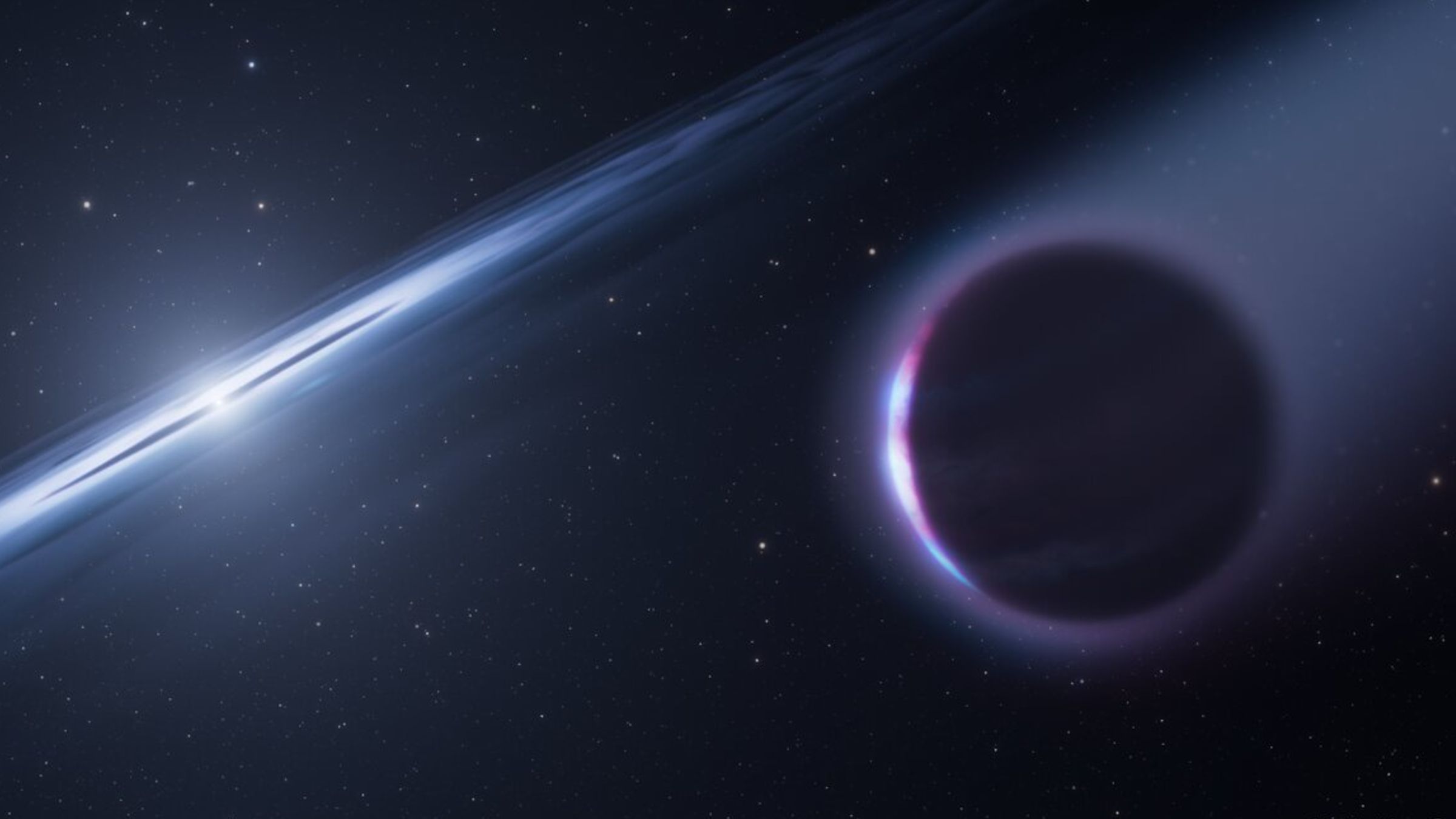
HS 0209+0832 was once a main-sequence star like the sun (top left) that ballooned into a red giant after it ran out of fuel (top right). Eventually, it collapsed into a white dwarf (bottom left), before an exoplanet emerged from the ashes of the red giant (bottom right).
(Image credit: NASA, ESA, L. Hustak (STScI))
Follow-up observations then revealed a recurring dip in the brightness of HS 0209+0832, suggesting that an exoplanet was repeatedly passing in front of the undead star. Based on the alien world’s orbit, which lasts approximately 4.4 Earth days, and the duration of its transits in front of the star, the team predicted that the planet is roughly the size of Jupiter. (Its close proximity to the white dwarf also supports the hypothesis that its atmosphere is being stripped away.)
“Second-generation planets are worlds that form out of the material a star casts off as it dies,” study first author Jamie Williams, a doctoral candidate in astronomy and astrophysics at the University of Warwick in the U.K., said in a statement. “They’re incredibly rare, and finding one around a white dwarf was completely unexpected. It’s a bit like finding a planet that has risen from the ashes of the very star it once orbited.”
Get the world’s most fascinating discoveries delivered straight to your inbox.
“Completely unexpected”
This is not the first time astronomers have spotted an exoplanet around a white dwarf. For example, in 2019, some of the authors of the new study previously spotted an alien world surrounding the white dwarf WDJ0914+1914. However, in that case, they were confident that it was a first-generation world that somehow survived its star’s fiery end.
But the heavy elements that seem to be falling onto HS 0209+0832 — and the relative lack of other elements common in first-generation planets, such as silicon and iron — suggest that’s not what’s happened for this recently detected world.
“This pattern of elements is a telltale sign of the ‘s-process,’ a nuclear reaction that builds heavy elements inside dying stars during their bloated red giant phase,” study co-author Nicholas Stone, an astronomer at the University of Wisconsin-Madison, said in the statement. “It’s a chemical signature no ordinary, ‘first-generation’ planet should carry, which told us that this new planet was something different.”

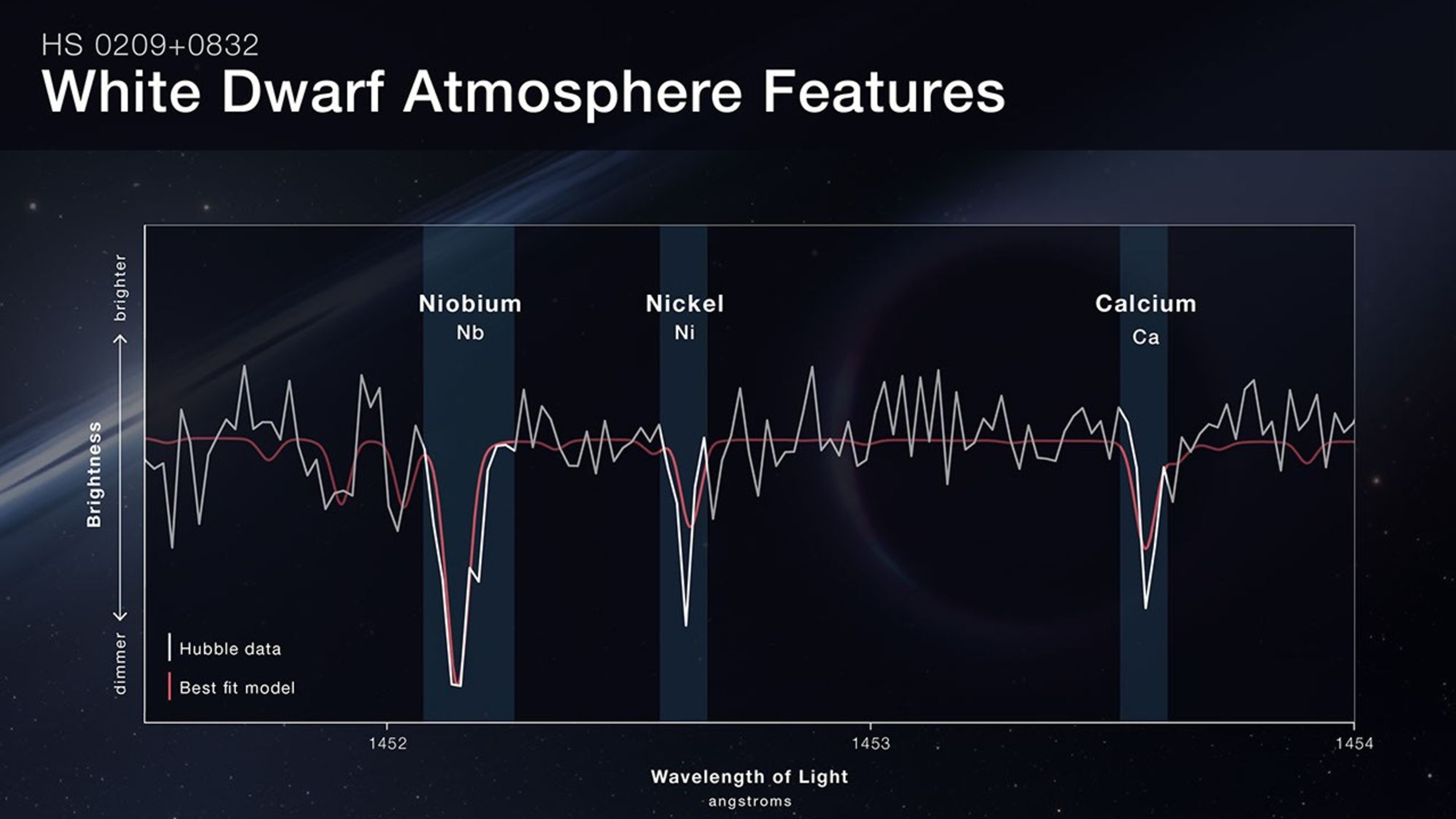
The elements in HS 0209+0832’s visible spectra, strongly suggested that it was accreting material from a second-generation exoplanet. The transit data later confirmed this theory.
(Image credit: Illustration: NASA, ESA, Leah Hustak (STScI))
Instead, the newly detected exoplanet likely formed directly from the material that was shed by the dying red giant after it expanded and before it collapsed in on itself.
Similar phoenix planets have been spotted alongside other stellar remnants, such as pulsars, which form when stars explode as supernovas. However, until now, such worlds have never been seen around a white dwarf.
Rising from the ashes
“What’s remarkable about the planet around HS 0209+0832 is that this isn’t a planet from somewhere else, or a survivor from the system’s birth, it looks like it was built from the very material its own star cast off as it died,” study co-author Boris Gänsicke, an astrophysicist at the University of Warwick who also helped to discover the exoplanet around WDJ0914+1914 in 2019, said in the statement. “In a sense, this system has given birth to a new world using the foundations of the old one.”
HS 0209+0832 may have once harbored other exoplanets when it was a red giant. But if they existed, these alien worlds likely perished in flames as the dying star ballooned — similar to what experts think will happen to Earth when the sun runs out of fuel and transitions into a red giant in around 5 billion years.
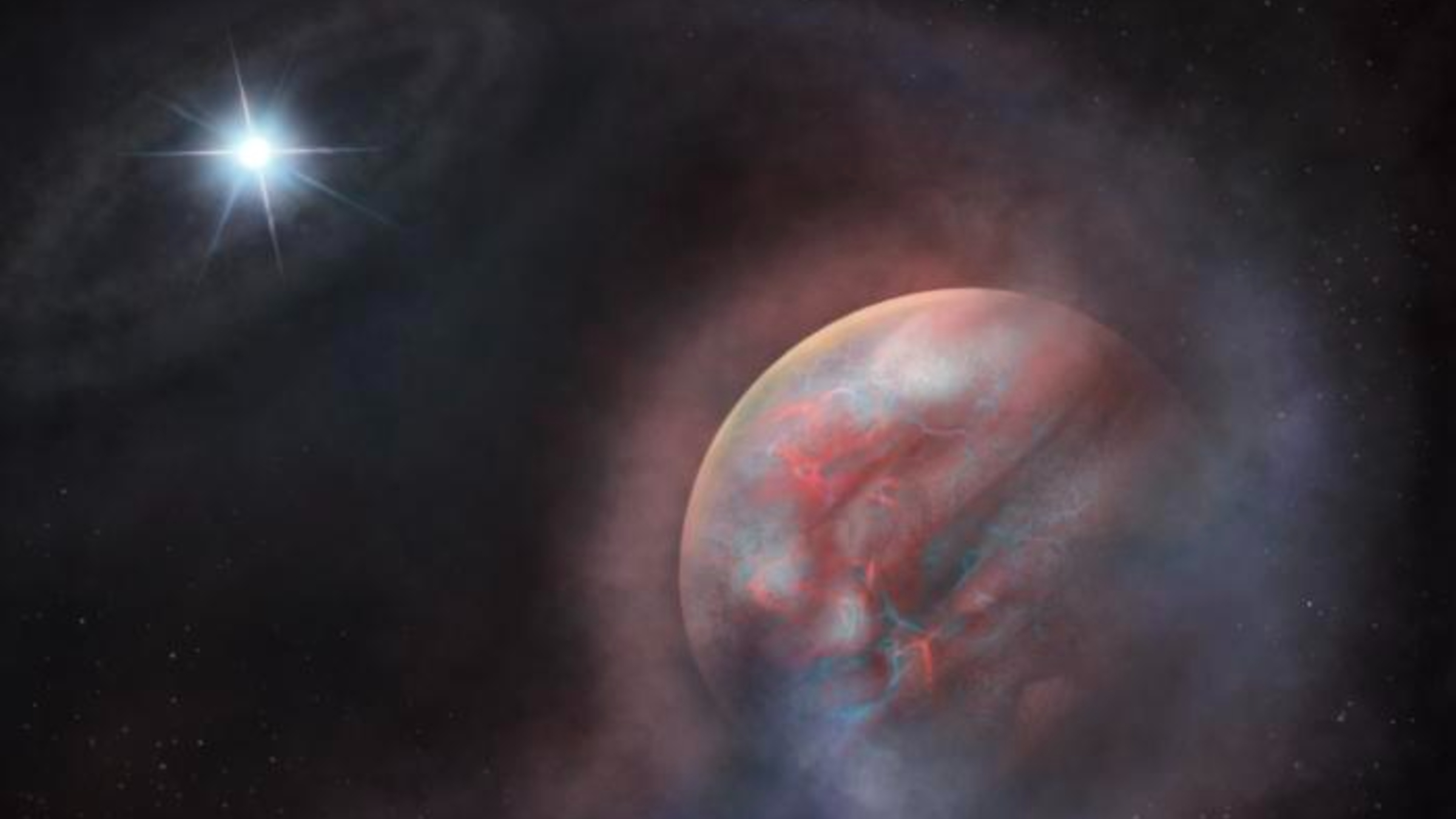
HS 0209+0832’s exoplanet likely has very little to no atmosphere left due to strong gusts of stellar wind stripping it away.
(Image credit: Dr Snehalata Sahu/University of Warwick)
Once the sun has finished bulging, it will turn into a white dwarf too. The new discovery hints that our star could also host brand-new worlds after it has transformed, creating a sort of solar system 2.0.
“Finding this one example raises the question of how many more might be out there and might our own solar system host a second-generation planet formed from the ashes of our sun,” Gänsicke said.
However, more work is required to figure out exactly how the newfound exoplanet formed and, as a result, how likely this scenario is. The researchers suspect that another object, such as a lost stellar sibling, may have been required to create the new world.
“Forming the protoplanetary disc in this situation is not easy and helps explain why these planets are so rare,” Williams said. “To form a disc of material necessary to birth a planet, HS 0209+0832 likely required a companion star that pulled the ejected material back into orbit, rather than letting it escape.”
Williams, J. T., Gänsicke, B. T., Stone, N. C., Koester, D., Davies, B. D. R., Tong, C., Wilson, D. J., Sahu, S., Swan, A., Beatty, T. G., Ramírez, S. H., Cunningham, T., & Long, K. S. (2026). Discovery of a second-generation planet candidate accreting onto a white dwarf. Nature Astronomy. https://doi.org/10.1038/s41550-026-02983-7