





Burning up
As the planet warms, our environment will be transformed, but so will our bodies. In this series, ‘Burning up,’ we investigate the health impacts of climate change, focusing on heat, air quality, food and infection risk. In this installment, we evaluate the promising solutions that could help us adapt to our warmer future
In the summer of 2008, New York City lowered the threshold for activating its emergency heat plan.
The city had historically relied on the National Weather Service threshold of a heat index of 105 F (40.6 C), but they noticed that people were getting heat stroke at lower temperatures.
As part of a wider effort, they changed the alert threshold: it would trigger if the temperature reached 100 F (37.8 C) for a day, or 95 F (35 C) for two days in a row. When the threshold was reached, city officials conducted targeted outreach, including to vulnerable groups, like homeless people; alerted residents on their phones; launched measures to protect the power and water supply; and opened cooling centers.
Lowering this threshold correlated with a more than 50% reduction in hospitalizations for heat stroke and related illnesses on hot days.
New York’s case study offers one of the clearest examples of an intervention that worked to protect people from deadly heat.
The strongest evidence is where these approaches reduce illness, hospital visits or death, not just heat exposure, pollution levels or other intermediate markers.
Charles Leonard, associate professor of epidemiology at the University of Pennsylvania
As the planet warms, we will need to find more of these solutions. The consensus among scientists is that the most effective way to avoid the worst health outcomes of climate change is to slow warming by reducing carbon emissions. Limiting warming to 1.5 degrees Celsius (2.2 degrees Fahrenheit), for instance, would mean 11,600 fewer deaths due to wildfire smoke exposure in the U.S. annually, compared with warming of 5.4 F (3 C).
But even if we rapidly reduce emissions, climate change will have wide-ranging effects on our health
So what measures actually work to protect people’s health? Live Science reviewed dozens of studies and talked with 19 climate and health experts at universities and health and climate associations, to identify the most promising solutions to two of the biggest climate-related threats: extreme heat and wildfire smoke.
Some interventions have demonstrated a reduction in deaths or disease at the population level, while others have used modeling to predict health impacts or rely on proxy measures.
“The strongest evidence is where these approaches reduce illness, hospital visits or death,” said Charles Leonard, an associate professor of epidemiology at the University of Pennsylvania, told Live Science, “not just heat exposure, pollution levels or other intermediate markers.”
Most solutions do not offer the level of clarity of the New York example, however. Many reduce temperatures or alter human physiology in ways that are likely to decrease the number of heat-related deaths or cases of illness. But a deeper examination reveals limited evidence that many seemingly intuitive interventions, such as cooling centers, are effective on a societal level.
For both heat and wildfire smoke exposure, we analyzed the evidence to see which interventions have actually worked.
Extreme heat
Air conditioning and heat pumps
Evidence grade: Strong
One of the most common interventions for managing indoor temperatures is the use of mechanical systems with refrigerants, such as air conditioning or heat pumps.
Air conditioning has been tied to reduced hospital admissions in California and reduced heat-related deaths at Texas prisons. During a heat wave in Portugal, patients admitted to an AC-supported hospital had a 40% lower risk of dying than those in wards without AC. It is a clear way to impact health outcomes.
But AC can’t be the whole solution.
“One of the most important lessons emerging from heat adaptation research is that no single intervention is sufficient on its own,” said Shweta Arya, senior project manager for smart surfaces at the American Public Health Association’s Center for Climate, Health and Equity, which leads the association’s work on health and climate action.
While 90% of U.S. households used AC in 2020, the latest year for which energy survey data is available, it’s not a cure-all. It is vulnerable to power outages, and it contributes to outdoor warming via added electricity demand and heat expelled from vents.
Additionally, just because people have AC doesn’t mean they can afford to use it. This is known as the “heat or eat” dilemma: analysis of US household data have consistently shown families limit food purchases and take on debt to pay AC-linked energy bills.
“In many cases, the primary barrier to stay[ing] cool indoors is not access to cooling equipment but the ability to pay monthly energy bills,” Pilar Botana Martinez, a research scientist at Boston University’s Department of Environmental Health, told Live Science.
Shade, rest and hydration outdoors
Evidence grade: Strong
Staying indoors to avoid the heat is one way to reduce the health impacts of climate change, “but this is not a practical solution for everyone, especially those doing demanding jobs in very hot warehouses, on construction sites, in agricultural fields,” Barrak Alahmad, director of the Occupational Health and Climate Change Program at Harvard University, told Live Science.


Nearly one-third of U.S. employees — mostly men — have regular outdoor exposure as part of their job.
Some of the strongest evidence for strategies for keeping them safe on the job comes from studies of sugarcane workers in Central America, Alahmad said. A nongovernmental organization called La Isla Network has rolled out a strategy in which workplaces incorporate mandated rest, shade, hydration and sanitation breaks.
In data collected over six years, La Isla Network has shown that this strategy improves health by reducing negative outcomes such as heat-related kidney failure. Similar reductions in heat-related illnesses have been seen in California; Texas; and Guangzhou, China, when such measures have been implemented. And although these interventions have some training and supply costs, they increase productivity, the data shows, which makes them an easier sell for companies.
“The aim is to build systems that reduce risk and harm, increase productivity and provide a return on investment so that these efforts just become business as usual,” Jason Glaser, CEO of La Isla Network, told Live Science.

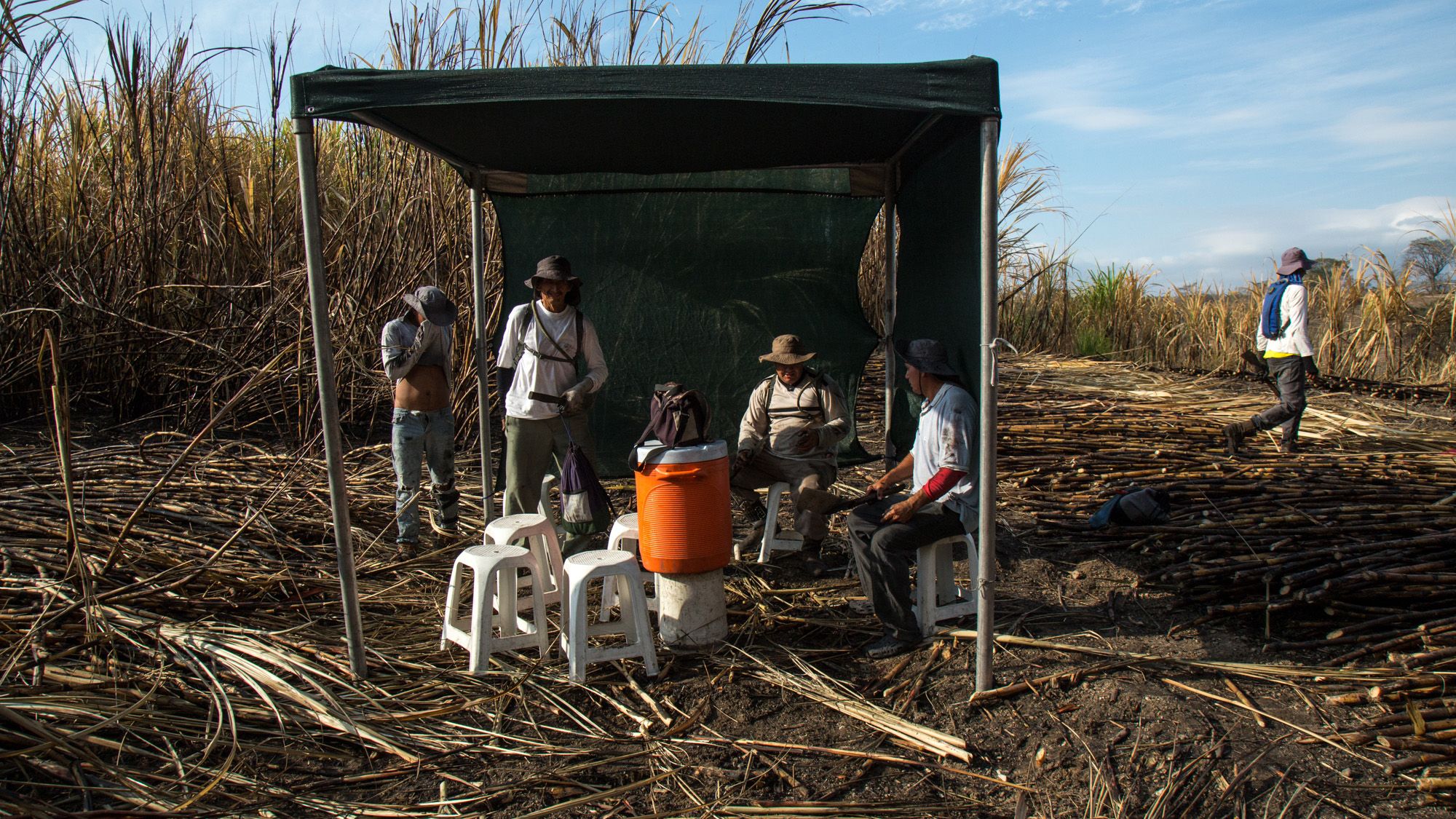
Image credit: Tom Laffay for La Isla Network
Farmworkers in El Salvador take a break from the heat beneath a shade structure. Data from La Isla Network suggest that mandated shade, rest and hydration breaks can reduce heat-related injuries in farmworkers.
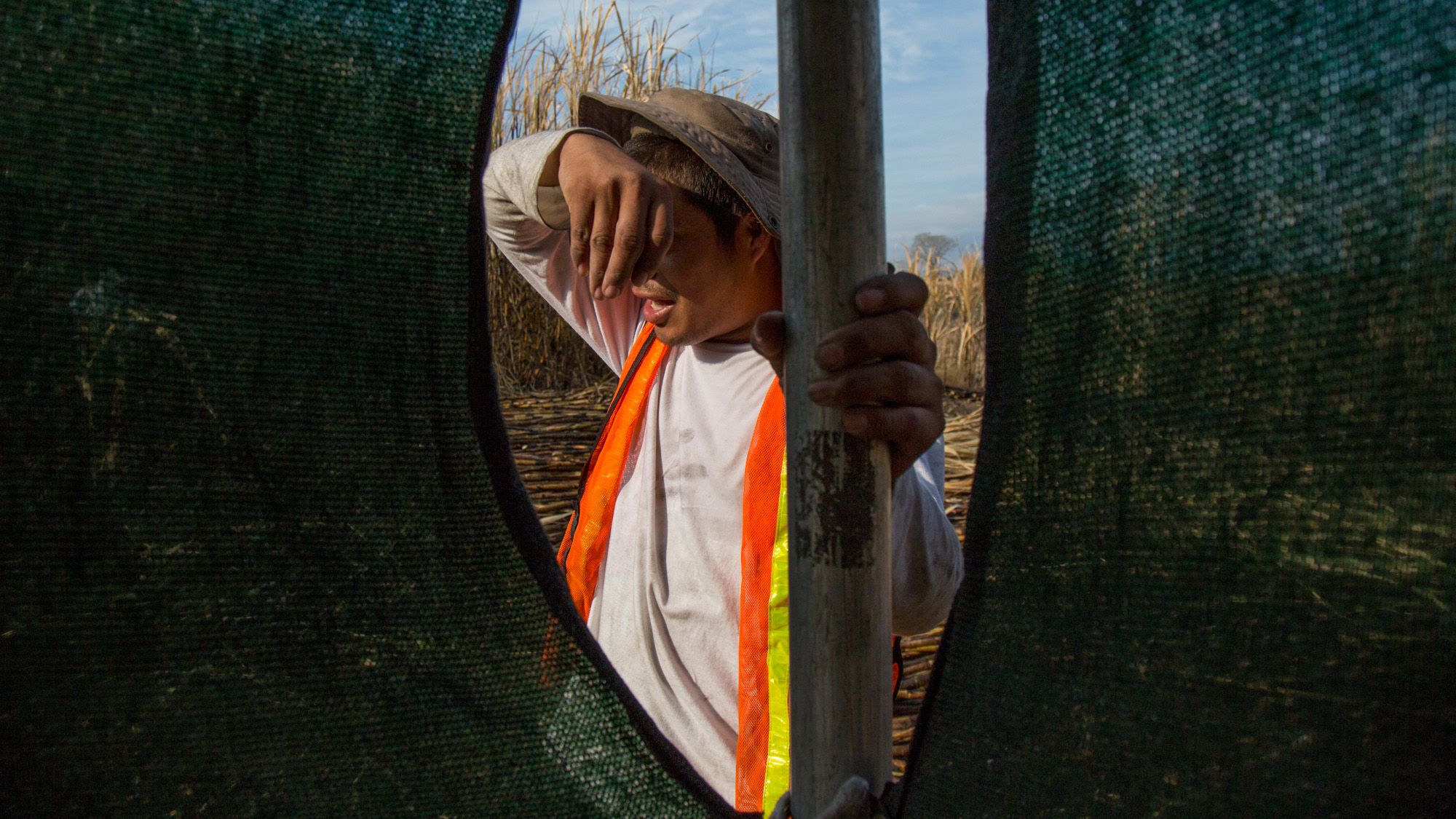
Image credit: Tom Laffay for La Isla Network
A farmworker wipes his brow outside a shade structure. While providing shade and rest periods may have upfront costs, data show they improve productivity.
Passive cooling
Evidence grade: Intermediate
Passive cooling reduces indoor temperatures without mechanical devices like AC. These strategies include modern technologies, such as reflective surfaces and roofs that reflect more sunlight and thus keep buildings cooler; shade structures and urban greenery; and traditional techniques, like courtyards, shades and ventilation.

“These are often low-cost material choices that can make a big difference in the safety and comfort inside a building and have a proven track record of performance [in lowering temperature],” said Kurt Shickman, senior fellow at the WRI Ross Center for Sustainable Cities.
These passive technologies also make AC more efficient, thus reducing costs and lowering demand for electricity on peak power days, Shickman said.

A worker whitewashes a roof in New York City. White reflects more heat than dark colors do, so white roofs can keep buildings cooler.
(Image credit: Bill Tompkins via Getty Images)
The evidence suggests cool roofs work at scale. A 2019 California modeling study predicted that state-wide adoption of this technology would halve the number of people exposed to heat wave conditions by 2050, while a 2024 study in London that modeled cool-roof deployment predicted that the technology could reduce heat-related deaths by up to 32% during heat waves.
Green spaces can also reduce heat exposure. In dense cities in Southeast Asia, the introduction of green infrastructure, such as trees lining streets and additional bodies of water, has been shown to reduce air temperatures by up to 4.7 F (2.6 C) and surface temperatures by 19.8 F (11 C).
Those interventions won’t work everywhere, though, in part because strategies that reduce deaths from heat could worsen those from cold, and cold-related deaths are four times more common globally, a 2025 study found. So places that have both cold snaps and heat waves will need to think about those trade-offs before implementing such strategies.

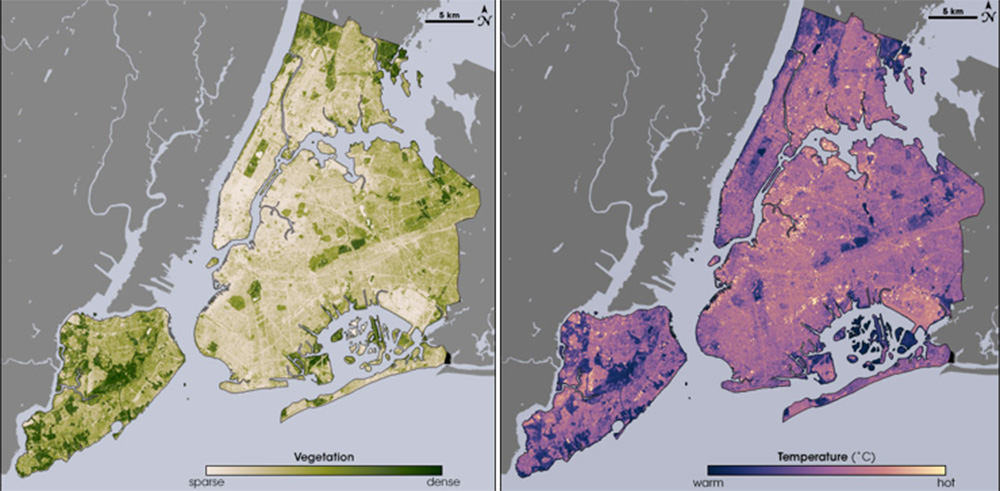
A map of vegetation (left) and temperature (right) in New York City. Areas with more greenery can be significantly cooler.
(Image credit: Maps by Robert Simmon, using data from the Landsat Program.)
City-wide heat warning systems
Evidence grade: Strong
Heat warning systems have been proposed to reduce heat exposure. There is evidence that some existing systems, such as New York City’s, work to reduce death or hospitalization. But whether these systems are effective depends on how they’re implemented.
Effective systems do far more than issue a temperature alert.
Shweta Arya, senior project manager for smart surfaces at the American Public Health Association’s Center for Climate, Health and Equity
“Effective systems do far more than issue a temperature alert” based on forecast high-heat events, Arya told Live Science — an idea other experts echoed. Instead, they trigger coordinated actions, such as reaching out to vulnerable populations, extending utility protections, and coordinating with healthcare systems for surges in the number of patients.
It’s difficult to test such plans in controlled experiments, but researchers try by comparing a city before and after an intervention, or by finding comparable cities or regions that did or didn’t implement a heat plan and assessing the plan’s effectiveness. These “natural experiments” offer a comparison without having an alternative universe as a control group. Academics using such methods concluded in 2025 that heat exposure prevention plans led to a 25% reduction in deaths attributable to extreme heat across Europe.
Personalized alerts
Evidence grade: Strong
While most warning systems trigger when temperatures cross a threshold that’s considered dangerous for an average person, Shickman said, “[i]n reality, people experiencing the same air temperature will have very different responses to it.”
One solution could be to individualize attention. Shickman pointed to a pilot program by insurance company Emblem Health in New York, in which a trained artificial intelligence (AI) agent supported 17,000 people with personalized advice targeted to those with complex health or social issues. The intervention halved hospital admissions compared with a control group that didn’t take part.
“We can go a step further and use technology to shift from generic, passive warnings to proactive ones that address individuals’ needs,” he explained.

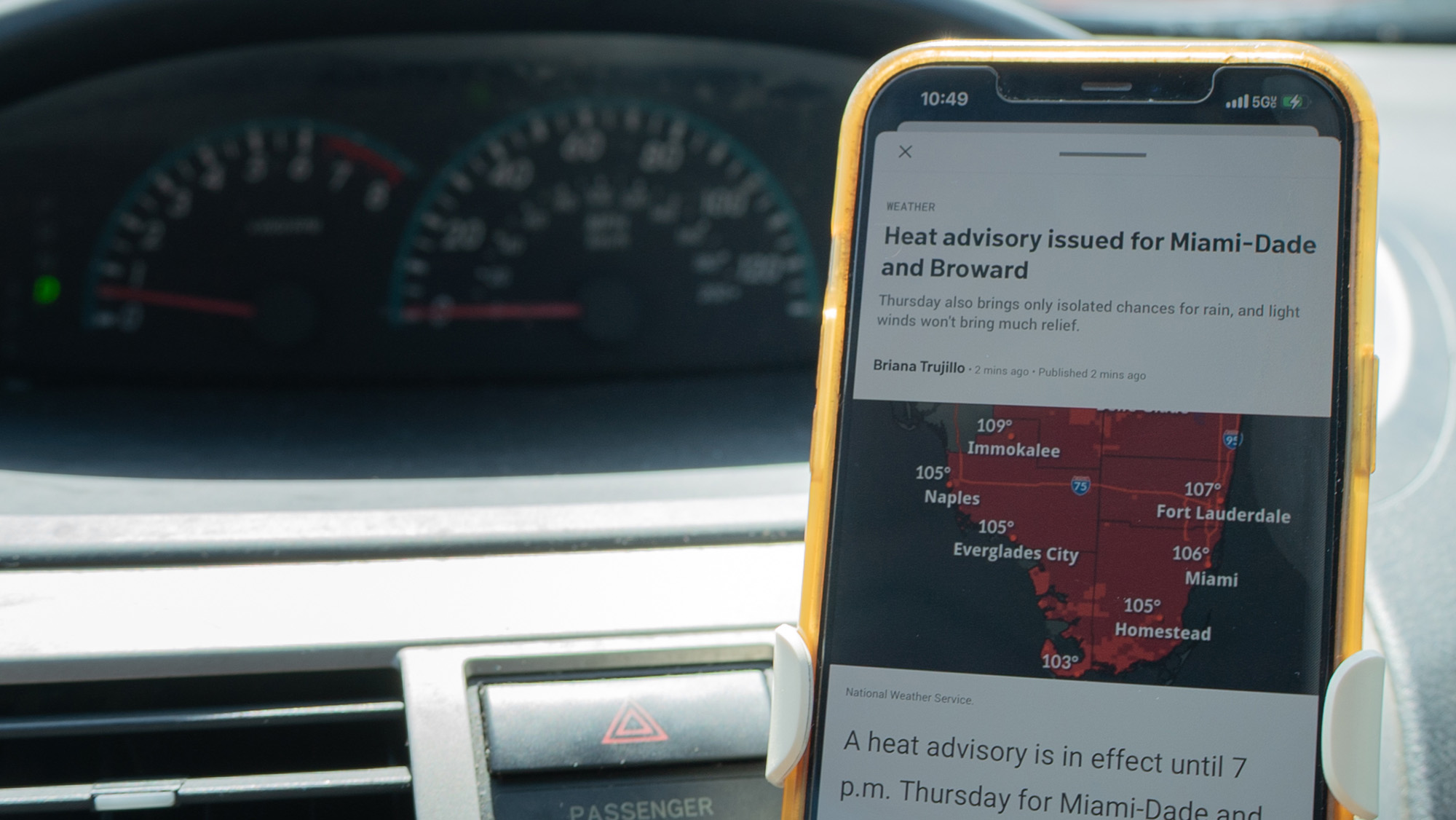
Personalized alerts can help, but they need to paired with other interventions to be effective, data suggest.
(Image credit: Anadolu via Getty Images)
Cooling centers
Evidence grade: Weak
A common strategy implemented during heat waves is the use of cooling centers — dedicated public spaces like libraries, schools, religious buildings or commercial locations where cooler air (often via air conditioning) offers respite.
Despite extensive adoption across the U.S. and internationally, there is very limited evidence that cooling centers reduce deaths or hospitalizations from heat exposure — likely because they’re not visited much.
For example, a 2024 study into Virginia’s cooling centers questioned the state’s existing strategy because communities that had cooling centers also had higher numbers of heat-related illnesses. Surveying the field, a 2025 review from the National Bureau of Economic Research questioned “whether those who can most benefit from reduced heat exposure can or are willing to access cooling centers, and whether travel to centers can actually increase heat exposure relative to staying at home.”
Wildfire smoke
Wildfire smoke is full of fine particulate matter known as PM2.5. These particles are 30 times smaller than the diameter of an average human hair and can penetrate deep into the lungs and the bloodstream, thereby increasing the risk of ailments such as heart attacks, asthma attacks and adverse pregnancy outcomes.
PM2.5 pollution contributes to tens of thousands of excess deaths every year in the U.S. And research suggests that wildfire smoke emissions could increase by 262% to 482% by 2055, depending on the level of carbon emissions.
Here’s what has been shown to work against this threat.
Commercial air filtration
Evidence grade: Intermediate
Data repeatedly shows that air filtration — whether through commercial HVAC systems or even a fan with a filter taped to it — reduces indoor PM2.5 exposure.
“For wildfire smoke, an important adaptation is cleaner indoor air, as simple as that may sound,” Leonard said.
Staying indoors protects individuals from the worst PM2.5 exposure. But a 2021 California study that used 1,400 air quality sensors showed that on days with nearby wildfires, smoke found its way into households, tripling PM2.5 compared with days without fires.
Putting newer-grade filters (MERV 16 or higher) on commercial systems, however, can reduce PM2.5 indoors by 81%, studies found. Similarly, portable air filters have been shown to reduce PM2.5 exposure in Montana offices, Seattle homes and Singapore apartments.
However, what’s still unclear is the extent to which air filtration will reduce deaths or hospitalizations related to wildfire smoke. This is because we don’t know whether interventions that make air cleaner in perfect conditions scale up; people may not replace their air filters, or they may use the portable ones only some of the time, for example.
Modeling of some air filtration measures, however, suggests that they could prevent 11% to 63% of the hospital admissions and 7% to 39% of wildfire-linked deaths.
Masks for outdoor smoke exposure
Evidence grade: Intermediate
Many people, including those who work in construction and other outdoor jobs, must venture outside during smoky days, and they need information and tools to protect themselves, said Gillian Capper, program manager at the American Public Health Association’s Center for Climate, Health and Equity.
For example, these measures include “distributing N95 respirators and requiring smoke protection plans for outdoor workers,” she said.
Modeling studies show that N95 respirators can reduce exposure to wildfire smoke by 90%, and a modeling exercise that used data from 2012 wildfires in Washington state showed that these masks decrease smoke-linked hospitalizations by up to 30%, compared with a group that did not use masks.
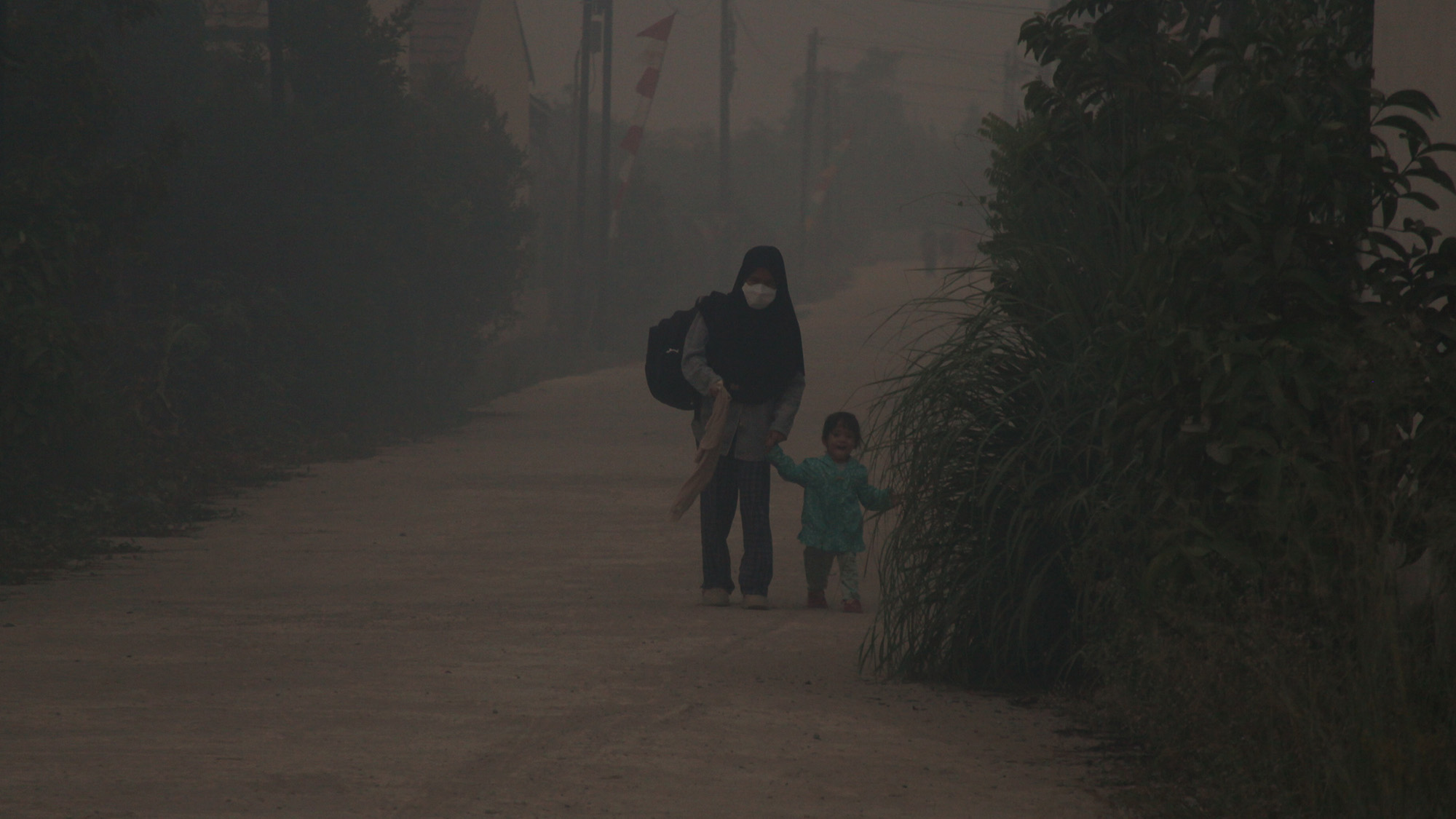
N95 masks are recommended for people who need to venture outside on smoky days.
(Image credit: Anadolu via Getty Images)
Land management
Evidence grade: Intermediate
The evidence to support a reduction in wildfires through land management is mixed. The idea is that by thinning forests, harvesting trees, clearing underbrush and doing prescribed burns to prevent unplanned conflagrations, we can reduce the risk of massive, uncontrolled wildfires.
“Reducing fuels today may help avoid larger, more severe fires and associated smoke impacts in the future,” Micah Hahn, an associate professor of environmental health at the University of Alaska Anchorage, told Live Science. “But relatively little research has directly measured those downstream health benefits.”
A 2022 modeling exercise led by U.S. Forest Service scientists compared four forest management scenarios — including actions such as forest thinning and prescribed burning — in the Lake Tahoe basin over the next century. It found that these measures reduced PM2.5 particle levels as well as smoke-related illness and death, compared with fire suppression on its own. It also modeled the health impacts for one year (2039) and found reduced health costs tied to such management.
But the benefits plateaued with more land burns. Research from the southeastern U.S. shows that management can become a large source of PM2.5.
Still, prescribed burns have an advantage over a spontaneously erupting wildfire, experts said. “With prescribed burning, one distinct difference is the ability to plan for smoke,” Heidi Huber-Stearns, director of the Center for Wildfire Smoke Research and Practice at the University of Oregon, told Live Science, and to “know when and where it will likely affect communities as compared to the unpredictability of wildfires.”
Smoke alerts
In theory, fire alerts, which use high-resolution air-quality data, could reduce smoke exposure, Laura Kate Bender, vice president of nationwide advocacy and public policy at the American Lung Association, told Live Science. Alerts would be paired with tailored guidance to notify people of dangerous smoke levels and to tell them when to take action.
Because these alerts are a fairly new idea, however, there’s little data showing that such programs would reduce smoke exposure or related hospitalizations and deaths. That said, there’s evidence from other fields: a 2012 World Bank modeling exercise calculated that weather data and early warnings saved nearly 800 lives per year in Europe, and could save a further 23,000 in the Global South if systems were upgraded.
Exclusive to Live Science Pro
“The hurricane warnings are good examples to follow, as people do act on these early warnings”, Kai Chen, faculty director at the Yale Center on Climate Change and Health, told Live Science.
Ultimately, the researchers we spoke with agreed that we need more data, which requires funding for further studies into which interventions are effective and can be scaled.
“We’ve put a lot of effort into understanding the impacts of climate change and related exposures,” Alahmad said. “But there comes a point where we need to move from studying the impacts to looking at interventions and solutions and see what actually works out there.”
How we evaluated studies
We categorized evidence as strong, intermediate, or weak. Here’s the criteria we used to assess them.
Strong: Data shows a reduction in disease, hospitalization or death at a population level. Data comes from either randomized trials or quasi-experimental protocols. Sample sizes are robust enough to show a clinically meaningful effect.
Intermediate: Data shows an improvement in an intermediate proxy measure, such as temperature or particulate matter concentrations, which has been tied to negative health outcomes, and/or data relies on modeling to show improved health outcomes at the population-level.
Weak: Limited data exists, or the data that does exist does not show a strong protective effect.
Burning up — How can we adapt to a warming world?
Help us improve Live Science Pro: We’re always trying to make our content better. Leave us feedback about Pro here.
TOPICS