





China just launched its rival to SpaceX’s Falcon 9 rocket for the first time, reportedly without providing any advance safety warnings.
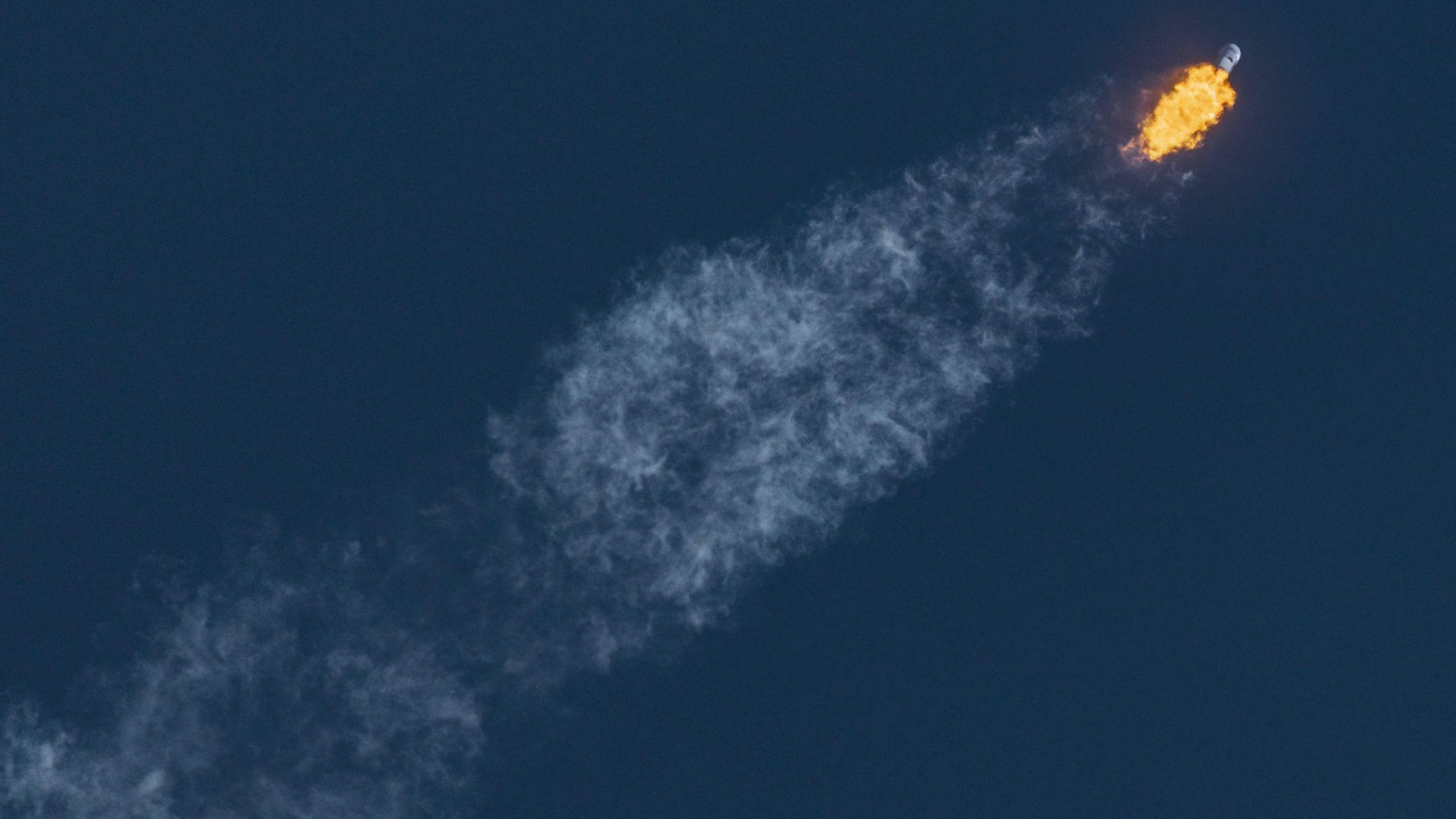
The 236-foot-tall (72 meters) March 12B rocket blasted off at 4.40 p.m. local time (4.40 a.m. EDT) on Monday (June 1), from the Dongfeng Commercial Space Innovation Test Zone in Inner Mongolia, an autonomous region of northern China.
The China Aerospace Science and Industry Corporation (CASIC), a state-owned rocket and missile manufacturer, announced the launch after it had already happened. The rocket had recently been sighted on its launchpad, but there were no apparent airspace notices issued for a launch, SpaceNews reported.
International airspace and maritime notices are issued to warn aircraft and boats of hazards associated with a launch, such as the potential for falling debris. They are standard global safety procedures for rocket launches, though analysts have warned that China’s space activities don’t always follow international norms, Scientific American reported.
The Long March 12B is a reusable, commercial rocket designed to assist in China’s internet satellite missions. In this case, the launch didn’t include a recovery test, though a first-stage recovery test is planned for a later date, according to CASIC.
The Long March 12B launched from the Dongfeng Commercial Space Innovation Test Zone in Inner Mongolia on June 1.
(Image credit: VCG/VCG via Getty Images)
The Long March 12B is China’s latest step toward developing reusable rockets that perform propulsive landings instead of being discarded after launch — a maneuver that has dramatically reduced the costs for SpaceX to build satellite megaconstellations in orbit. As a more powerful follow-on from last year’s Long March 12A, the Long March 12B has a low Earth orbit payload capacity of about 22 tons (22 metric tonnes).
The rocket successfully carried the 10th batch of China’s Qianfan, or “Thousand Sails,” satellites into low Earth orbit. China is building a megaconstellation of internet service satellites to rival SpaceX’s Starlink. And much like Starlink, the “Thousand Sails” satellites exceed brightness limits proposed by astronomical authorities, meaning they are a problem for astronomers studying the night sky.
Get the world’s most fascinating discoveries delivered straight to your inbox.
The new space race
China is ramping up its rocket launches as part of a new space race with the U.S., which includes positioning key infrastructure in Earth’s orbit and further afield. For example, both countries are planning to establish a permanent presence on the moon in the coming years. NASA’s current schedule plans to put astronauts on the moon in 2028, while China intends to land its taikonauts on the lunar surface before 2030. However, there’s no guarantee that the U.S. will colonize the moon first.
China pledged to accelerate its moon program in the wake of NASA’s historic Artemis II lunar flyby, Asia Times reported. The country plans to send humans to the moon in the Mengzhou spacecraft, taken into space on a Long March 10A rocket — the Long March 12B’s much larger crewed cousin, which was tested in February. Another rocket is then supposed to transport a Lanyue lunar lander to the moon on a separate flight, before rendezvousing with Mengzhou around the moon, Nature reported.