




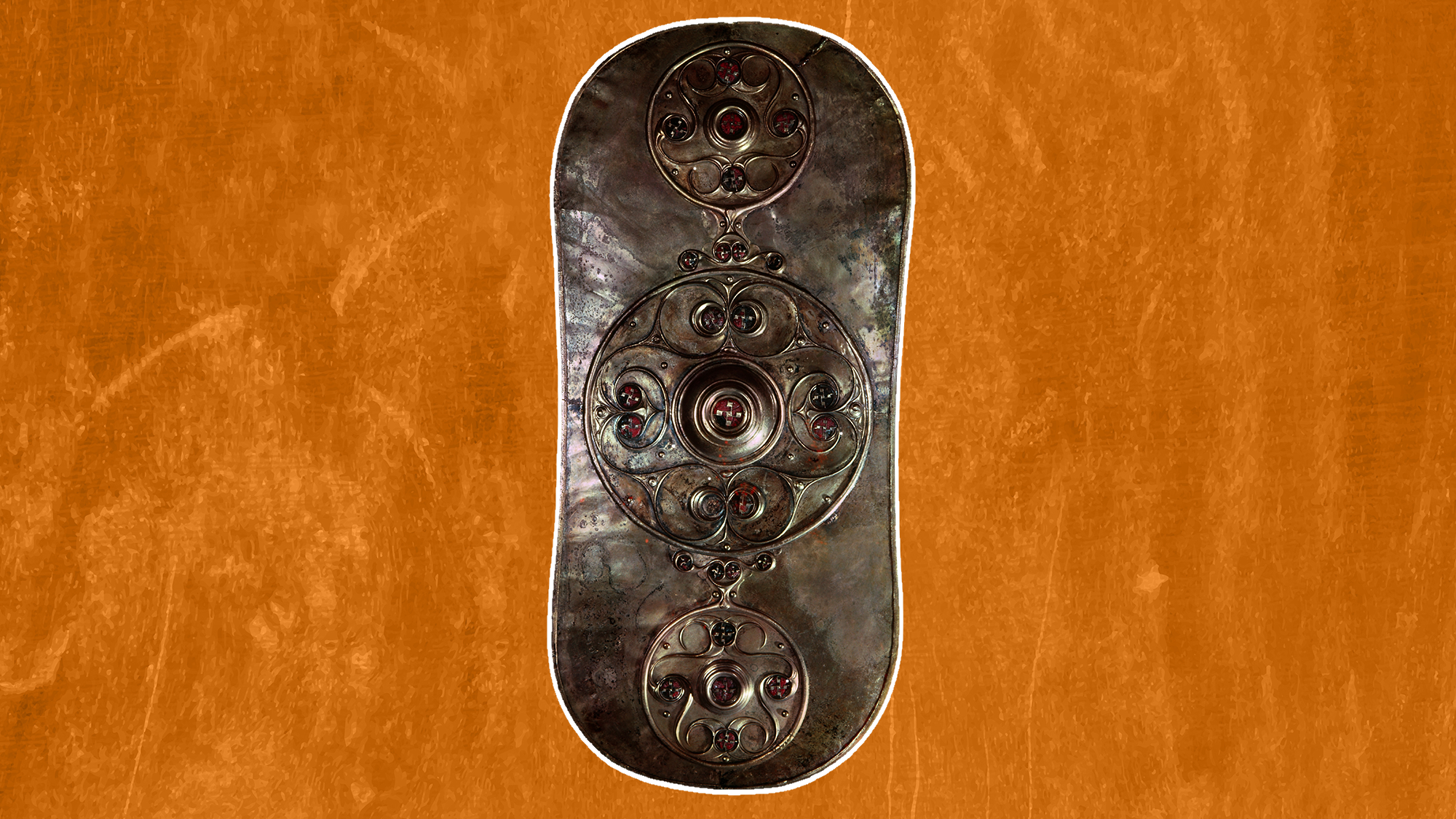


The Battersea Shield was pulled out of the River Thames in 1857.
(Image credit: Universal History Archive/Universal Images Group via Getty Images)
QUICK FACTS
Name: Battersea Shield
What it is: Bronze facing of a shield
Where it is from: River Thames, London
When it was made: Between 350 and 50 B.C.
This masterpiece of ancient Celtic weaponry was discovered by a laborer who was working on a bridge over the River Thames in 1857. Named the Battersea Shield after the London neighborhood near where it was found, the bronze artifact shows no signs of use, leaving archaeologists wondering how it ended up at the bottom of the river.
According to the British Museum, which acquired the shield directly from the construction worker who found it nearly 170 years ago, the weapon is made of several pieces of sheet bronze fastened together with rivets. The shield is about 30.6 inches (77.7 centimeters) long and 14 inches (35.7 cm) wide, and it weighs roughly 7.5 pounds (3.4 kilograms). Originally, the thin bronze shield facing would have been affixed to a wooden or leather base to create a substantial shield, but no trace of the underlying material has survived.
Experts think the Battersea Shield dates to the Iron Age because of the Celtic-style decorations that have been hammered into the shield from the back. The circular shield boss in the middle — which served to protect the wearer’s fist — is a specifically British form of decoration, according to the British Museum, suggesting the object was made in Britain and not imported from another Celtic culture.
Latest Videos FromLive Science
Palmettes and interlocking S-shaped motifs adorn the shield, and there are 27 circular decorations filled with red glass enamel and bronze in the shape of swastikas, which were symbols of good luck in ancient Celtic culture. These ornaments could also represent eyes staring back at an enemy, archaeologist Sophia Adams, a curator at the British Museum, has suggested.
The shield likely predates the invasion of Rome; Julius Caesar and his forces invaded Britain in 55 and 54 B.C., but they left soon after. The Romans didn’t return until the Roman emperor Claudius launched another invasion in A.D. 43, long after the shield was created sometime between 350 and 50 B.C.
Because there’s no evidence of damage to the shield, it was probably never used in battle, according to Adams. Rather, the shield could have been thrown into the Thames as a ritual sacrifice to the river or to an important ancestor.
“There’s something of a watery element to these shapes, the swirls and eddies,” Adams said in a London Museum video. “So I wonder if there’s almost an intention that this was meant to end up in the water.”
Get the world’s most fascinating discoveries delivered straight to your inbox.
The Battersea Shield is the “most famous object ever to be found in the Thames,” archaeologist Kate Sumnall, a curator at the London Museum, said in the video. As such, it has become a potent symbol of ancient Britain and has been featured on items as diverse as postage stamps, cigarette boxes and CD cases.
Can you put together last week’s Astonishing Artifact?
TOPICS