





Two Anglo-Saxon children interred together 1,400 years ago were brother and sister, an analysis of the skeletons’ DNA reveals — a confirmed familial link that is rare in Anglo-Saxon burials.
The siblings may have died at the same time from a fast-acting disease, according to a statement from the British archaeology show Time Team.
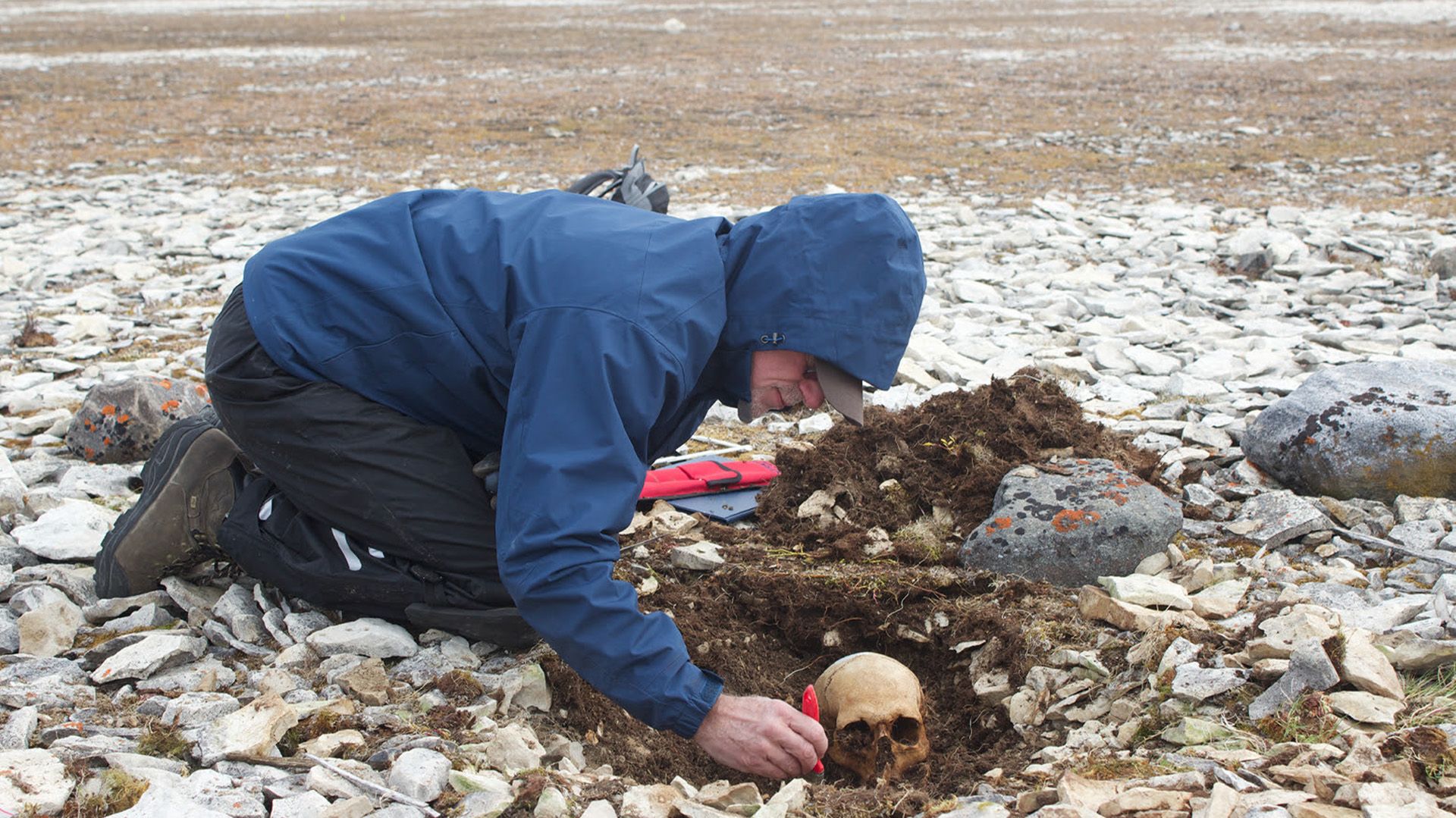
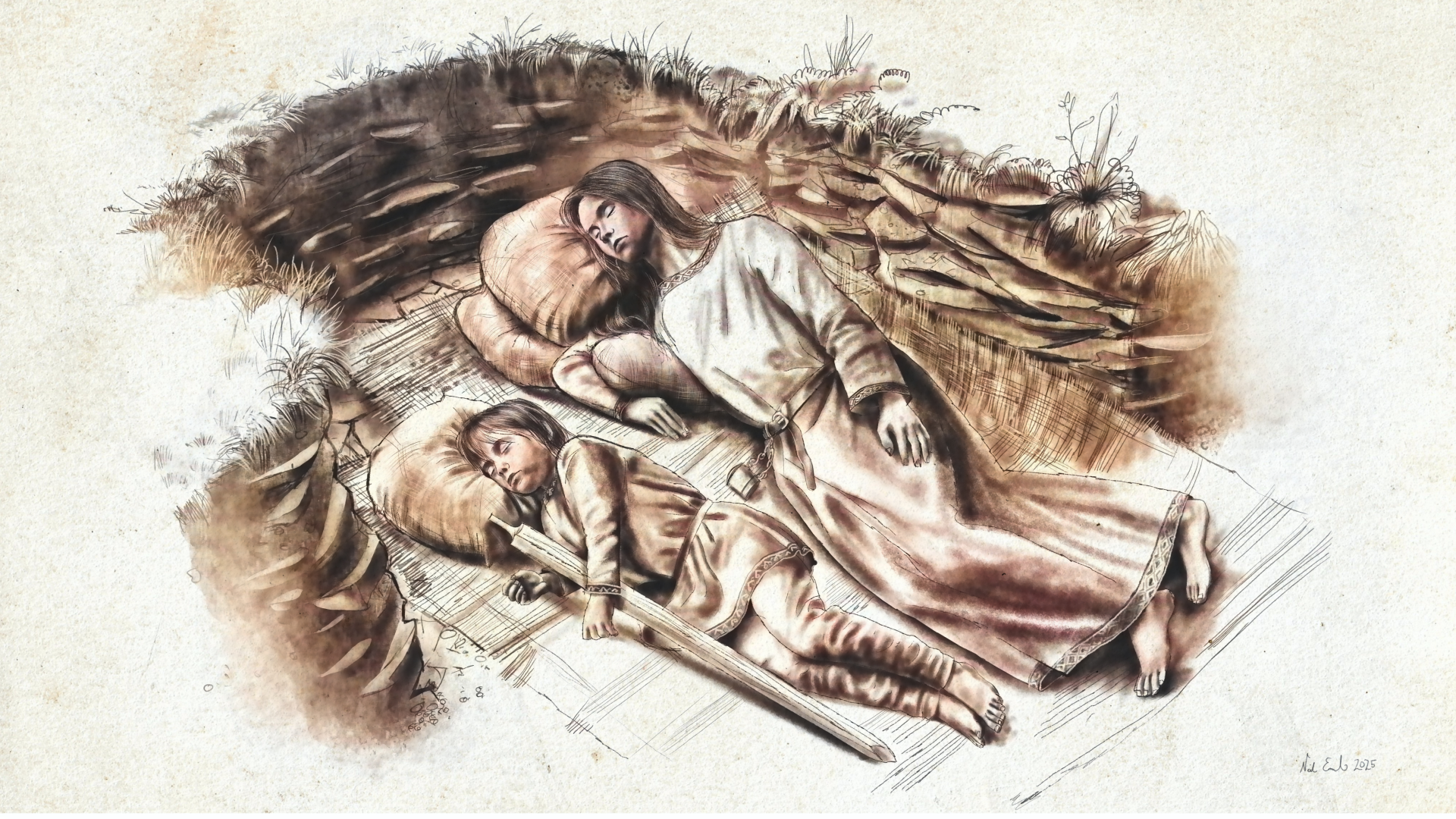
Archaeologists initially discovered the rare double burial in an Anglo-Saxon cemetery in Cherington, a village in southwest England, in September 2024. In the grave, the excavators found the skeleton of a 7- or 8-year-old boy holding an iron sword and the skeleton of a teenage girl buried with a necklace and a workbox — a cylindrical metal object that may have held thread and cloth — dated to the second half of the seventh century.
Time Team featured the excavation of the double burial in an episode released in January, but a DNA analysis of the skeletons was recently completed by scientists at the Francis Crick Institute in London. The results were announced on the April 14 episode of the Time Team podcast.
The DNA confirmed “we do have a boy and a young girl,” Jacqueline McKinley, the osteoarchaeologist with Wessex Archaeology who excavated the burial, said in the podcast. “But I know what their relationship is now — they were brother and sister.”
The siblings appear to have been buried in the same grave at the same time. The older sister was turned toward her little brother and was found at a slightly higher level, suggesting she had been propped up on pillows that have since disintegrated. It is “a very telling position,” McKinley said. “To me, that is a signal of what her role was before he died. She was somebody who would look after him, look over him.”
Because the siblings died at the same time, McKinley suspects a rapid-acting infectious disease may have been to blame. “I think she probably did catch something from him, and that’s why they died at the same time,” she said. It’s not clear, however, how the siblings died.
Further DNA analysis may be able to clarify if a pathogen was responsible for the siblings’ deaths. But McKinley pointed out that the bacteria that cause some life-threatening conditions, such as sepsis or meningitis, would not leave behind their DNA, limiting confirmation of the siblings’ cause of death.
McKinley is currently working on an Anglo-Saxon cemetery nearby in Wiltshire, which also contained double burials. At that site, however, the DNA analysis done so far has not shown any first- or second-degree relationships, such as siblings, parents and children, grandchildren and grandchildren, or uncles and nieces, she said. Rather, the relationships between people buried in double graves are helping confirm historical information that Anglo-Saxon households included adoption, fostering and extended family networks.
The discovery of siblings in an Anglo-Saxon grave “opens up a whole new vista,” Helen Geake, a Time Team archaeologist and Anglo-Saxon specialist, said in the podcast. “Immediately, your thoughts go to the wider family and what an awful tragedy this must have been to lose two children at the same time.”