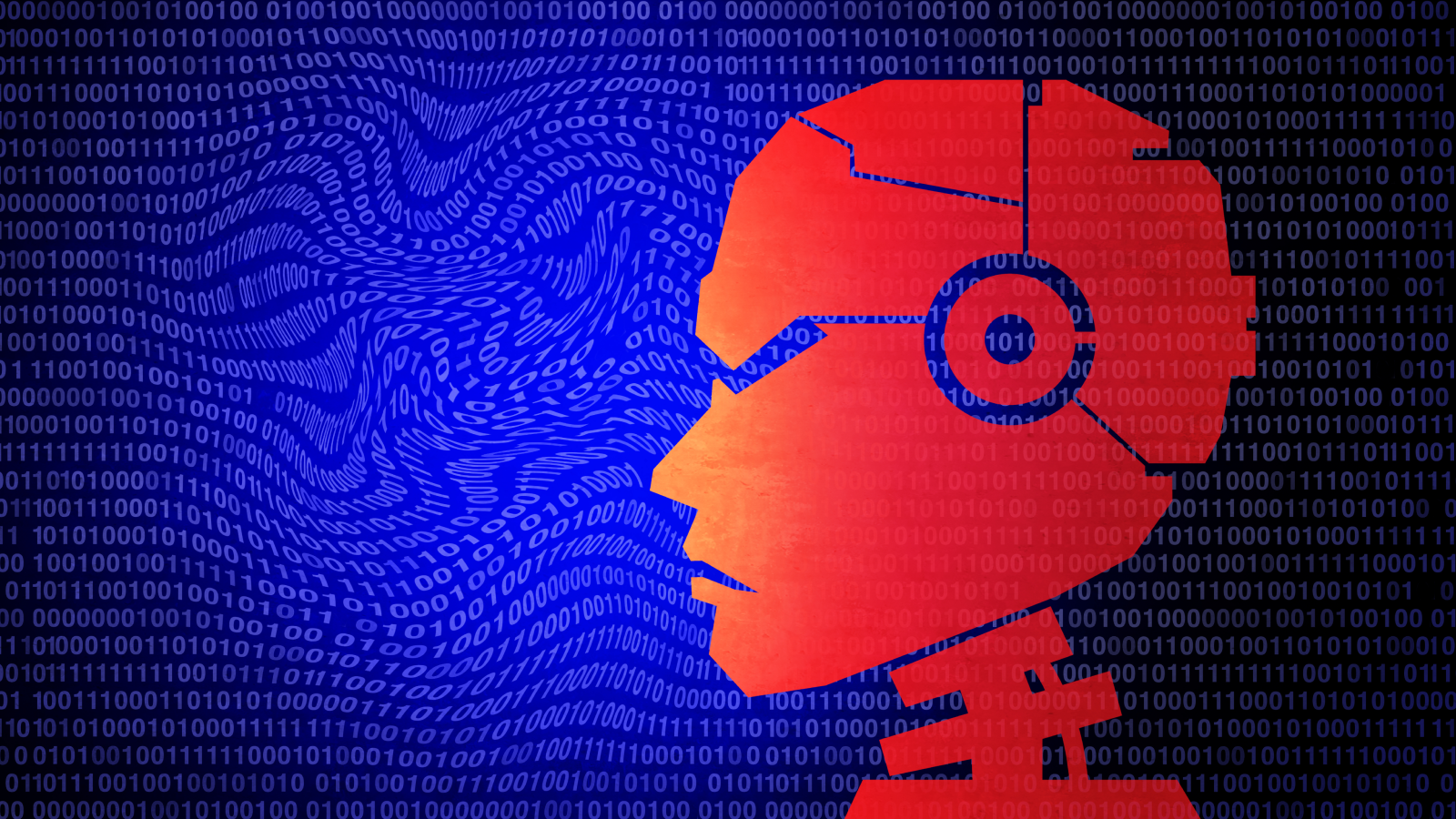




Artificial intelligence is already embedded in most modern cameras, from autofocus tracking to in-camera noise reduction, but with the speed of AI advancement ever-increasing, it’s now possible to use AI before you even pick up the camera.
So-called “agentic AI”, where AI positions itself as an assistant in everyday life, is becoming increasingly popular. Naturally, we were curious to see if its usefulness extended to life as a photographer, and what we could therefore learn about how AI positions itself as a companion across every walk of life.
In this article, we’ve detailed the results after a week using AI as a photography assistant from start to finish. AI was used during pre-shoot planning, suggested camera settings when out and about, checked AI-driven weather forecasts for low-light landscape photography and was incorporated into our post-processing workflow for noise reduction and sharpening.
The results were mixed, but our time with AI as a photographer’s assistant revealed a clear picture both of where it genuinely earns its place in a photographer’s toolkit alongside the best cameras and lenses — and where a photographer’s eye still matters the most.
Using AI for pre-shoot planning
Last fall, we had an idea to take some landscape images on a hill near us — a short walk away. If we did it in the right weather at the right time of day, we knew we could capture excellent results. By feeding our AI assistant details such as location, subject matter, time of day and equipment, we wondered whether we could quickly generate an idea of how we might tackle the location, and what kind of images we’d look to capture.
First things first: we fed it the coordinates of where we wanted to shoot. First error — it got the location completely wrong! But with a bit of guidance, it narrowed the location down to pretty much where we were planning to shoot. Our AI assistant then came up with suggested viewpoints, likely focal lengths, optimal shooting windows based on sunrise and sunset and, quite helpfully, reminders about access constraints or considerations around parking.
Although this wasn’t a nighttime scenario, for astrophotography, we can see AI proving especially useful at summarising complex planning variables into something digestible. If you gave it a location, it would certainly be good at letting you know where in the night sky, and at what angle, the object you wanted to shoot would be.
One thing that stood out was speed. Rather than hopping between apps, image libraries and Google searches, AI condensed the information into a single response. It can’t replace specialist planning apps, but it worked well as a fast first pass and gave a generalist viewpoint, providing a way to sense-check whether a shoot was worth attempting before committing more time to planning.
Because it was being given prompts about a known area, we could also cross-check and measure its responses. Fortunately, and reassuringly, most of what it came up with was accurate.
Camera settings

Next, AI was used to recommend camera settings for different shooting scenarios at different times of day, with different objects in focus: a shot of the town below the hill, a picture of the landscape around the hill, and so on.
Camera model, lens, subject and time were all specified, and we received suggested starting points for ISO, aperture and shutter speed, with helpful reasoning behind each suggestion. This was one of the nicest elements of this part of the test — AI outlined its thinking as part of the results, and even managed to point out some landscape-specific features (such as the limestone rooftops in our chosen vista) which gave some reassurance that it knew where we were and what we were asking.
Its recommendations were generally sensible. It tended to prioritize safe shutter speeds and conservative ISOs, producing usable images straight out of the box, but didn’t think particularly creatively, pointing out that some experimentation would be required for different scenarios. It provided a use case for normal conditions, if there was more sunlight, more clouds or different weather conditions. For beginners, this kind of guidance could be genuinely confidence-boosting.
Understandably, where AI struggled was in cases that simply can’t be predicted. This left us thinking that AI can suggest technically sound settings, but it can’t base its responses on intent. It doesn’t know whether you’re willing to accept noise for a decisive moment or sacrifice sharpness for atmosphere, for example — these decisions must be made on the fly.
Shooting conditions

One of the most promising uses we found for AI was in interpreting weather and atmospheric data. Rather than just presenting forecasts, AI could explain why certain conditions mattered.
Given a simple prompt (“Can you look at the weather forecast for tomorrow and suggest what we need to take into consideration at 11:00am”), it came up with a comprehensive (and, according to weather apps, accurate) interpretation of the weather, what the prevailing conditions meant for how the landscape would look, how this would affect camera settings and even what we’d need to pack in our bag to circumvent the effects of passing rain showers. It sounds simple, but we found that having this as a checklist helped us ensure we had everything we needed with us. Sometimes, you need someone to point out the obvious.
Testing AI for night-sky work, it summarised satellite imagery and seeing predictions along with forecasts, which was genuinely helpful. It translated technical metrics into plain language, making it easier to decide whether a marginal forecast was worth the effort.
However, it’s worth pointing out that AI cannot really replace specialist tools here. Dedicated astronomy apps and meteorological services remain more precise scientifically, but also more transparent about uncertainty. AI has a habit of rushing past or smoothing over ambiguity, presenting what should be done in different conditions with more confidence than is truly justified.
Post processing

Post-processing is where AI feels most mature, and many image-proceessing tools now have AI embedded into their software for tasks such as noise reduction, sharpening and spot removal.
In a landscape setting, the biggest advantage was selectivity. AI could reduce noise aggressively in flat areas while preserving detail and texture where it mattered. Sharpening algorithms are similarly nuanced these days and could dramatically enhance detail without introducing artefacts.
In our experience, though, it must be said that AI can be heavy-handed. Images can take on a synthetic look when AI is over-used: Too smooth, too crisp and oddly lifeless. If shot correctly, most images need only subtle tweaks in post-processing, and the human eye is still far better than AI at doing this.
Where AI helped, and where it failed

After using AI for pre-, during and post-shooting over the course of a week, some patterns became obvious. It was excellent at technical optimization, preparation and organization. After a bit of prodding, with the right background information and the right prompts, it knew the desired location, it knew the weather forecast, it knew what time of day would be best for the shots we were after and it even knew what landscape features we’d be able to focus on at a given location. It also helped with issues around logistics, such as parking and access.
However, AI doesn’t yet understand why a photographer might break the rules. Sometimes, imperfect conditions work. AI can’t deal with emotion — it just knows a set of technical “rules.” AI also doesn’t understand local nuances such as microclimates and real-world unpredictability, which are exactly the kinds of things photographers want in their shots.
Overall, using AI as a photography assistant for a week didn’t improve our imaging output, but it did make us more efficient. We ended up thinking of it as a desk-based assistant, and it helped in planning and refining technical decisions like what kinds of lenses to pack. Having a gear checklist that was specific to the weather conditions was also surprisingly useful.
One thing we found particularly helpful was asking our AI assistant to shorten its responses. AI has a habit of trying to cover all bases and coming up with rather long-winded explanations for things that don’t really need to be decided in advance. It somewhat takes the magic out of the process, but if you ask the right things of it, it can present the information it provides well.
AI was a tool for asking better questions, not answering them. We did find that its responses sometimes included things we hadn’t even thought of, but then that is the point, really. If you engage with these responses and ask questions of yourself and your own photography, it can be very useful.
If you’re hoping that it will replace leg work, real-world experience and human judgement, then — thankfully! — you’re likely to be disappointed.
In accordance with Live Science’s artificial intelligence policy, while the use of AI is the subject of this article, it was not used in the article’s creation or production.