Much of the discourse around artificial intelligence (AI) focuses on grand ideas such as the rise of a hypothetical artificial general intelligence (AGI) and superintelligence. Speculation swirls around the likelihood that the technology will thin out the job market, or even precipitate the death or evolution of human creativity. We haven’t focused as much on the multitude of subtle yet hugely consequential ways in which AI is reshaping the social fabric of our society, and how we collectively imagine the future.
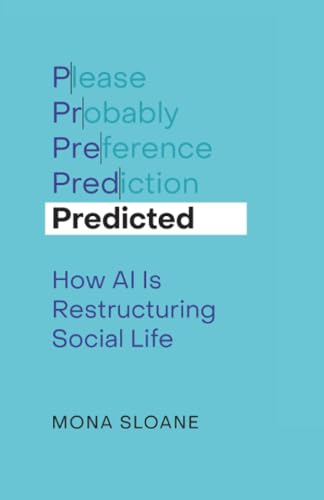
That’s the argument sociologist and AI researcher Mona Sloane, an assistant professor of data science and media studies at the University of Virginia, puts at the center of her new book, “Predicted: How AI Is Restructuring Social Life” (University of California Press, 2026). Whether we consider email filtering, prediction markets or social media platforms, AI systems are embedded in the heart of how we interact with the digital world. Indeed, AI is so ubiquitously integrated into everyday interfaces that it’s given rise to a new kind of “prediction logic” that makes assumptions about who we are and how we are likely to behave.
In this excerpt, Sloane compares the AI technology we use today with the oracles of ancient Greece, framing it as an omnipotent presence that has moved to organize society through the prism of prediction models. This in turn affects how we learn, live, love and even picture the future.
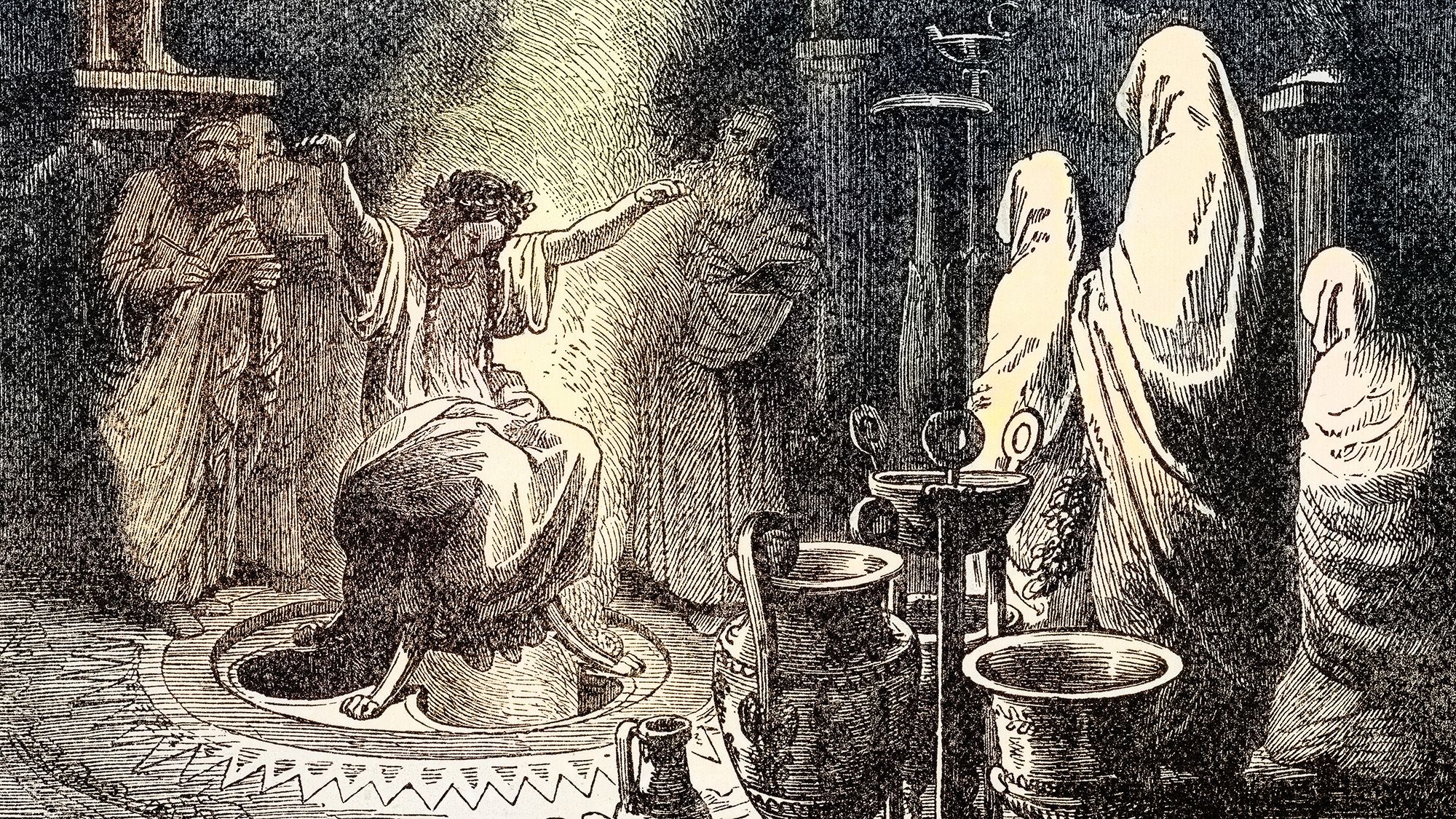
We live in a world of oracles. These oracles constantly feed us predictions that shape our social lives — how we socialize, love, work, gain access to resources. Like in ancient Greece, predictions occupy a prominent role in our society. We consider our oracles so mighty that their predictive power rules over the fate of whole economies and even geopolitical constellations. Where the oracle is, there is the center of the world.
But unlike in ancient Greece, our oracles aren’t high priestesses delivering divine prophecies. They are artificial intelligence (AI) systems melted into the infrastructure of everyday life. Today, it is nearly impossible to evade the grasp of AI predictions. I voluntarily and involuntarily use AI on a constant basis: by using email providers that build on the predictive properties of AI for spam filters, by conducting online banking and getting enrolled into AI-automated fraud detection, or by using generative AI for supporting administrative chores. It has become part of how I experience the world.
It can be a relief when it helps me do things I dread or am bad at, such as produce a spreadsheet template I desperately need, help streamline language produced by different authors for a report, or generate a specific image for a presentation. Often, I must intently handhold the AI, checking and fixing its outputs. And sometimes, with deep frustration, I give up and start all over to complete my task manually.
The omnipresence of AI prediction can make it easy to think of these systems as inevitable, quasi-natural phenomena we are subject to, rather than a part of. But they are quantitative concepts that arise from social agreements about how we ought to capture and interpret the world around us.
Get the world’s most fascinating discoveries delivered straight to your inbox.
“Quantitative concepts are not given by nature: they arise from our practice of applying numbers to natural phenomena,” wrote Rudolf Carnap, a logician and professor of philosophy of science, in 1966. His point was that numbers can be useful, because they allow for information to travel more easily across contexts, as a sort of language. They also make mathematical predictions possible.
To him, this was first and foremost useful for engineering modern life: A quantitative language allows for the articulation of quantitative laws that, in turn, facilitate the routine generation of mathematicized predictions, particularly in the realm of physics. Being able to predict how energy, compounds, and materials will behave in certain configurations is the reason humans were able to build the conveniences of airplanes, cars, and telephones. For Carnap, predictions were simply instrumental in this way.
AI’s ability to predict is changing how we think about the future.
(Image credit: Yana Iskayeva via Getty Images)
Today, almost 60 years later, this pragmatic approach to mathematical prediction has been turned on its head by AI. Prediction is no longer just a handy tool in physics or engineering. The promises of AI’s oracular power have turned prediction into a logic for structuring social life. This is a dangerous proposition. It implies that AI is always necessary or even inevitable and diverts attention from the social forces shaping ideas around this technology in the first place.
AI systems are not natural phenomena that happen to us. They are collective expressions of society. As such, they are not just a hype or a deception concocted and executed by global tech elites. They indicate a wider shift in how we imagine and enact society. Many critical discussions of AI characterize this phenomenon chiefly as heightened surveillance and capitalist extraction. But this is a myopic diagnosis. AI’s most powerful effect is the subtle yet comprehensive recalibration toward prediction as a guiding principle for organizing society. In this book, I call this phenomenon the prediction paradigm.
AI is something that we do as part of going about our lives and participating in society — it is social infrastructure, affecting how we relate to one another and how we act in public and in private. Like all infrastructures, AI allows resources and ideas to flow in certain directions, but not others. AI uses data from our collective past to predict our individual future. And because AI deals in futures, it solidifies a linear time regime that hardens our social commitment to causality: The past always predicts the future. The problem of AI is not the rise of intelligent machines, but the extraordinary social significance ascribed to this linearity, fetishizing the future and leaving little room for deliberations about what (other) futures may be possible or we may want.
Reprinted from Predicted: How AI Is Restructuring Social LIfeby Mona Sloane, courtesy of the University of California Press. Copyright 2026.
University of California Press
Predicted: How Ai Is Restructuring Social Life: 1 (co-Opting Ai)
In Predicted, Mona Sloane offers a pragmatic framework for understanding these transformations around prediction, classification, and linearity, proposing that we think about AI as a social arrangement that we coproduce. Drawing on over a decade of empirical research and real-world examples, this book invites us to see AI for what it is: deeply social, deeply political, and open to change.