





Follow us
Add us as a preferred source on Google
Subscribe to our newsletter
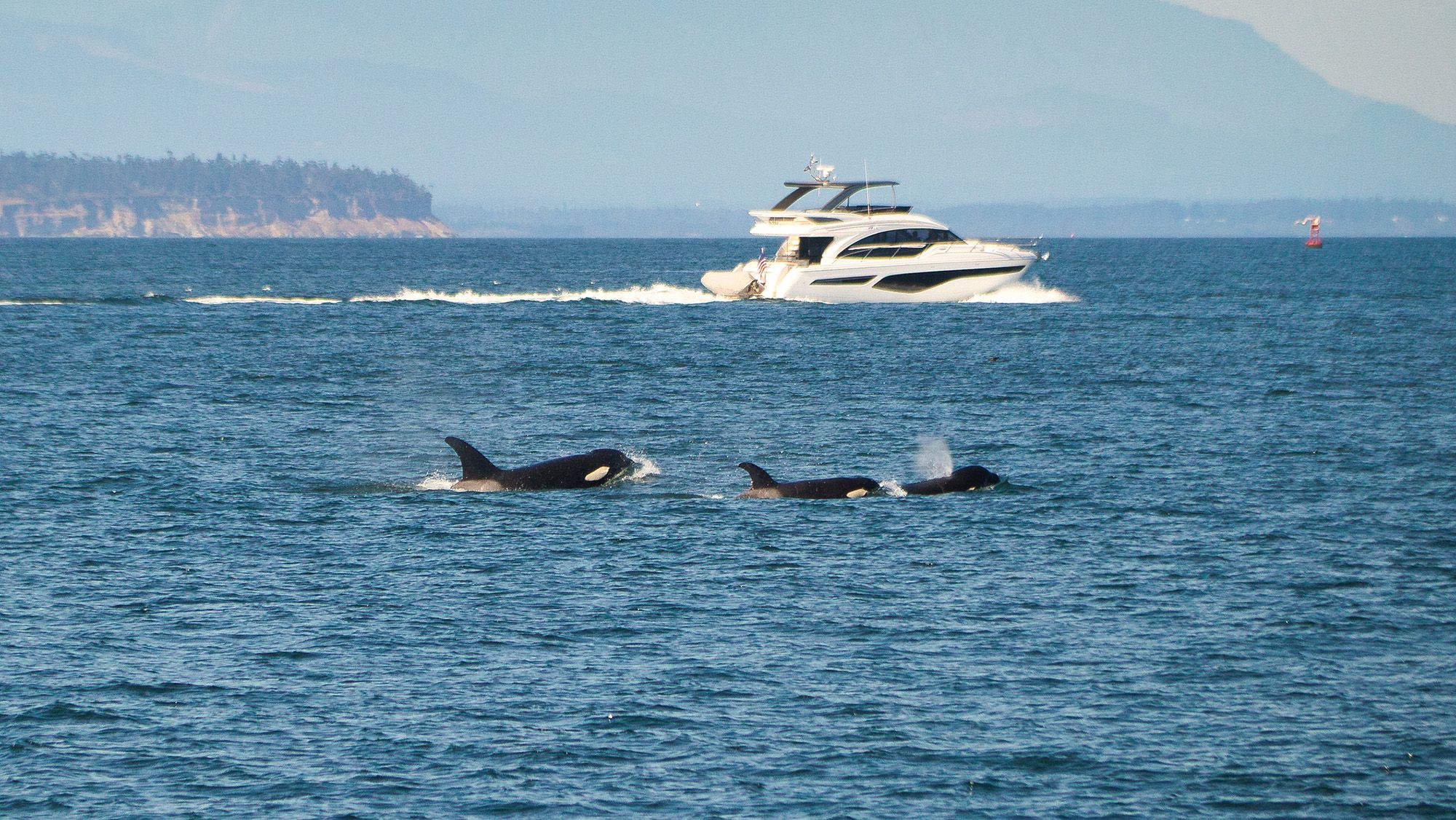
Over the past six years, orcas have made headlines for a unique behavior: Some individuals have repeatedly damaged or destroyed rudders on boats. The behavior has prompted a wide range of explanations, including that it’s playful, a form of revenge, a warning against getting too close to the pod, or even a type of cultural transmission, in which one orca observes another interacting with a boat and then imitates it.
But Christian Frings, a cognitive psychologist who studies how humans control their actions, thinks it could be deliberate.
While Frings, who is also chair of general psychology and methodology at Trier University in Germany, does not study orcas directly, he believes that theories developed to explain human behavior could provide insight into this orca behavior. Orcas (Orcinus orca), he said, may be a “test case” for whether a wide variety of species can anticipate how their actions will change the environment and then take those actions deliberately, with the goal of making those changes.
He published his theory as a commentary Sept. 8 in the journal Animal Cognition.
This doesn’t necessarily mean orcas have wicked motives or are ramming boats with the goal of sinking them and scaring or harming people. It may be that orcas just like the sensation of smashing into a rudder or being in the water with a wonky, disabled boat. Once they learn this, they anticipate the effect — for example, how a boat moves or feels when the rudder is damaged — and then carry out the learned action sequence that creates that effect.
Frings’ theory doesn’t attempt to explain why orcas (also called killer whales) would seek to damage a boat or rudder. “Why they want this effect is a secondary question and while of course interesting it touches a quite different topic,” Frings told Live Science via email.
Christian Frings is a cognitive psychology professor at the University of Trier in Germany and the director of the Institute for Cognitive and Affective Neuroscience. His research explores how the human mind turns perception into action and why our recent experiences can shape what we do next, often without us noticing.
Live Science spoke with Frings about his hypothesis and why theories that describe how humans execute a series of motor behaviors — called action control frameworks — might help us understand how other complex animals behave in the wild.
Kenna Hughes-Castleberry: Why is it important to study orca behavior, and what can studying orcas tell us about animal cognition?
Christian Frings: In truth, I’m the wrong person to get that question because I should mention right from the start that I’m a cognitive psychologist. So usually, I’m studying human behavior. So, it’s not really that I’m interested in orcas, per se, more in the question of what is actually comparable between human action control, human cognition and animal cognition.
KHC: Can you explain the action-control framework for our readers?
CF: It’s a group of theories. The most important point is that agents — humans and maybe orcas — control their actions by actually anticipating the behavioral and the sensory consequences of their actions.
So let’s take the example of turning the light on. The action starts with anticipating how it will look when the light is turned on. It does not start with pressing the light switch. It starts with the visual effect you’re going to produce. This visual effect then actually retrieves from memory a motor program, and this motor program actually produces the anticipated effect. So it’s all about anticipating action effects.
In the human action-control literature, that is the most dominant view from different theories of how humans actually control their behavior: by anticipating the effects they’re going to produce.
KHC: How does that apply to the orca behavior?
CF: The typical explanation for [the boat-attacking behavior] is more stimulus response or cultural transmission. Stimulus response would mean, in this case, the rudder elicits an approach or attack behavior. So any rudder should just elicit this behavior. [Editor’s note: Stimulus-response theory is a psychological concept in which a stimulus triggers a particular response from an individual. Examples include a cat being sprayed with water when on the couch and jumping off the couch in response, or a dog salivating when it smells food.]
Cultural transmission would actually be observational learning. That means one orca sees how another orca is attacking a rudder and then just imitates the behavior.
I’m not saying that these explanations [stimulus response or cultural transmission] are wrong, by the way. I just want to add an additional layer of explanation.
I suggest that they actually anticipate the sensory consequences of their action. So maybe they anticipate how it would look and how it would feel if they destroy the rudder. I would not call it [their behavior] play, but maybe they’re just testing or probing what kind of effect they’re going to produce.
It’s a little bit like human babies, when they start to move — or move their arms or move their legs — they’re also typically trying to produce effects, right? It’s also when they develop language, this kind of babbling, right? That is a kind of testing or probing action effects.
Maybe this is something the orcas also do. I don’t know. But at least it’s [another theory].

Whale-watching tours help the public see orca behavior from a close-but-safe distance.
(Image credit: Francesco Riccardo Iacomino via Getty Images)
KHC: So would the orca be anticipating something like the boat becoming impossible to steer?
CF: Actually, no. Let’s assume for a moment it [that a broken rudder is] what they want to produce — because they somehow anticipate how it would look and how it would feel if this yacht cannot be steered anymore.
If they can anticipate, then this anticipation of this effect will retrieve from their memory what they have to do to actually produce this effect. And it’s not about [higher-order] thinking. That is a very important thing.
So we do not need human-like intentions to impose that on the orcas. I’m not saying that, because I really think it’s, in a way, comparable with turning a light on. When you turn your light on, you also do not have big thoughts about that. You just want to turn your light on. So you want to produce an effect, and you do not think about all the different, quite complex muscle movements you have to do if you actually press the light switch.
I would say, again, it does not really need higher-order cognition or something like that. We do not have to impose motives or complex thoughts on the orcas for that.
My point is just to look at this behavior from this somewhat different angle, adding this layer about action effects.
Christian Frings
KHC: What are the bigger implications if your theory is correct?
CF: My point is just to look at this behavior from this somewhat different angle, adding this layer about action effects. Because if you, for a moment, take my ideas for granted and say, “OK, maybe he has a point,” then this opens up the possibility to manipulate the orca behavior.
Because if the orcas anticipate effects and this action effect produces a certain behavior, if you change the effect — let’s say the rudder [material] or the shell of the boat so that the orca thinks he’s producing a certain action effect — then he shows his behavior, but this behavior does not produce the action effect anymore. So the orca will probably change the behavior. It might be dangerous because it might elicit somewhat different — maybe even more dangerous — behavior of the orcas, but it might also stop it.
But it gives you a natural angle to manipulate the orca behavior. [Editor’s note: In a follow-up email, Frings noted that this could involve testing a different version of the boat rudder. If the original rudder, when damaged, leaves the boat floating in a “helpless” way, a second one could be tested that allows the boat to be maneuverable even when attacked. If Frings’ hypothesis is right, then by breaking the link between the orcas’ planned actions (ramming the boat) and the outcome they want (helpless boat), you could change the orcas’ behavior.]
But again, if you try to change it this way, it might be a little bit dangerous. So I would not suggest doing that with a boat with real people on it, because if you change the environmental consequences, they [the orcas] might actually go a little bit crazy. Maybe they might try to produce this effect with a different kind of behavior, and that could be even more aggressive. But I don’t know. I can’t predict that.
KHC: So the orcas are a case study to test this framework, right?
CF: Exactly. And for the general approach, it’s important to try to find action frameworks that can travel across species that are not specific for one particular species. Because at the moment, we might have action-control models for humans or action-control models for the great apes.
Exclusive to Live Science Pro
But maybe we can just have a family of action-control frameworks, because maybe orcas and humans, and at least the great apes, control their behavior concerning action effects in quite the same way, to be honest.
Another important point here that makes it, for me personally, very interesting: This is behavior in the wild. So a lot of the research on action control is typically in the lab under very controlled conditions, so in a way, this is moving from humans to orcas but also from lab into wild behavior.
I think one misconception is actually that the models from the lab are not applicable to behavior in the wild. That’s not only true for orcas; it’s also true for humans. And I don’t like that.
And again, this paper is a nice showcase that lab models can actually be used to explain behavior in the real world.
This interview has been condensed and edited lightly for clarity.
Help us improve Live Science Pro: We’re always trying to make our content better. Leave us feedback about Pro here.