




About 2,500 years ago, people in what is now India and Sri Lanka were manufacturing an exceptionally high-quality type of steel. Wootz steel was extraordinarily strong and sharp, and they exported it globally — in the Middle East, it was used to forge the legendary Damascus blades. But around A.D. 1100, it vanished, and the knowledge of how these ancient people forged such high-carbon steel was lost.
In this excerpt from the book “The Age of Alchemy: How Early Innovators Shaped Modern Chemistry” (Profile Books, 2026), author Kit Chapman, a science journalist and honorary researcher at Falmouth University in the U.K., reveals the extraordinary story of Wootz steel and the experiments that finally showed how it was created using furnaces powered by monsoons.
During the Industrial Revolution, it became clear that something far stronger [than iron] — steel — was needed. Victorian engineers had started to build larger projects than anyone had ever seen, and were using cast iron for their structures, such as the first metal bridge, at Ironbridge in Shropshire. But cast iron was too weak. In 1847, a cast-iron railway bridge over the River Dee collapsed less than a year after it was opened.
If the world was going to modernise, it had to come up with a better material. Steel was the obvious answer, but how did you get rid of just the right amount of carbon in pig iron? The answer was found by an inventor called Henry Bessemer, who was hired by the British government to try to make cheap steel for use in guns. Bessemer’s great innovation was to suggest that, once you’ve got your molten-hot pig iron, you blow air — a lot of air, between 85,000 and 550,000 litres per minute — up from beneath it.
This results in the iron undergoing oxidation, both increasing the temperature of your molten steel and reacting with the impurities. The impurities form a scum at the top of the furnace called slag. This is a mix of metal oxides and other unwanted byproducts such as silicon dioxide, which then needs to be removed, decarbonising the pig iron into the exact ratio you need for steel. With the steel already molten, it can then be poured out into whatever shape you need.
Bessemer became one of the leading figures of the “Second Industrial Revolution” at the tail end of the nineteenth century. He was knighted by Queen Victoria; his steelworks in Sheffield led to it becoming synonymous with steel; and in the US, eight towns were named after him. Without Bessemer, the world would never have known steel’s true potential, and our skylines wouldn’t be dominated by modern structures that rely on them, such as skyscrapers, railroad tracks and suspension bridges.
Except there’s a big problem. “The story you’ve been told about metallurgy is from a western viewpoint,” explains Gill Juleff, an archaeologist from the University of Exeter, and the reason I’ve come out to Sri Lanka. “It comes from colonialism, and the dominance of Europe. In Asia, there were technologies that were making very good-quality steel. The makers of iron understood it. All of the evidence suggests that India was very familiar with it. They were producing hardened chisels that carved granite even in the Iron Age. You can only do that with steel.”
A Damascus blade forged from Wootz steel.
(Image credit: HDesert via Getty Images)
As early as 500 BCE, steel began to originate from the Indian subcontinent that was far greater in quality than any other. The blades were forged with intricate, elaborate patterns and banding, like the marbling of the finest cut of steak. These were harder than any other blades, cut sharper and cost more.
Arabian, Greek, Roman and Chinese writers all described this wonder-material, which became so legendary that a Persian euphemism for cutting someone with a sword was an “Indian answer.” It was known as Wootz steel. Just like pepper or other commodities from southern India that moved west along the Silk Road, the steel’s rarity made it a luxury item.
“It’s not a material that your everyday blacksmith would necessarily want,” Juleff says. “High-carbon steel is an awful lot harder to work. It’s not for arrowheads or kitchen knives. It became used by specialist swordsmiths.” Then, around 1100 CE, the mysterious, intricately patterned blades simply vanished. Subsequent versions emerged (the most famous is Damascus steel), but Wootz steel had disappeared completely. It left a gaping hole in the history of chemistry.
No one could figure out how the Sri Lankans produced steel of such fine quality, and with such intricate patterning, well over a thousand years before it should have been possible. That is, until Juleff discovered the answer. She realised that archaeologists had been looking at the question based on how Europeans worked with iron.
“We discovered that the furnaces were all placed at the top of hills,” Juleff explains. “Hundreds of them, of a type we’d never seen before; we only knew they were furnaces because there was slag everywhere. For some reason, the early Sri Lankans had their villages at the bottom of a hill, and then dragged all their iron to the top to smelt it.” Initially, the strange furnaces were a puzzle. Typically, a furnace is tall and erect, like a chimney; this creates a natural draught that feeds oxygen to the fire, drawing air in and pushing out the exhaust gases. The Sri Lankan furnaces were totally different. They were flat, half a metre high and 2 metres long, with hundreds of holes bored into the front and back. They looked like oversized harmonicas.

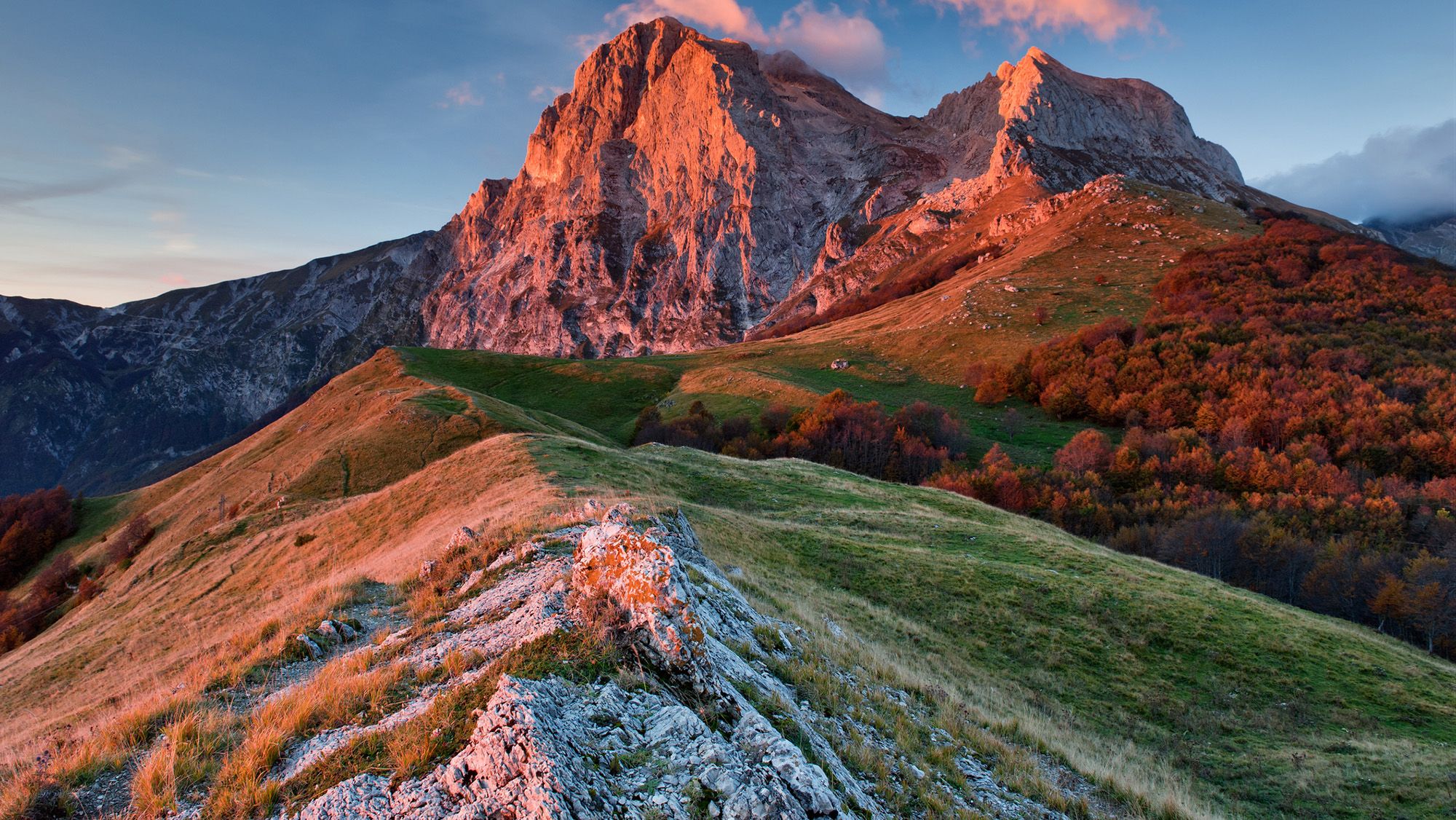
Ancient people forged Wootz steel near Sri Lanka’s central highlands at the tops of hills to utilize the monsoon winds.
(Image credit: Jakub Specjalski via Getty Images)
“The answer wasn’t immediately obvious why,” Juleff says. “And then we realised they were all facing into the wind.” What if the Sri Lankans weren’t using bellows at all? This is why Juleff asked me to come to Colombo in the off-season. Every year, Sri Lanka is buffeted by two wet seasons: the south-west monsoons from May to September, and the north-west monsoons from December to February. It’s a kind of weather you have to experience yourself to truly appreciate.
“A monsoon wind blows up to 90km an hour [56 mph],” says Juleff. “When you’re at the top of a hill, you get an aerodynamic effect, where all the wind’s rushing up and cresting. You’re battered by it. Everyone told me you couldn’t run a furnace just using the wind, because it’s not strong or reliable enough. So, I decided to experiment. I built one.” Juleff’s furnace was identical to the Sri Lankan ruins she had found. She fed it using charcoal and iron sourced locally from surface deposits — exactly as would have been available to the villagers who built them.
Then, she waited for the monsoon. “So, we ran this furnace,” Juleff says. “And, to begin with, I thought it wasn’t working. We had this line of fire behind the front wall, and nothing at the back. I thought everything needed to be burning.” It looked like the experts had been right: the monsoon winds weren’t regular or consistent enough to blow into the furnace’s holes to create the temperatures required.
But then Juleff’s mood changed. “It was like a Transformers toy, everything rearranged in my mind. I had a eureka moment! It wasn’t wrong at all; it was how it was designed to work. The wind was blowing up the hill — it wasn’t blowing into the tubes at all, it was blowing over the top of the furnace. It’s like an aeroplane wing: by blowing over the furnace, you’re creating this incredible pocket of low pressure.” The Sri Lankan furnace wasn’t a harmonica, with air puffed through it; instead, it was played like a flute.
This is the Bernoulli effect, the same principle that sticks a race car to the road, or keeps water moving through your plumbing. The change in pressure and the smooth, ordered air flow was creating a furnace beyond anything western science had considered possible. The team continued putting in ore and charcoal throughout the day, then allowed things to cool. The next day, they returned to see what they had produced. At the top was a knotted lump of pure iron — a bloom, as expected. “But then below that, stuck to the bottom of our slag, was another layer of metal,” Juleff says. “High-carbon steel. The wind did it. We couldn’t stop the wind doing it. We had created a furnace that could make the best steel anywhere in the world.”
Juleff had solved the mystery of Wootz steel. Not only did we now know how it was made, we understood why the technology hadn’t spread around the world: the technology was anchored in the unique geography of Sri Lanka, and the people who visited weren’t scholars, but traders who didn’t appreciate the small miracle they were witnessing.
“The metal-makers weren’t moving,” Juleff says. “They were here, sat in the interior of Sri Lanka, season after season, running these incredible furnaces.” Why did Wootz steel vanish? In the twelfth century CE, Sri Lanka was invaded by the Pandya dynasty of southern India. It triggered a societal collapse, as Sri Lankans were forced to pay tribute to their conquerors. The most likely explanation is that, during the chaos of the invasion and its messy aftermath, the traders and middlemen who brought the Wootz steel to the coast, and the ships that transported it around the world, had stopped coming.
It wouldn’t have occurred, or mattered, to a Sri Lankan metallurgist that their goods were ending up in the hands of kings and emperors in some distant land they’d never heard of; they’d have only seen that they couldn’t sell to local traders any more. The villagers stopped making goods that didn’t sell, and moved on to other, more profitable, careers.
Excerpted from “The Age of Alchemy: How Early Innovators Shaped Modern Chemistry,” Profile Books, 2026.

Profile Books
The Age of Alchemy: How Early Innovators Shaped Modern Chemistry
“Age of Alchemy” is a fascinating and funny dive into chemistry long before chemistry existed. It captures the ingenuity of humans across cultures and time, revealing how ultimately the work of these early innovators would eventually meld into modern science.