
A 6-year-old girl was given a first-of-its-kind gene therapy in a hospital in China for a nonlethal condition. Within a week, she was dead.
Her death was never publicly disclosed by the scientists who developed and administered her experimental gene therapy. But now, more than a year after her death, her parents are telling her story in the hope that others will be spared the same fate.
A new joint investigation from Science and Retraction Watch, published July 23, details the case of “Mei,” a young girl given gene therapy in March 2025 at Xinhua Hospital, which is affiliated with the Shanghai Jiao Tong University School of Medicine. (Mei’s parents asked that the family’s names be changed for the report. Her name was changed to Mei, which is Chinese for “beautiful,” and they are referred to as “Jason” and “Linda.”)
Mei’s trial was led by Zilong Qiu, a neuroscientist at the university’s brain center. Live Science has contacted Qiu for comment.
Mei had a rare genetic disorder called Snijders Blok-Campeau syndrome, which is caused by mutations in the gene CHD3. The gene carries instructions for a protein that helps control how DNA is packaged in cells, which in turn, affects how genes can be switched on and off. The gene plays an important role in early brain development. In people with the syndrome, this process is disrupted, leading to brain changes that can cause speech problems and intellectual disability.
Mei’s parents had sought further tests after their daughter was diagnosed with global developmental delay in 2023; this broad diagnosis is given to young children who show delays in several areas, such as speech and motor skills. Genetic sequencing following her diagnosis revealed she had the syndrome.
People with the condition typically have normal life expectancy, although symptoms can range in severity, with severe cases coming with seizures and heart problems. Mei’s case was mild, and her parents secured her speech and occupational therapy alongside special education support to help manage her symptoms.
Get the world’s most fascinating discoveries delivered straight to your inbox.
Jason worried about her future, though, anticipating that she’d continue to trail behind in school and may never live independently. On WeChat (the instant messaging, social media and mobile payment app), Jason and Linda joined a group of parents of kids with autism and similar disorders. There, they learned about Qiu, the neuroscientist, who has a gene-therapy company called Lanqi Xintu Gene Technology. Qiu had been developing a gene therapy for Rett syndrome, another genetic disorder that disrupts brain development.
Jason contacted Qiu about possibly creating a gene therapy for Mei, and Qiu immediately arranged a meeting. He explained that such a therapy would require delivering viruses into Mei’s spinal fluid; modified viruses are often used as vehicles to deliver gene therapies into the body. The viruses would then travel to her brain, where they’d make the desired edits. To get a big enough dose into the brain, hundreds of trillions of viruses would be needed.
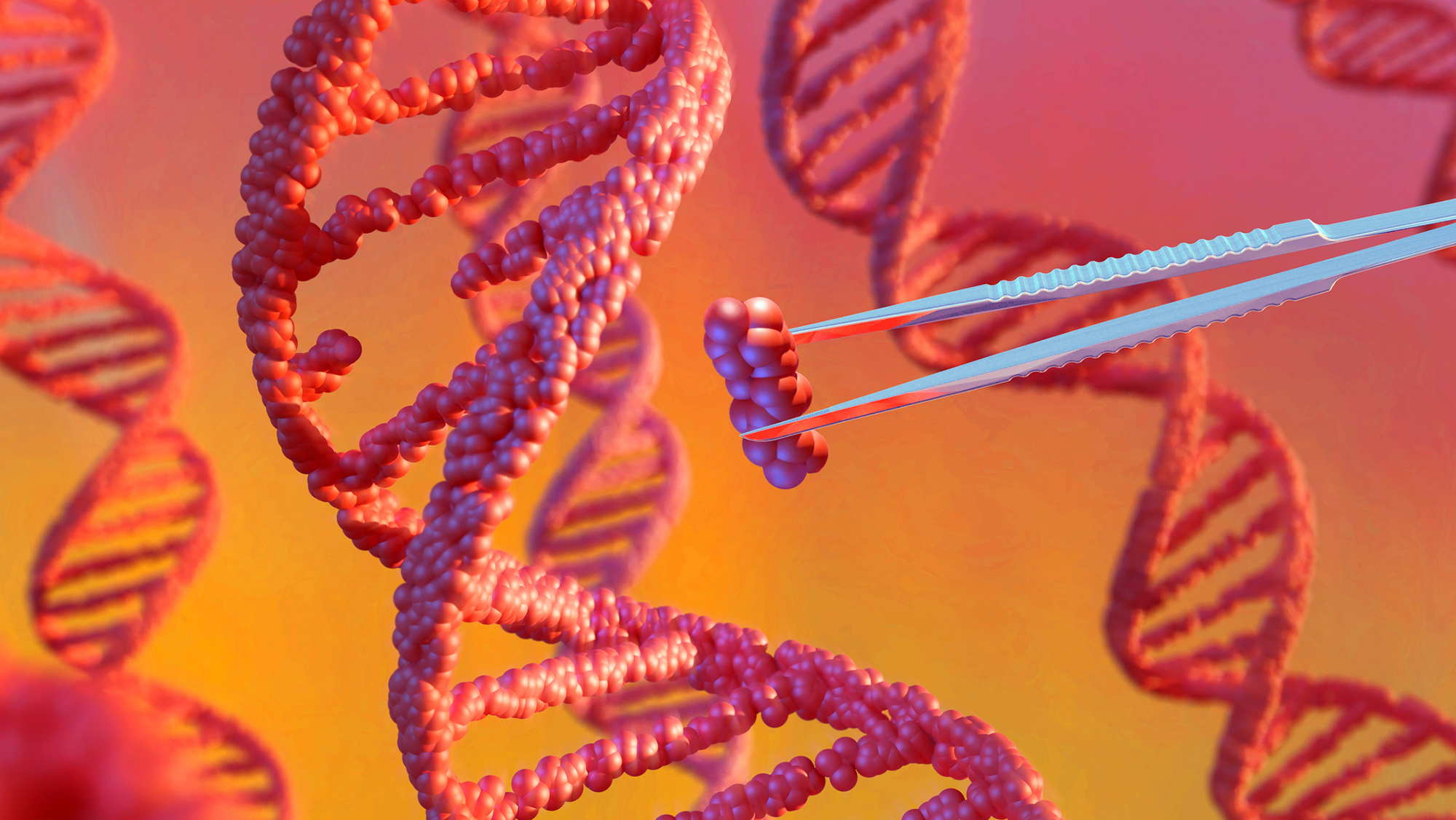
Qiu planned to use a base editor, a CRISPR-based approach that swaps out just one letter in DNA’s code for another. (The technique was famously used in the case of a U.S.-based baby, called KJ, whose life-threatening genetic disease was successfully treated.)
Because Mei’s condition was not life-threatening, the approach would need to clear a high bar to pass the university’s ethics board, Qi said. It would need to be trialed in mouse and monkey experiments first. Qiu insisted, though, that the university could ensure Mei’s safety, although it couldn’t guarantee the treatment would work. The possibility of death wasn’t discussed — and it would not be in the years to come.
Xinhua Hospital, affiliated with the Shanghai Jiao Tong University School of Medicine, treated Mei.
(Image credit: c1a1p1c1o1m1 via Getty Images)
Jason and Linda agreed to the plan. They would ultimately put the equivalent of $860,000 toward the cost of developing, testing and deploying the therapy; those costs included informal payments made directly to various members of the research team. Charging for an unproven therapy is forbidden under Chinese law, but Qiu explained this away by saying the parents were paying into his gene-therapy company, which then paid for the procedure.
In January 2025, Qiu submitted a manuscript describing the team’s lab-animal experiments to the journal Nature. (A revised version of the manuscript was published in February 2026 and contains no mention of the family nor its financial contributions.) Science had several experts review the manuscript, who expressed concerns about how well the monkey study was conducted. Live Science has contacted Nature for comment.
The next month, a toxicology study conducted by the team found that four monkeys given the treatment developed moderate to severe liver damage, and one also had kidney damage. This should have prompted additional safety studies, experts told Science, and hinted that the therapy was triggering a dangerous inflammatory response — a known risk of virus-based gene therapies.
The hospital’s ethics committee did not review this data before giving the OK for Mei’s procedure. Her parents were told about the results of the animal studies, but they said the scientists seemed unconcerned about them. Under China’s regulatory system, the trial did not need to be cleared by the country’s equivalent of the Food and Drug Administration before proceeding.
On March 24, 2025, after giving her a steroid to dampen potential immune reactions, Dr. Yongguo Yu injected gene therapy-laden viruses into Mei’s spinal fluid. Although some virus-based gene therapies in the U.S. can be given with steroids, as of late, doctors often opt for more aggressive immune-suppressing drugs for safety.
Within days, Mei developed a range of symptoms; she got a fever, wasn’t urinating, and her platelet levels plummeted. She was taken into an intensive care unit for treatment, but she died seven days after receiving the injection.
The hospital determined her death was directly related to the treatment and caused by thrombotic microangiopathy. This is an immune reaction that causes blood clots and can arise from virus-based gene therapies.
The hospital was later fined the equivalent of about $3,600 for failing to properly oversee the trial and not registering it as commercially sponsored research in China’s national database. The hospital required that the doctor involved receive verbal counseling.
The family asked Qiu to withdraw his Nature paper, worried that other families might be tempted to try the same therapy, and he initially agreed, although it was later published. The paper was covered positively in the press at the time, and parents in the WeChat group began expressing interest. Seeing that, Jason and Linda submitted a complaint to Shanghai Jiao Tong University School of Medicine, calling for a retraction and investigation. The university took no action.
They also sent a letter to Nature after the publication; at the time, the journal said that the ethical issues raised “fall outside our purview in terms of data integrity” and that the matter should be handled by the university.
Live Science has contacted Nature and Qiu for comment and will update this article with any responses. Regarding the investigation, neither Qiu, Lu, the university or the hospital responded to Science’s requests for comment. Nature told Science that it was not aware of the issues surrounding the clinical trial before it published the group’s paper.
You can read the full investigation by Brendan Borrell at Science, along with a breakdown of the top four takeaways from the case. In particular, Mei’s death raises questions about China’s regulations around experimental therapies and human clinical trials, especially in the wake of the infamous “CRISPR baby” cases that purportedly prompted the country to tighten its restrictions around gene editing.