Close Menu
  • Home
  • United States
  • World
  • Politics
  • Business
  • Lifestyle
  • Entertainment
  • Health
  • Science
  • Tech
  • Sports
  • More
    • Web Stories
    • Editor’s Picks
    • Press Release

Subscribe to Updates

Get the latest USA news and updates directly to your inbox.

What's On
Shaquille O’Neal’s strange excuse for why he ‘lost a family’ raises eyebrows

Shaquille O’Neal’s strange excuse for why he ‘lost a family’ raises eyebrows

August 4, 2026
College students’ use of AI has surged — despite boos at graduation ceremonies

College students’ use of AI has surged — despite boos at graduation ceremonies

August 4, 2026
Author who lost M book deal over AI concerns claims allegations are racially motivated: ‘Definitely innocent!!!’

Author who lost $2M book deal over AI concerns claims allegations are racially motivated: ‘Definitely innocent!!!’

August 4, 2026
Facebook X (Twitter) Instagram
Trending
  • Shaquille O’Neal’s strange excuse for why he ‘lost a family’ raises eyebrows
  • College students’ use of AI has surged — despite boos at graduation ceremonies
  • Author who lost $2M book deal over AI concerns claims allegations are racially motivated: ‘Definitely innocent!!!’
  • Dad fumes as son’s killer walks free after serving assault sentence
  • I’m a Jewish fashion editor. Galliano’s Met Gala should happen — even though it’s hard.
  • Run! Amazon Shoppers Are ‘Completely Obsessed’ With This ‘Dressy-Casual’ Blouse — Just $13
  • Browns’ Shedeur Sanders ranked last among QBs by NFL execs, coaches: ‘Shouldn’t lose to him’
  • Physicists find a way to control heat in a way once thought impossible
  • Privacy
  • Terms
  • Advertise
  • Contact Us
Join Us
USA TimesUSA Times
Newsletter Login
  • Home
  • United States
  • World
  • Politics
  • Business
  • Lifestyle
  • Entertainment
  • Health
  • Science
  • Tech
  • Sports
  • More
    • Web Stories
    • Editor’s Picks
    • Press Release
USA TimesUSA Times
Home » Why does it take our eyes so long to adjust to the dark?
Why does it take our eyes so long to adjust to the dark?
Science

Why does it take our eyes so long to adjust to the dark?

News RoomBy News RoomJune 20, 20261 ViewsNo Comments

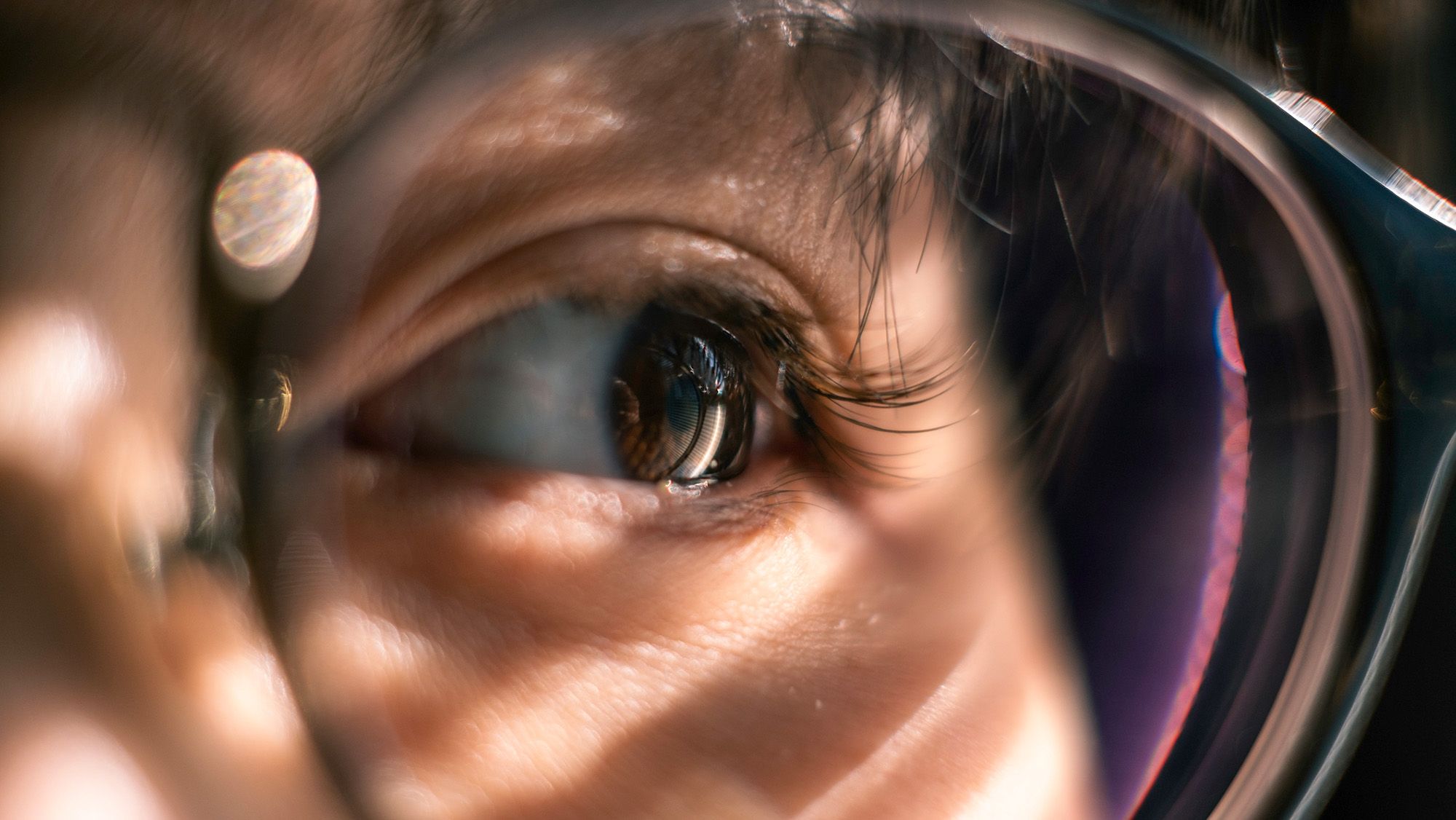
It’s after dark, and the lights go out; a thunderstorm has knocked out your power. At first, it’s pitch-black. But slowly, after a while, the light from the moon makes it possible to see your surroundings. The light didn’t change; your eyes did.

But why does it take our eyes so long to fully adjust to the dark?

It has to do with the types of cells in the eye and how they evolved, experts told Live Science.

Sign up for our newsletter

(Image credit: Marilyn Perkins / Future)

Sign up for our weekly Life’s Little Mysteries newsletter to get the latest mysteries before they appear online.

Our eyes use two kinds of cells to sense light. These cells, known as photoreceptors, are called rods and cones, based on their shapes, Alapakkam Sampath, a retinal neuroscientist at UCLA, told Live Science.

Cones are responsible for color vision. Humans possess three kinds of cone cells, which detect red, green or blue light. The colors people can see are a mix of red, green and blue, Anand Swaroop, chief of the Neurobiology Neurodegeneration & Repair Laboratory at the National Eye Institute, told Live Science.


You may like

Rods cannot discriminate colors, but they are far more sensitive to light. Each is capable of detecting a single photon, or particle of light. “Rods are what allow you to see in dim light,” Swaroop said.

The extraordinary sensitivity of rods has a price, though: Once each rod detects a photon, it can take up to an hour for it to regenerate its ability to see light, Johan Pahlberg, chief of the photoreceptor physiology group at the National Eye Institute, told Live Science.

A comparison chart between rods and cones in the eyes

Rods and cones are photoreceptors, or light-detecting cells, in the retina.

(Image credit: Anatoliy Stepura via Getty Images)

The compound that helps rods sense light is called rhodopsin, which is derived from vitamin A, Sampath said. Once each rhodopsin molecule absorbs light, it gets “bleached,” meaning it can no longer detect light.

Specifically, rhodopsin is made of two compounds: opsin and retinal, Pahlberg said. When rhodopsin absorbs light, the retinal changes from bent to straight and detaches from the opsin. This retinal eventually makes its way into a part of the eye known as the retinal pigment epithelium, where it can get repaired and resume a bent shape. This retinal can then make its way back to an opsin and reattach to create a functional rhodopsin.

If all of the rods in a human eye are bleached, it may take 45 minutes to an hour for all of them to regenerate, Pahlberg said. However, some rods may regenerate within 10 to 15 minutes to grant some level of vision in dim light, he added.


What to read next

Rods and cones line the retina, the back part of the eyeball. Rods outnumber cones in most mammal retinas. “In each human eye, there are roughly 6 million cones and 100 million rods,” Swaroop said. Sampath noted that “since it takes a lot of time for rods to regenerate, your eyes have a huge number of them to compensate.”

Cones are found mostly in the center of the retina, where the eye’s lens focuses most of the light it receives, while rods dominate the rest of the retina, Sampath explained. This reflects how during the day, we rely mostly on cone cells for our vision. “Rods are mostly not functional at all during that time,” he said.

The human eye does have a quicker way to adjust somewhat to the dark. It can enlarge the pupil, the dark hole at the front of the eye, to let in more light, explained Mark Fairchild, professor of color science at the Rochester Institute of Technology in New York, in an article in The Conversation. However, the vast majority of the eye’s adaptation to darkness is due to its rods, and the long amount of time it takes for rods to regenerate explains why it takes so long for eyes to fully adapt to the dark.

Before artificial lighting, humans would typically not experience quick shifts from light to dark. Instead, the ability for human eyes to adapt to the dark would have relied on the setting of the sun, which might take about the same time as rod cells take to regenerate. “There was no evolutionary pressure for it to be faster,” Sampath said.

Rods are the most vulnerable cells in the retina to disease and dysfunction, Pahlberg said. This is why older adults often have trouble driving at night. “My colleagues are developing a diagnostic test as a normal part of an eye exam to measure the human adaptation to the dark to see how it changes with age,” Sampath noted.

TOPICS
Life’s Little Mysteries

Share. Facebook Twitter LinkedIn Telegram WhatsApp Email

Keep Reading

Physicists find a way to control heat in a way once thought impossible

Physicists find a way to control heat in a way once thought impossible

A SpaceX rocket will hit the moon at 5,000 mph tonight. Experts explain what you could see, and when.

A SpaceX rocket will hit the moon at 5,000 mph tonight. Experts explain what you could see, and when.

‘Darwin’s hypothesis provided an important inspiration’: Scientists bolster 150-year-old Darwinian theory with a carnivorous plant in China

‘Darwin’s hypothesis provided an important inspiration’: Scientists bolster 150-year-old Darwinian theory with a carnivorous plant in China

Brains don’t always rot: Scientists may finally know how human brains have evaded decay for thousands of years

Brains don’t always rot: Scientists may finally know how human brains have evaded decay for thousands of years

Super El Niño may push an already stressed climate ecosystem across a critical threshold, climate change researcher says

Super El Niño may push an already stressed climate ecosystem across a critical threshold, climate change researcher says

World’s highest frozen lake shatters along disputed border between China and India ‪—‬ Earth from space

World’s highest frozen lake shatters along disputed border between China and India ‪—‬ Earth from space

‘Even when knowledge improves, emotional anxiety does not easily disappear’: Pediatrician Dr. Masahiko Sakamoto on educating parents about childhood illnesses

‘Even when knowledge improves, emotional anxiety does not easily disappear’: Pediatrician Dr. Masahiko Sakamoto on educating parents about childhood illnesses

First deaths from Cyclospora outbreak reported in Michigan

First deaths from Cyclospora outbreak reported in Michigan

Scientists uncover big clue as to how Antarctica’s mysterious Blood Falls came to be

Scientists uncover big clue as to how Antarctica’s mysterious Blood Falls came to be

Add A Comment
Leave A Reply Cancel Reply

Editors Picks

College students’ use of AI has surged — despite boos at graduation ceremonies

College students’ use of AI has surged — despite boos at graduation ceremonies

August 4, 2026
Author who lost M book deal over AI concerns claims allegations are racially motivated: ‘Definitely innocent!!!’

Author who lost $2M book deal over AI concerns claims allegations are racially motivated: ‘Definitely innocent!!!’

August 4, 2026
Dad fumes as son’s killer walks free after serving assault sentence

Dad fumes as son’s killer walks free after serving assault sentence

August 4, 2026
I’m a Jewish fashion editor. Galliano’s Met Gala should happen — even though it’s hard.

I’m a Jewish fashion editor. Galliano’s Met Gala should happen — even though it’s hard.

August 4, 2026

Subscribe to News

Get the latest USA news and updates directly to your inbox.

Latest News
Run! Amazon Shoppers Are ‘Completely Obsessed’ With This ‘Dressy-Casual’ Blouse — Just

Run! Amazon Shoppers Are ‘Completely Obsessed’ With This ‘Dressy-Casual’ Blouse — Just $13

August 4, 2026
Browns’ Shedeur Sanders ranked last among QBs by NFL execs, coaches: ‘Shouldn’t lose to him’

Browns’ Shedeur Sanders ranked last among QBs by NFL execs, coaches: ‘Shouldn’t lose to him’

August 4, 2026
Physicists find a way to control heat in a way once thought impossible

Physicists find a way to control heat in a way once thought impossible

August 4, 2026
Facebook X (Twitter) Pinterest WhatsApp TikTok Instagram
© 2026 USA Times. All Rights Reserved.
  • Privacy Policy
  • Terms
  • Advertise
  • Contact

Type above and press Enter to search. Press Esc to cancel.