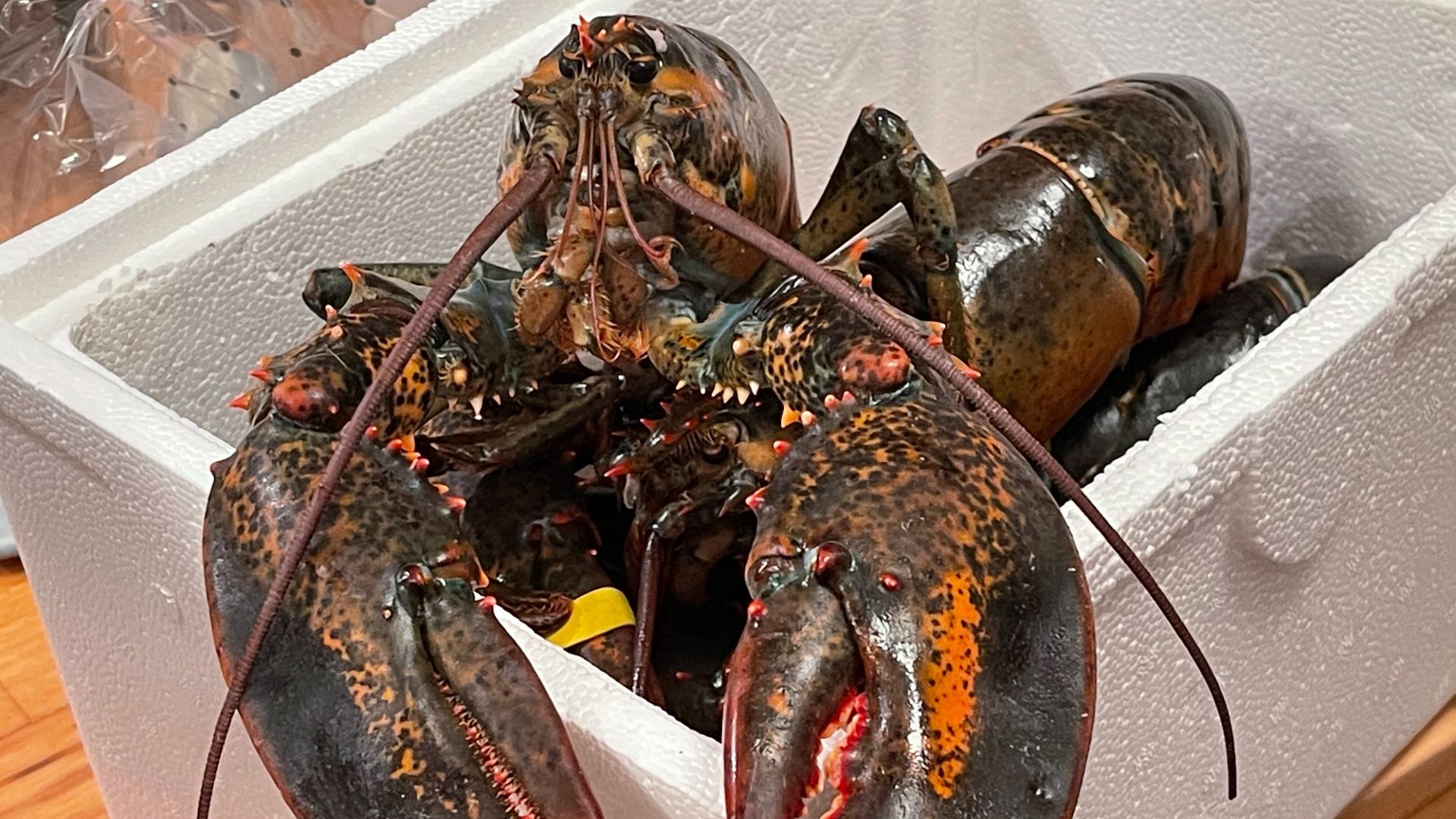

New research on Norway lobsters adds to a growing body of evidence that these crustaceans feel pain — something scientists have long suspected and even inspired David Foster Wallace’s famous 2004 essay “Consider the Lobster.”
In a study published April 13 in the journal Scientific Reports, researchers found that two drugs used for pain relief in humans — aspirin and lidocaine — significantly reduced the escape responses of Norway lobsters (Nephrops norvegicus) when they were electrically shocked. The researchers argue that the medicines were muting the animals’ pain processing and that the tail flip is therefore a pain reflex, rather than a simple stress reaction..
“The fact that painkillers developed for humans also work on Norway lobsters shows how similar we function,” Lynne Sneddon, a professor of zoophysiology at the University of Gothenburg in Sweden, said in a statement. “That’s why it’s important to care about how we treat and kill crustaceans, just as we do with chickens and cows.”
Several areas — including Norway, New Zealand, Austria and parts of Australia — have already banned the boiling of live crustaceans on welfare grounds, and the new findings may add pressure for broader reforms in how these animals are treated and killed.
Similar legislation is being proposed in the United Kingdom, while industry and researchers are exploring the electrical stunning of lobsters and crabs as a potentially more humane alternative to boiling them alive.
Shockingly painful
To understand how lobsters respond to painful stimuli, the researchers separated 105 Norway lobsters into multiple groups. These included several control groups of lobsters that weren’t shocked, along with two shock groups treated with either lidocaine or aspirin. The lidocaine was dissolved in the individual lobster’s tank, while the aspirin was injected into the animal directly.
The researchers then gave a 9.09-volt-per-meter electrical shock for 10 seconds to the three shock groups and observed their behavior before, during and up to two hours after the shock.
When shocked, the lobsters tried to escape by using a tail flip, a common escape maneuver in some crustaceans that rockets them out of danger in small, rapid spurts. The tail flips were seen only in the electrically shocked group of lobsters, not in the control groups.
Yet when the animals received lidocaine or aspirin before being shocked, the rate of tail flips dropped sharply: Only seven of the 13 lidocaine-treated lobsters and three of the 13 aspirin-treated lobsters tail-flipped, with more intense responses seen in the untreated group.
According to the researchers, their results suggest that the electrical shocks weren’t just triggering muscular contractions in the lobsters but instead created a painful experience. That’s because if the behavior was merely electrically stimulated, the painkillers wouldn’t be expected to suppress the tail flip.
Instead, painkiller treatment reduced the escape behavior. From this finding, the researchers suggested that the tail flip may have had a neurological component known as nociception. This is when signals from the body part exposed to the harmful stimulus travel to the brain and trigger a negative internal state associated with pain.
Adding more evidence
This study joins a growing body of research indicating that crabs, octopuses and other invertebrates can experience pain. In past studies, hermit crabs shocked inside their shells eventually abandoned their homes to avoid experiencing the painful stimulus.
Octopus have shown even stronger clues about pain processing; in one widely cited study, they avoided places linked to injury and favored those associated with pain relief.
This evidence is beginning to gradually change policies about how these animals are being treated. In the U.K., crabs, lobsters and octopuses are now recognized as sentient animals “capable of experiencing pain and suffering” under the 2022 Animal Welfare Act. New Zealand has also established welfare rules for animals such as crabs, crayfish and rock lobsters, requiring them to be made “insensible” before commercial killing.
The U.S. may be slowly following suit. Several states, such as California and Washington, have also taken their own actions to ban octopus farming entirely, citing inhumane practices, with several others considering passing similar laws.
Kasiouras, E., Rotllant, G., Gräns, A., Hjelmstedt, P., & Sneddon, L. U. (2026). Effects of analgesia on the response to a noxious stimulus in Norway lobsters (Nephrops norvegicus). Scientific Reports, 16(1). https://doi.org/10.1038/s41598-026-41687-w
How much do you know about octopuses? Try your hand at our octopus quiz!