




Humans are depleting Earth’s fresh water at a dizzying rate by pumping groundwater and sucking rivers dry. Continents are losing enough water each year to meet the needs of 280 million people. And in January, a report from the United Nations warned that the world is entering an era of “global water bankruptcy,” meaning we have irreversibly damaged entire freshwater systems.
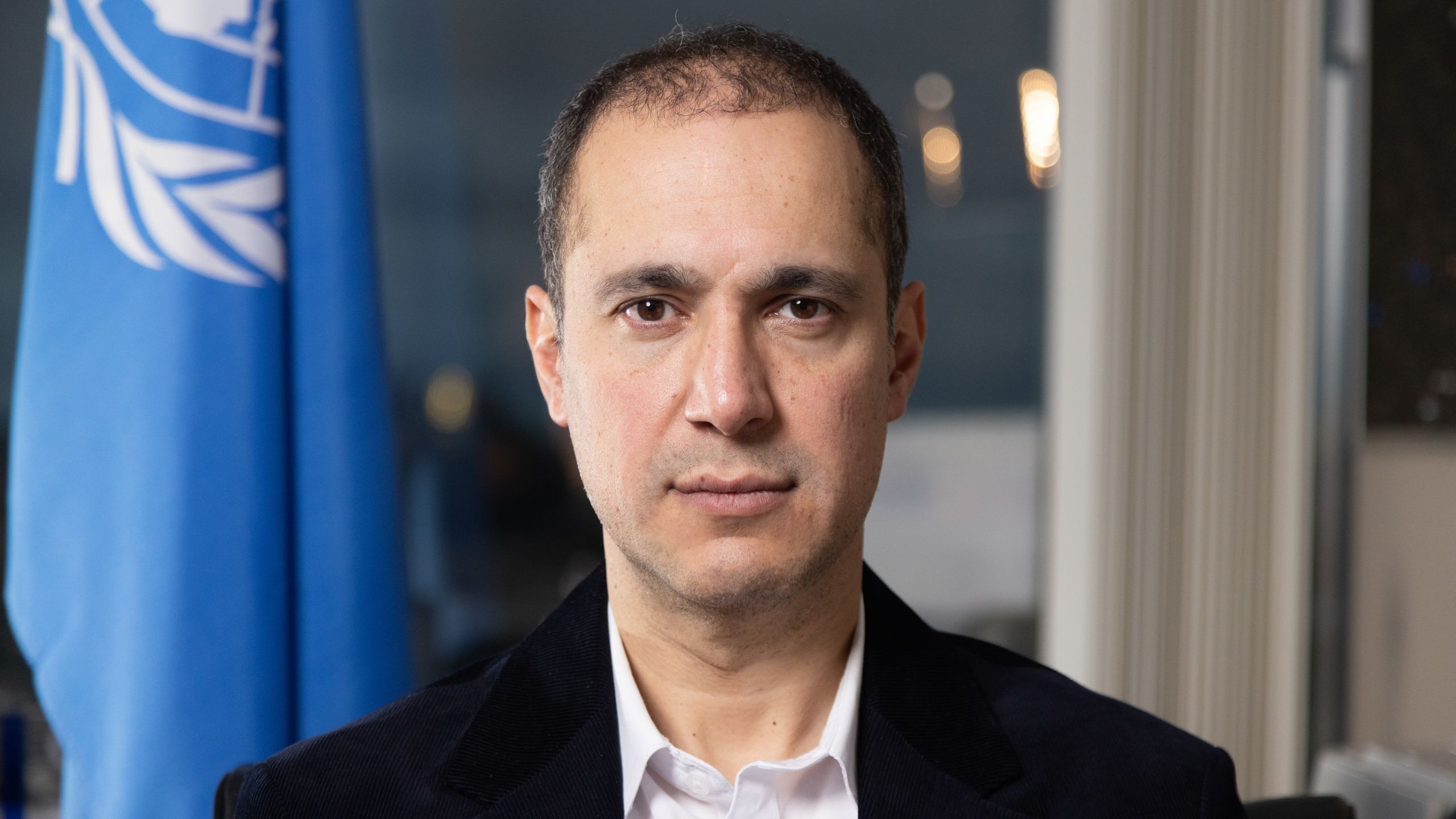
Kaveh Madani is the author of this report and the director of the United Nations University Institute for Water, Environment and Health. On March 18, he received the 2026 Stockholm Water Prize, which is often described as the “Nobel Prize of Water,” for outstanding contributions to the sustainable use and protection of water resources.
A decade on, Madani is globally recognized for making important improvements to water resources management models. By applying game theory frameworks to human behavior, he has helped show why traditional engineering models often fail to capture real-world complexities.
Live Science spoke with Madani about what water bankruptcy really means, how countries can address water problems, and why artificial intelligence (AI) and data centers are putting additional pressure on globally stretched water resources.
Sascha Pare: Long before the current war, Iran has faced very severe water issues. Were you aware of these challenges growing up? And if so, how did this shape your career?
Kaveh Madani: It’s an exaggeration to say that when I was a kid, I knew about the water problems. But certainly, when I was a kid, I knew about water, because I was the only child of parents who worked for the water sector. I read a lot of journals and articles that my parents were bringing home. When I was an undergraduate student, I wrote my first article on Iran’s water crisis, so it is true that my passion for water has some real roots. What I saw in my childhood shaped my interest, yet I cannot claim that I planned everything until this point. A lot of things are the product of circumstances.
SP: You coined the term “water bankruptcy.” Why is it a useful concept to describe the water situation globally today?
KM: Water bankruptcy, as I have defined it, combines two important conditions. One is insolvency, and the other is irreversibility. Insolvency happens when the use of water resources is much more than the rate of renewal of water resources through natural recharge — when water use is more than what we get from nature deposited into our “account” every year through precipitation.
At the beginning, the environment is very kind to us. It accepts that sort of cut in its access to water. But after a while, nature also starts reacting in a negative way and loses its ability to bounce back. That’s when the insolvency is combined with irreversibility, meaning that the system can no longer restore its historical conditions.
What once was an abnormality becomes a new normal. That’s when water shortage and scarcity becomes a chronic problem. And that’s what we see in many places around the world, where systems face new normals and have lost their ability to bounce back. These systems are no longer in a crisis, or a temporary deviation from the historical conditions. What we see there is our new normal, and around the world, we are seeing more and more systems getting into this situation, which I have named “water bankruptcy.”
SP: What environmental impacts are you most worried about in the next 10 to 20 years?
KM: I have the habit of not prioritizing one environmental problem over another one. Instead, I try to remind people about the interconnectedness of the different environmental problems that the world needs to deal with. But certainly, one of the major environmental problems of the world is the degradation of its water resources in terms of quality and quantity, affecting the natural capital that depends on it and underlies it.
We have ecosystems that heavily depend on water. Examples of this are wetlands downstream of water systems and glaciers upstream of water systems. Other components include rivers, soil moisture, groundwater, snowpacks and so on.
We will also see, as the result of impacts on water resources, some problems becoming more and more serious than before. One of those, for example, is the issue of land subsidence, whose rate is increasing around the world. Another example is the issue of sand and dust storms that are increasing in frequency and intensity around the world. When land becomes dry, not only do we see more destructive flash floods, but also we see wind blowing soil particles and moving them for thousands of kilometers, affecting ecosystems, human health, aviation, energy systems, air quality and so on.
SP: Which parts of the world do you think will see the biggest water problems first?
KM: The water bankruptcy report tells us that, essentially, in every continent where humans are present, water bankruptcy is manifesting itself in a way. While manifestations are different and these problems are different, essentially there is no country that is immune from water bankruptcy.
Water bankruptcy, just like financial bankruptcy, can happen to systems regardless of how water-rich or water-poor they are. Similar to financial bankruptcy, where it doesn’t matter how rich or poor you are to begin with, what matters is how you manage your budget. You can be a province in water-rich Canada and become water bankrupt or struggle with water issues — for example, in Alberta — and you can be a Middle Eastern country like Yemen and face issues.
We know that water problems have been an issue in the dry parts of the Middle East or dry parts of the U.S. West, but the report tells us that water bankruptcy can happen also in very wet areas. Water bankruptcy is not only about water quantity; it’s also about water quality. We have some places of the world that are wet, like East Asia, for example, or Southeast Asia. And in those places, the quantity is there, but the quality is very bad. The water is polluted and cannot be used, so we should also worry about those places.
Initially we have seen signs of water bankruptcy in the Middle East and North Africa, for example, and in water-stressed areas of the world: the Colorado River basin, parts of Mexico or other dry areas. But you go around the world, and you see that these problems are happening everywhere.
SP: What are the steps countries should take now to avoid a water disaster?
KM: What we have done so far to address our water shortage problems has not been adequate and, in a way, has even intensified or worsened our problem. If we look back and see what we have done, we see that we have mostly focused on increasing water supply through different technological interventions, from digging deeper wells to building dams to transporting water, desalination, recycling and reuse, and so on. What we haven’t done enough of is demand control and consumption reduction.

Bankruptcy management is not only about increasing supply but also putting a cap on consumption and reducing expenditure — that’s a necessity. Part of this can be done through technology, so technology would be part of the solution. But you also need to implement major policy reforms that lead to the reduction of consumption and getting rid of unsustainable uses. This would affect certain sectors, and to ensure that you don’t cause injustice, you have to see which groups are being impacted and how we have to address that.
Countries need to diversify their economies and reduce the pressure of their economies on water and natural resources. In many parts of the world, especially in the Global South, agriculture is the biggest user of water. Many smallholder farmers rely on water for their food production and employment and income — and cutting water from them means unemployment, hunger, migration, tension and so on. Countries must avoid that, and that’s only possible if alternative modes of livelihood can be created through the diversification of the economy and creating opportunities in the service and industrial sectors.
SP: What is the worst industry or sector for unsustainable water use, and how can they improve?
KM: It’s a strategic mistake if we name one sector as the worst sector and just decide that we have to reduce use only in that sector. Countries are very different in terms of their development stage and the state of their economy, also their geography and resources, so everything depends on the conditions.
Every society, every system, has to do a proper water accounting and see how it is using water within the system. In certain places, the bad user can be the urban sector. In some other places, it might be the industrial sector that is highly polluting, and then in many other places, it can be the agricultural sector that can become much more efficient to help prevent the exacerbation of the problem. It’s totally dependent on the location, but we know that the return on investment per drop of water is bigger in certain industries or certain sectors versus other ones.
Countries must look at these numbers to be able to make proper decisions. But let’s not also forget that it’s not all about the economic return; sometimes countries use water for creating food security and stability through making the employment sector intact. We’ve got to be careful about naming and shaming one sector and claiming that it’s only one sector that we have to focus on, or one method that we have to use across the world, to address water problems.
SP: One sector that is growing and uses a lot of water is AI and data centers. How do you think that will influence water bankruptcy in the future?
KM: AI and data centers rely on a lot of energy for their operations. They impact water resources not only through the water they need for cooling, which is a considerable amount, but also through the water that is used or impacted for producing the energy that they use. It’s a new use that is growing, despite the fact that we are already water bankrupt or near-bankrupt in many places.
It is a sector that has a high return on investment, so you can argue that societies can shift water from some other sectors where the return on water use is nowhere [as high] to help this sector grow. But that only makes sense if the benefit generated is distributed and those who lose access to water resources can benefit from the growth of AI and data centers. If, for example, you have a basin where alfalfa is being grown with water, using water for AI and an expansion of data centers [instead] in that location might be a very reasonable move, provided that the alfalfa grower is a beneficiary of that growth and change.
We have to be careful. In some other places, further water investments in data centers might result in compromising food security and the growth of certain strategic foods, and that’s something that we should avoid. We know that that sector is getting increased use, and we are already under pressure in many places. This doesn’t mean that we should say no to technology; it only means that we have to proactively curb, essentially control and mitigate the impacts, and ensure that introducing new uses would not hurt the system further and result in more irreversible damage.
Editor’s note: This interview has been condensed and lightly edited for clarity.