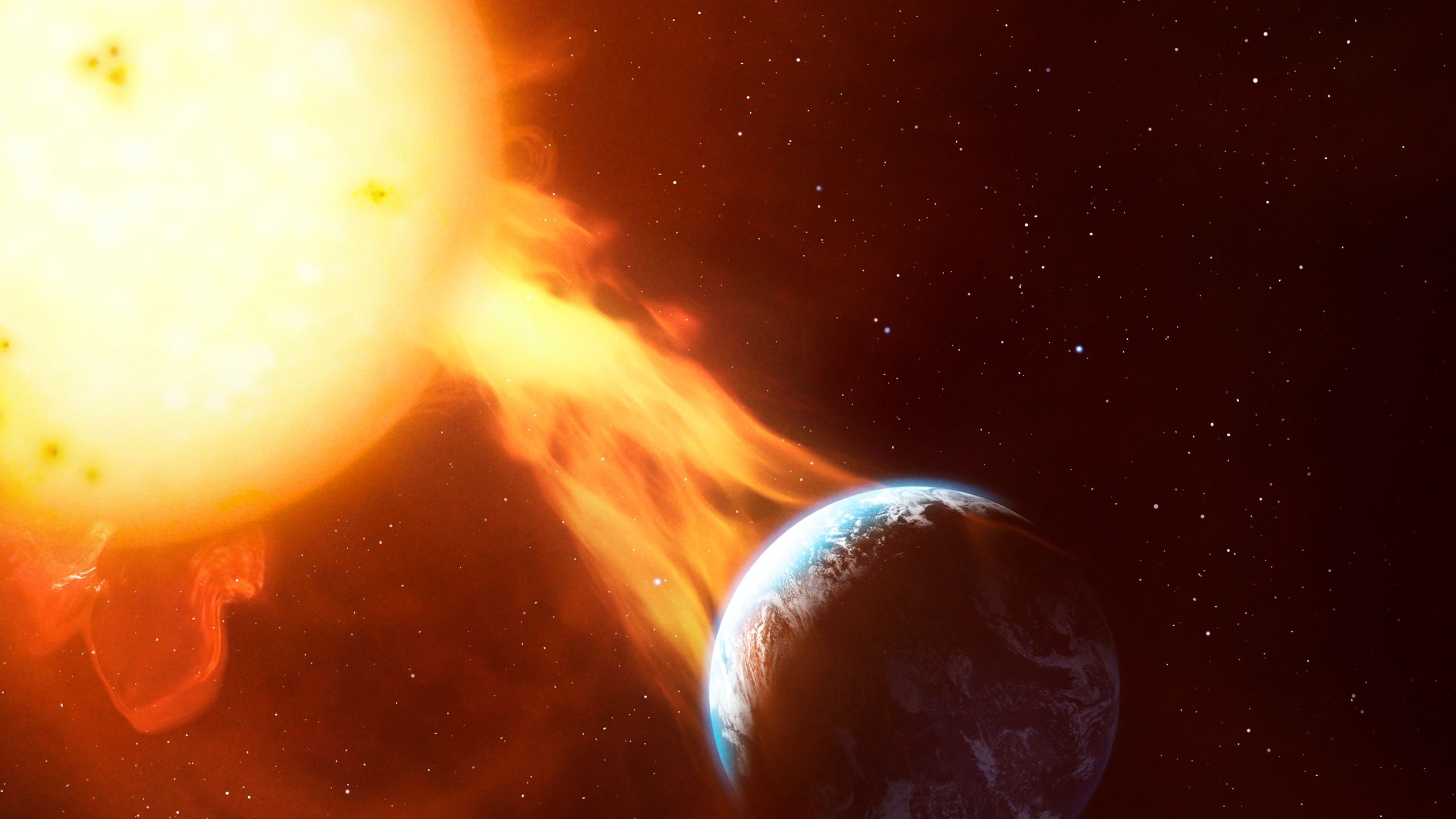





Could ancient humans really have built the pyramids without extraterrestrial help? Or do such questions reveal more about modern anxieties than the past itself?
The idea that aliens assisted the builders of ancient monuments was promoted by the Swiss author Erich von Däniken in his bestselling book Chariot of the Gods — published in 1968. Von Däniken died in January 2026, but his vision of ancient astronauts still captivates millions.
Article continues below
Though these ideas have been repeatedly debunked, television shows such as the History Channel’s Ancient Aliens continue to air similar narratives.
Erich von Däniken’s theories emerged at a distinct historical moment. They crystallized during the cold war, amid fears of nuclear annihilation, the space race and rapid technological change.
As humans prepared to leave Earth, while simultaneously confronting their own destructive power, the idea of ancient astronauts offered both cosmic reassurance and existential drama. The past became a stage for modern hopes and anxieties.
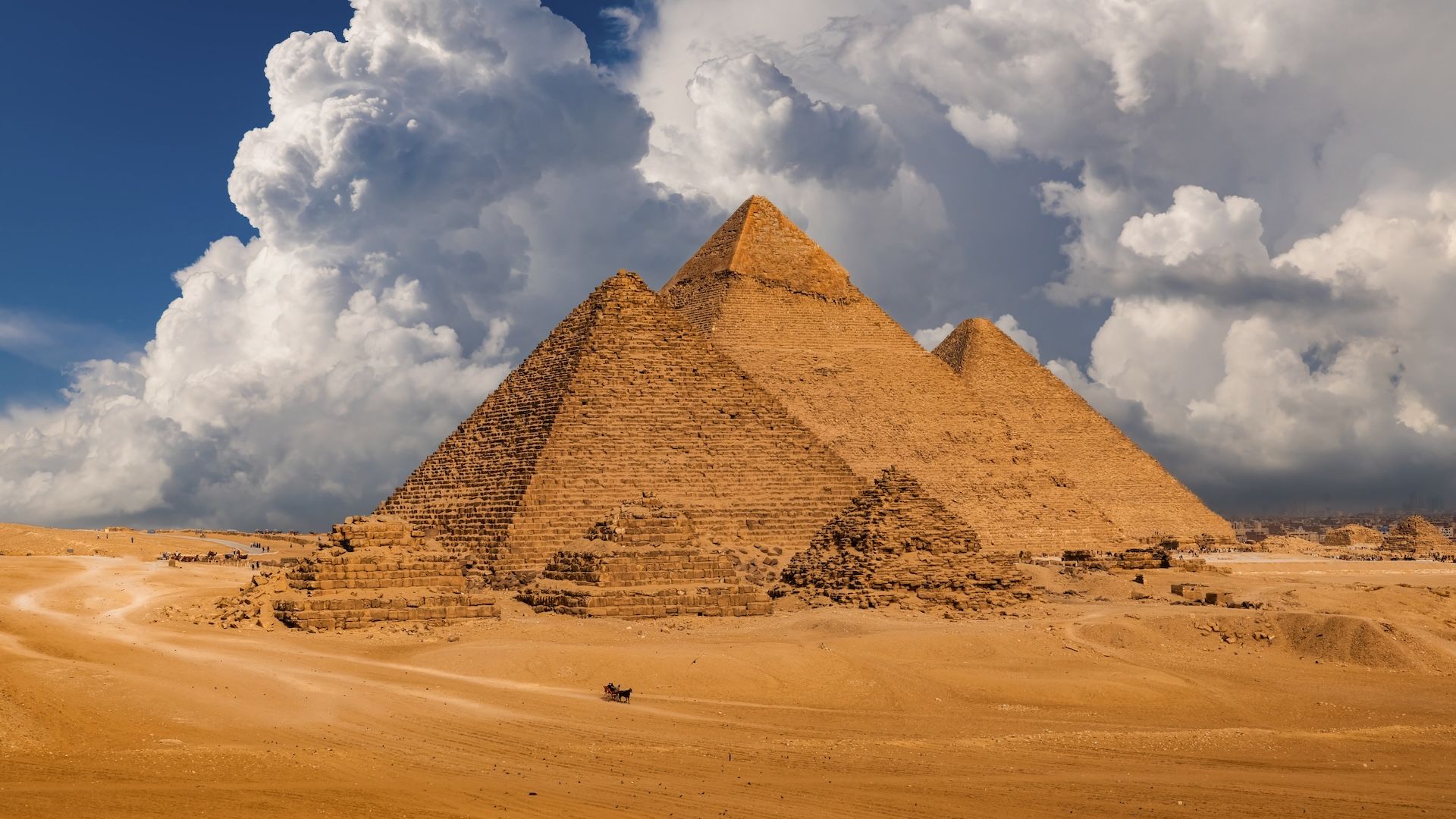
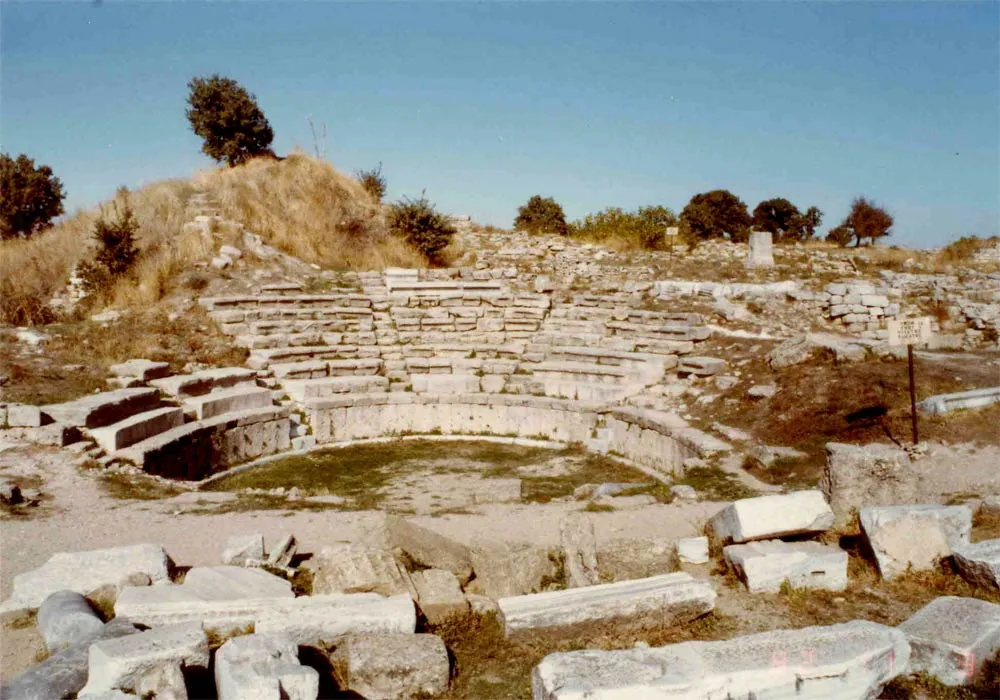
The reason some people feel able to believe in completely unfounded theories relates to the nature of archaeology itself. The discipline works with fragmentary evidence, layered deposits, and interpretations that rarely yield simple conclusions. Sites such as Giza in Egypt, Göbekli Tepe (a Neolithic settlement in modern Turkey known for its monumental pillars decorated with sculptural reliefs), and Troy — also in Turkey — are not unsolved enigmas but the result of decades of systematic excavation and analysis.
At Giza, archaeologists have uncovered planned worker settlements, bakeries and organized food supply systems, demonstrating how thousands of laborers could construct the pyramids over decades.
Göbekli Tepe shows that its monumental stone pillars were erected by hunter-gatherer communities millennia before the invention of writing — not through alien intervention, but through coordinated labor and ritual innovation. At Troy, successive settlement layers reveal centuries of rebuilding, adaptation and regional exchange rather than a sudden technological anomaly.
Archaeological conclusions are cautious, probabilistic and grounded in material evidence. To outsiders, however, caution can resemble hesitation. Pseudoscience fills that perceived gap with spectacle: aliens built the pyramids; mysterious forces raised Göbekli Tepe; forgotten super-technologies shaped Troy’s walls. Stripped of context, evidence becomes entertainment. Complexity is flattened into insinuation.
A typical “ancient aliens” argument illustrates the pattern: the pyramids are extraordinarily precise. Precision, the claim goes, requires advanced technology; therefore, humans without modern machines could not have built them.
The reasoning sounds logical — but it rests on a false dilemma. What disappears from view is precisely what archaeology studies: logistics, labor organization, tool assemblages, accumulated craft knowledge — and small imperfections that reveal human hands at work.
Such explanations satisfy a deep psychological impulse. Where once religion explained purpose, science explains process. The “ancient astronauts” hypothesis exploits proportionality bias — the intuition that extraordinary achievements must have extraordinary causes.
Just as medieval legends framed the pyramids as protection against cosmic catastrophe, modern narratives cast humanity as part of a grand design guided by superior beings. Archaeological sites become props in a cosmic drama.
Humans cease to be creators; the past becomes extraordinary because it was “helped”. The appeal is not confined to fringe audiences. Surveys suggest that many people consider extraterrestrial life possible or even likely.
Archaeology emphasizes gradual change and cumulative knowledge; pseudoscience promises revelation.
Many scientists agree that, given the vast scale of the universe, such life is statistically plausible. But plausibility is not proof — and it is certainly not evidence for alien intervention in antiquity.
Distrust amplifies the effect. Universities, museums and academic journals are often portrayed as gatekeepers suppressing inconvenient truths. Scientific refutation becomes evidence of conspiracy.
Academic prose — careful, qualified and precise — struggles to compete with dramatic certainty. Questions such as: “How could humans have built this without modern technology?” already contain the insinuation.
Digital media turbocharge the pattern: visually striking claims circulate faster than methodological explanations. Archaeology emphasizes gradual change and cumulative knowledge; pseudoscience promises revelation.
Pseudoscientific archaeology is not just a set of beliefs — it is a lucrative industry. Books on ancient astronauts sell millions of copies worldwide. Television franchises generate steady revenue, and leading figures attract audiences in the hundreds of thousands online.

By contrast, scholarly work circulates in a radically different economy: monographs are printed in small runs and generate little profit. This is not only a battle of ideas but a battle for attention: spectacle is rewarded more visibly than caution.
Von Däniken’s rhetorical genius lay in ambiguity. He rarely made definitive claims, preferring suggestive questions and selective juxtapositions that turned uncertainty into insinuation.
As he once remarked: “Chariots of the Gods was full of speculation — I had 238 question marks. Nobody read the question marks. They said: Mr von Däniken is saying … I did not say — I asked.” The strategy is disarmingly simple: frame speculation as inquiry and criticism as misunderstanding.
Reclaiming the story
The popularity of pseudoscience is not simply ignorance. It reflects the difficulty of interpreting fragmentary evidence, a hunger for meaning, declining institutional trust and the dynamics of digital amplification.
Yet dismissal alone is not enough. Archaeology does more than recover artifacts; it constructs narratives about how humans organized labor, shared beliefs and transformed landscapes. Those narratives are shaped by contemporary questions — and acknowledging this strengthens rather than weakens the discipline.
Debunking alien claims matters. But so does telling richer, more compelling stories about how humans shaped their own past. Archaeology shows that uncertainty is intellectual honesty, that incremental knowledge is cumulative achievement, and that context deepens wonder rather than diminishes it.
Monuments, cities, and human creativity are achievements of our own making, not traces of lost cosmic visitors. Through cooperation, experimentation and resilience, humans created the extraordinary — without any extraterrestrial assistance.
Through rigorous scholarship and compelling storytelling, archaeology shows that the extraordinary was never alien. It was always human.
This edited article is republished from The Conversation under a Creative Commons license. Read the original article.
Ancient Egypt quiz: Test your smarts about pyramids, hieroglyphs and King Tut