Close Menu
  • Home
  • United States
  • World
  • Politics
  • Business
  • Lifestyle
  • Entertainment
  • Health
  • Science
  • Tech
  • Sports
  • More
    • Web Stories
    • Editor’s Picks
    • Press Release

Subscribe to Updates

Get the latest USA news and updates directly to your inbox.

What's On
Women are getting boob jobs made from cadavers — why an NYC doc worries it could lead to cancer scares

Women are getting boob jobs made from cadavers — why an NYC doc worries it could lead to cancer scares

April 16, 2026
NBC News NOW reveals programming change, promotes  former CNN-er

NBC News NOW reveals programming change, promotes former CNN-er

April 16, 2026
Hegseth leads Pentagon prayer service with faux Bible verse made famous by ‘Pulp Fiction’

Hegseth leads Pentagon prayer service with faux Bible verse made famous by ‘Pulp Fiction’

April 16, 2026
Facebook X (Twitter) Instagram
Trending
  • Women are getting boob jobs made from cadavers — why an NYC doc worries it could lead to cancer scares
  • NBC News NOW reveals programming change, promotes former CNN-er
  • Hegseth leads Pentagon prayer service with faux Bible verse made famous by ‘Pulp Fiction’
  • Hegseth compares ‘Trump-hating press’ to biblical Pharisees in speech
  • Skip the Ticket! These Kentucky Derby-Style Floral Dresses Make You Look Rich — From Just $12
  • Lakers star Luka Doncic finds out fate for NBA awards
  • British researchers say unlikely social media diet hack really works to cut cravings
  • Exclusive | Gen Z and parents favor old-school tech like iPods and digital cameras for a simpler, less plugged-in life: ‘People are just sick of it’
  • Privacy
  • Terms
  • Advertise
  • Contact Us
Join Us
USA TimesUSA Times
Newsletter Login
  • Home
  • United States
  • World
  • Politics
  • Business
  • Lifestyle
  • Entertainment
  • Health
  • Science
  • Tech
  • Sports
  • More
    • Web Stories
    • Editor’s Picks
    • Press Release
USA TimesUSA Times
Home » The earliest black holes in the universe may still be with us, surprising study claims
The earliest black holes in the universe may still be with us, surprising study claims
Science

The earliest black holes in the universe may still be with us, surprising study claims

News RoomBy News RoomFebruary 12, 20261 ViewsNo Comments

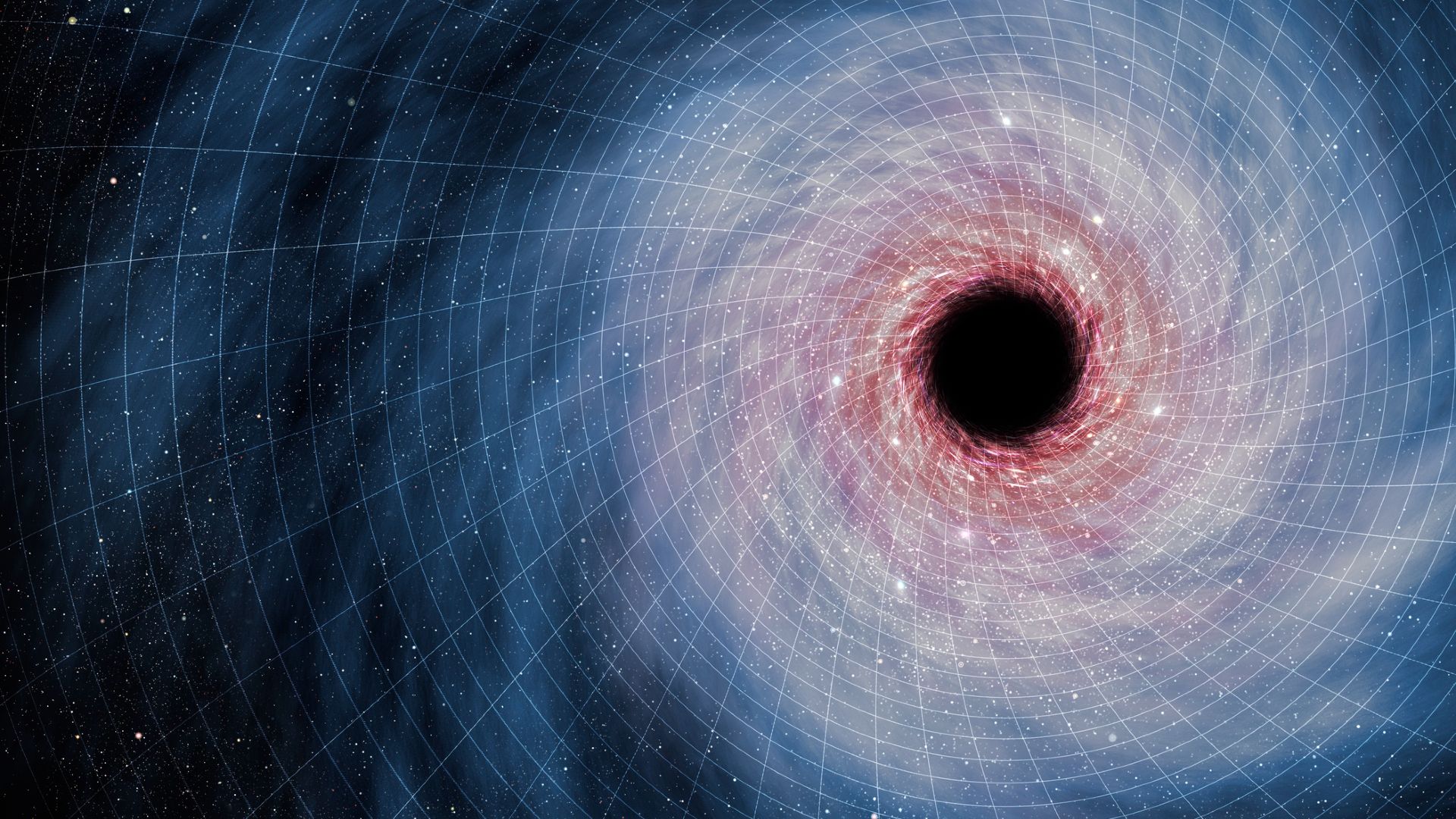
Moments after the Big Bang, the newborn universe was a wild, hot place. In that cosmic soup, primordial black holes — the first black holes in the universe, formed from extremely dense pockets of matter — could quickly take shape.

For ages, our understanding of these objects, especially the smaller ones, was that they eventually just faded away through a quantum process called Hawking radiation. It seemed like a settled fate.

But a new investigation, published in January to the preprint database arXiv, has opened a different path. This research claims that these objects didn’t always shrink — sometimes, they could grow, becoming cosmic devourers that absorbed the radiation of the early universe.


You may like

This unexpected appetite doesn’t just change the individual destinies of early black holes; it also transforms how we see the universe’s past — and, crucially, it alters our search for dark matter, the invisible scaffolding that holds galaxies together.

Hungry newborns

Primordial black holes are a fascinating idea in cosmology. Unlike the usual black holes born from collapsing stars, these objects would have formed in the first moments after the Big Bang, from extreme densities in the universe’s initial soup. They could range from microscopic sizes up to masses greater than that of the sun.

For a long time, general relativity told us that these objects, especially the smaller ones, would slowly lose mass through Hawking radiation. They would just evaporate and fade into nothing.

According to one model of the universe, primordial black holes formed immediately after the Big Bang and slowly gathered matter around themselves — ultimately building the architecture of stars and galaxies we see today. (Image credit: ESA)

Here’s where the story takes a turn. The early universe wasn’t just a quiet vacuum around these primordial black holes; it was a thick, hot soup, full of radiation — with photons zipping everywhere.

Get the world’s most fascinating discoveries delivered straight to your inbox.

This new research adds a vital piece to the puzzle: direct absorption of that thermal radiation. If a primordial black hole’s collapse efficiency passes a certain point calculated in the new research, it doesn’t just slowly evaporate; it starts to feed. These black holes become silent, hungry cosmic devourers, the new study suggests.

This new understanding changes everything about how we picture the early cosmos and the destiny of these ancient objects. Their ability to grow means they can live far longer than we previously thought, leading to extended lifetimes and substantial mass.

If primordial black holes can grow by absorbing radiation, then a much broader range of initial masses could still exist today, acting as the universe’s unseen dark matter. The research indicates this expanded range depends heavily on something called the absorption efficiency parameter — a measure of how quickly and efficiently the black hole can feed on matter around it.

For instance, if this parameter is 0.3, the allowed range for a primordial black hole to form and become dark matter expands from 10^16 grams to 10^21 grams. If the parameter is 0.39, then the range is from 5*10^14 grams to 5*10^19 grams. Previously, it was thought that primordial black holes couldn’t be this massive and still be responsible for dark matter.

This work makes us rethink a lot about the universe’s earliest moments. It forces a fundamental reevaluation of how these objects evolve and their potential to explain the mystery of dark matter. This isn’t just a small tweak to a model; it’s a new chapter in our cosmic story. We thought we knew the life cycle of these objects, but it turns out, the universe had other plans.

Black hole quiz: How supermassive is your knowledge of the universe?

Share. Facebook Twitter LinkedIn Telegram WhatsApp Email

Keep Reading

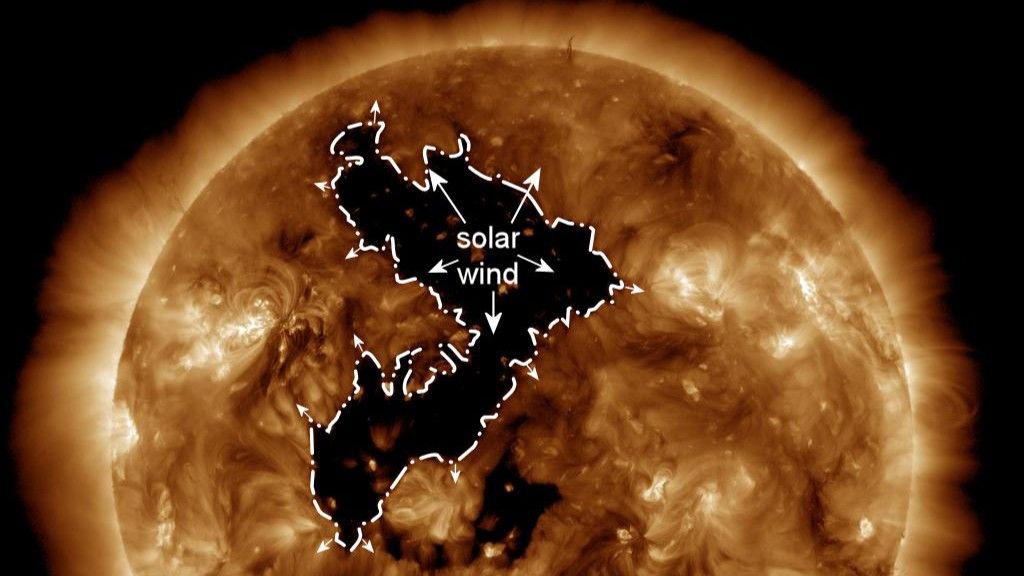
Northern lights may be visible from several US states Friday and Saturday as giant hole opens up in sun’s atmosphere

Northern lights may be visible from several US states Friday and Saturday as giant hole opens up in sun’s atmosphere

Hackers used AI to steal hundreds of millions of Mexican government and private citizen records in one of the largest cybersecurity breaches ever

Hackers used AI to steal hundreds of millions of Mexican government and private citizen records in one of the largest cybersecurity breaches ever

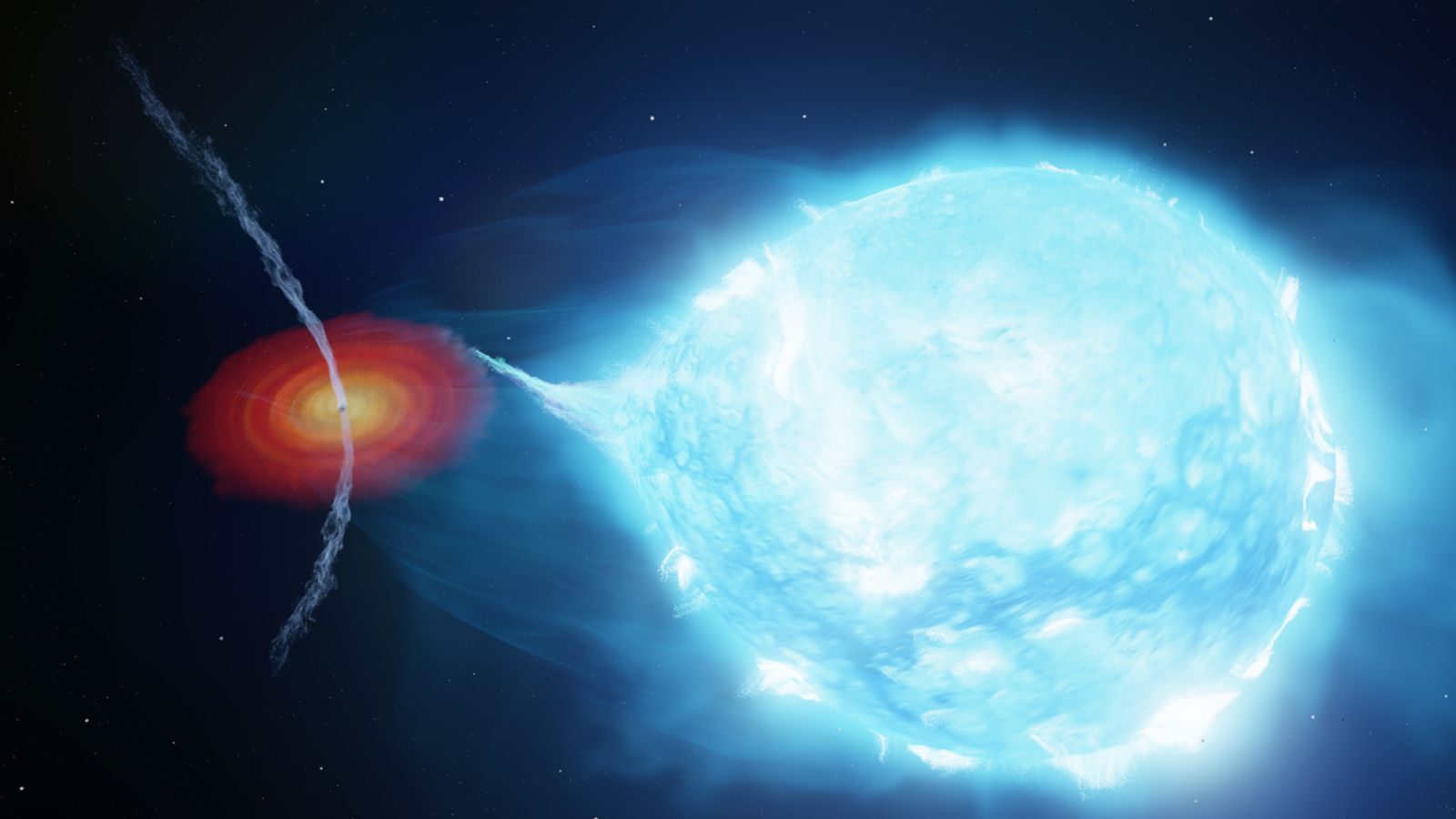
Cygnus X-1 — the first black hole ever discovered — is spewing ‘dancing jets’ of energy at half the speed of light

Cygnus X-1 — the first black hole ever discovered — is spewing ‘dancing jets’ of energy at half the speed of light

Stephen Hawking’s black hole information paradox could be solved — if the universe has 7 dimensions

Stephen Hawking’s black hole information paradox could be solved — if the universe has 7 dimensions

Ancient process that created rare earth elements discovered — and it could help us locate desperately needed deposits

Ancient process that created rare earth elements discovered — and it could help us locate desperately needed deposits

This humanoid robot does all your housework for you ‪—‬ and its makers say it’s ready for your home

This humanoid robot does all your housework for you ‪—‬ and its makers say it’s ready for your home

New study confirms lobsters feel pain, driving scientists to call for a ban on boiling them alive

New study confirms lobsters feel pain, driving scientists to call for a ban on boiling them alive

‘Human evolution didn’t slow down; we were just missing the signal’: Large DNA study reveals natural selection led to more redheads and less male-pattern baldness

‘Human evolution didn’t slow down; we were just missing the signal’: Large DNA study reveals natural selection led to more redheads and less male-pattern baldness

‘Something’s missing’: Most thorough-ever study of the cosmos proves we still can’t explain how the universe is expanding

‘Something’s missing’: Most thorough-ever study of the cosmos proves we still can’t explain how the universe is expanding

Add A Comment
Leave A Reply Cancel Reply

Editors Picks

NBC News NOW reveals programming change, promotes  former CNN-er

NBC News NOW reveals programming change, promotes former CNN-er

April 16, 2026
Hegseth leads Pentagon prayer service with faux Bible verse made famous by ‘Pulp Fiction’

Hegseth leads Pentagon prayer service with faux Bible verse made famous by ‘Pulp Fiction’

April 16, 2026
Hegseth compares ‘Trump-hating press’ to biblical Pharisees in speech

Hegseth compares ‘Trump-hating press’ to biblical Pharisees in speech

April 16, 2026
Skip the Ticket! These Kentucky Derby-Style Floral Dresses Make You Look Rich — From Just

Skip the Ticket! These Kentucky Derby-Style Floral Dresses Make You Look Rich — From Just $12

April 16, 2026

Subscribe to News

Get the latest USA news and updates directly to your inbox.

Latest News
Lakers star Luka Doncic finds out fate for NBA awards

Lakers star Luka Doncic finds out fate for NBA awards

April 16, 2026
British researchers say unlikely social media diet hack really works to cut cravings

British researchers say unlikely social media diet hack really works to cut cravings

April 16, 2026
Exclusive | Gen Z and parents favor old-school tech like iPods and digital cameras for a simpler, less plugged-in life: ‘People are just sick of it’

Exclusive | Gen Z and parents favor old-school tech like iPods and digital cameras for a simpler, less plugged-in life: ‘People are just sick of it’

April 16, 2026
Facebook X (Twitter) Pinterest WhatsApp TikTok Instagram
© 2026 USA Times. All Rights Reserved.
  • Privacy Policy
  • Terms
  • Advertise
  • Contact

Type above and press Enter to search. Press Esc to cancel.