



Close Menu
  • Home
  • United States
  • World
  • Politics
  • Business
  • Lifestyle
  • Entertainment
  • Health
  • Science
  • Tech
  • Sports
  • More
    • Web Stories
    • Editor’s Picks
    • Press Release

Subscribe to Updates

Get the latest USA news and updates directly to your inbox.

What's On
WHCD shooting suspect Cole Allen ‘thought he was Rambo,’ wanted Trump dead: top DC fed

WHCD shooting suspect Cole Allen ‘thought he was Rambo,’ wanted Trump dead: top DC fed

May 3, 2026
Jodie Sweetin says she once received a 1-cent ‘Full House’ residual check

Jodie Sweetin says she once received a 1-cent ‘Full House’ residual check

May 3, 2026
Nordstrom’s Wedding Guest Edit Has 7,000+ Gorgeous Dresses, But These 13 Are *Actually* Worth It

Nordstrom’s Wedding Guest Edit Has 7,000+ Gorgeous Dresses, But These 13 Are *Actually* Worth It

May 3, 2026
Facebook X (Twitter) Instagram
Trending
  • WHCD shooting suspect Cole Allen ‘thought he was Rambo,’ wanted Trump dead: top DC fed
  • Jodie Sweetin says she once received a 1-cent ‘Full House’ residual check
  • Nordstrom’s Wedding Guest Edit Has 7,000+ Gorgeous Dresses, But These 13 Are *Actually* Worth It
  • World Cup’s ‘sexiest fan’ captures attention of Formula 1 cameraman
  • DOT Secretary Duffy blames Biden admin, Pete Buttigieg for Spirit Airlines’ failure
  • Taxpayer-backed Ivanpah solar plant kills birds and burns fossil fuels
  • Confirmed: All the New York City It-Girls Are Ditching Jeans for This Boho-Chic Staple
  • Joel Embiid begs 76ers ticket-holders not to sell to Knicks fans: ‘This is bigger than you’
  • Privacy
  • Terms
  • Advertise
  • Contact Us
Join Us
USA TimesUSA Times
Newsletter Login
  • Home
  • United States
  • World
  • Politics
  • Business
  • Lifestyle
  • Entertainment
  • Health
  • Science
  • Tech
  • Sports
  • More
    • Web Stories
    • Editor’s Picks
    • Press Release
USA TimesUSA Times
Home » Microbes in Iceland are hoarding nitrogen, and that’s mucking up the nutrient cycle
Microbes in Iceland are hoarding nitrogen, and that’s mucking up the nutrient cycle
Science

Microbes in Iceland are hoarding nitrogen, and that’s mucking up the nutrient cycle

News RoomBy News RoomFebruary 8, 20261 ViewsNo Comments

As high-latitude soils warm, microbes in the soil change how they handle nutrients like nitrogen. Normally, these microbes are nitrogen recyclers, pulling it from the soil and turning it into inorganic forms — like ammonium and nitrates — that plants can absorb. But a new study published in Global Change Biology suggests that with rising temperatures, microbes are changing their strategy. They take up more nitrogen for themselves while reducing the amount they release back into the environment. This change alters the flow of nitrogen through the ecosystem, potentially slowing vegetation growth and affecting the rate at which our planet warms.

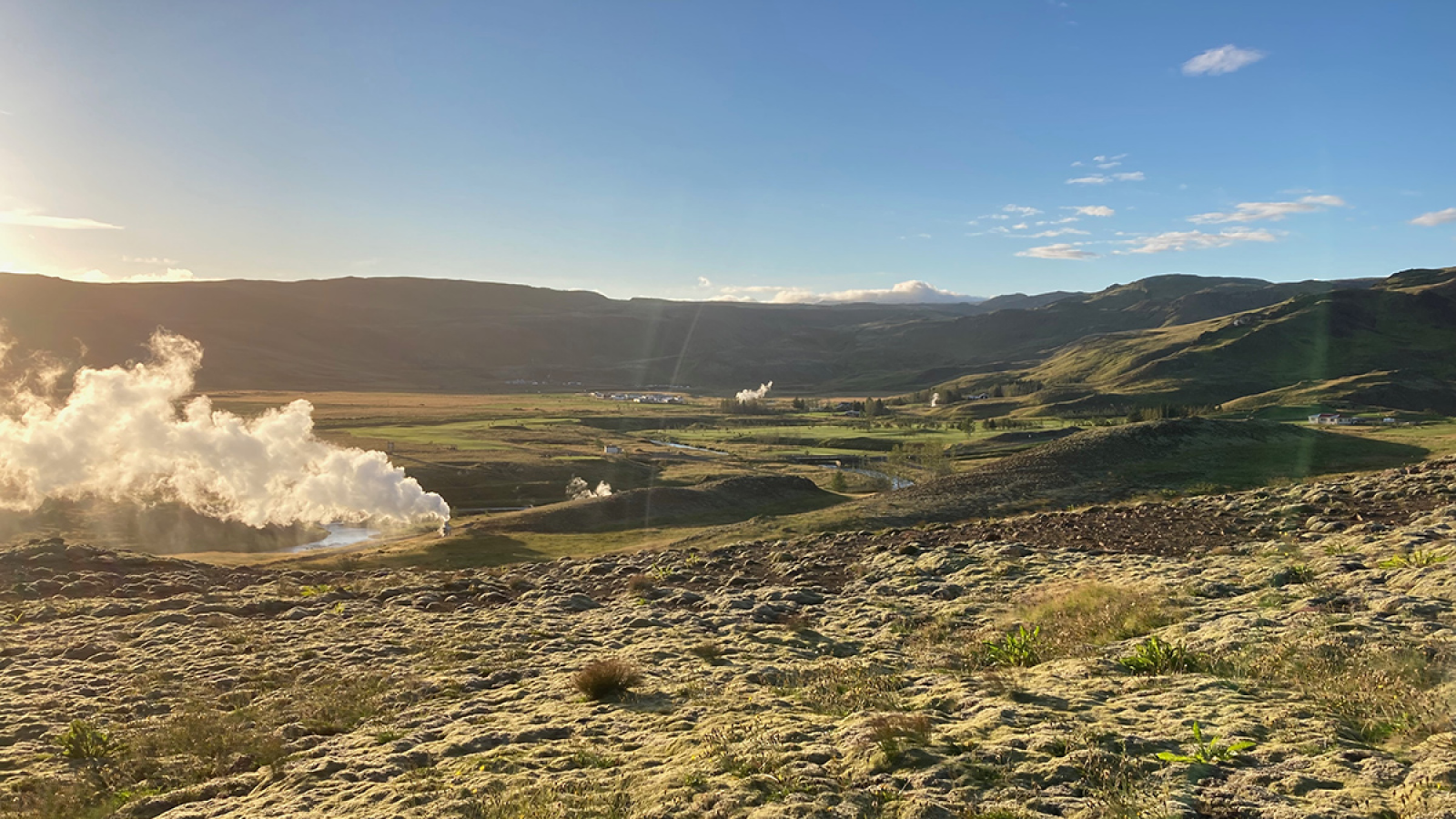
These findings come from experiments carried out in subarctic grasslands near Hveragerði, Iceland. In 2008, earthquakes rerouted groundwater in an area that had been warmed by geothermal gradients, creating patches of soil heated between 0.5°C and 40°C above normal temperatures. The event turned the region into a natural laboratory where researchers could study how ecosystems respond to long-term warming under natural conditions.

Earlier research in this location had already shown that in warming soils, microbes become highly active while plants are dormant. As a result, nitrogen-containing compounds released into the soil by the microbes were lost, either by leaching into groundwater or by escaping into the atmosphere as the potent greenhouse gas nitrous oxide.


You may like

An abandoned greenhouse near the experimental sites in Iceland serves as a reminder that climate change is having an especially strong effect on high-latitude soils. (Image credit: Sara Marañón Jiménez)

In this work, scientists added nitrogen-15 to the soil, which they could track to determine how much the plants had used up and what they did with it. Researchers found that after the initial nutrient loss, microbes became more conservative in their handling of nitrogen, recycling nitrogen internally rather than absorbing more from the ground. At the same time, microbes stopped releasing ammonium, a nitrogen-rich by-product of their normal metabolism that is usable by plants — the microbial equivalent of urine, said study coauthor Sara Marañón Jiménez, a soil scientist at the Centre for Ecological Research and Forestry Applications in Spain.

Nitrogen Heist

This change in nitrogen cycling has important consequences for the whole ecosystem. On the one hand, it has a positive effect because it prevents further nitrogen loss.

“The study shows that nitrogen is not released as inorganic nitrogen, but it seems to go directly in an organic loop,” said Sara Hallin, a soil microbiologist at the Swedish University of Agricultural Sciences in Uppsala who was not involved in the study. “You could say that it’s a positive aspect, and so it’s more beneficial for the ecosystem if that nitrogen is sort of retained.”

On the other hand, microbes’ nutrient-hoarding behavior might reduce nitrogen availability for plants. “There’s a delicate feedback between plants that take nitrogen, make photosynthesis, and put carbon in the soil as organic matter and microorganisms that take this organic matter, recycle it, and release nitrogen in forms the plants can use,” Marañón Jiménez said. “If microorganisms start immobilizing nitrogen, it could lead to competition between microbes and plants.”

Get the world’s most fascinating discoveries delivered straight to your inbox.

The team is now working on a study to determine what exactly happens to soil at the very early stage of warming, before nutrients have been lost. “This way we hope to recover the first chapters, to see what we’ve been missing,”

To this end, they transplanted bits of normal soils into heated areas to study the process in detail from the very beginning. “Soils exposed to [soil] temperature increases showed the same nutrient loss after 5 years [as] after 10 years,” Marañón Jiménez said, suggesting that most of the nutrient loss occurs early on.

A Greenhouse Time Bomb

Climate models may be underestimating how the loss of nitrogen and carbon from cold soils is contributing to global warming, researchers said. Disruptions to nutrient cycling at these latitudes could represent a previously overlooked source of greenhouse gas emissions.


You may like

Arctic soils store massive amounts of carbon, built up over thousands of years from plant material that microbes cannot fully break down. This partially decomposed organic matter accumulates, forming one of the largest carbon reservoirs on Earth. As temperatures rise, scientists expect microbes to become more active, accelerating decomposition and releasing much of this stored carbon into the atmosphere as carbon dioxide.

Researchers had hoped warmer temperatures would allow plants to grow more vigorously, absorbing some of the extra carbon released by Arctic soils.

The new findings call this idea into question. “It’s a chain reaction,” Marañón Jiménez explained. “As biomass is lost from the microbial mass, that means there’s less storage capacity for carbon and nitrogen in the soil, leading to poorer soils where plants can’t grow as well, and plants cannot compensate emissions by absorbing more carbon.”

Studying these geothermally heated soils could yield confusing results, though. “It’s not really the way global warming works,” Hallin said. Global warming includes increases in air temperature, she explained, whereas the plants in the current study had only their root system in a warmer climate, not their aboveground shoot system. “That could potentially cause some effects [the researchers] are not accounting for,” she said.

Finally, the authors of the new study also warn that not all soils have the same response to warming. The Icelandic soils in this study are volcanic and rich in minerals, unlike the organic peat soils that dominate many Arctic regions. Deep peatlands in Scandinavia and northern Russia store vast amounts of carbon and may behave differently, highlighting the need for similar long-term studies across a wider range of Arctic landscapes.

This article was originally published on Eos.org. Read the original article.
Share. Facebook Twitter LinkedIn Telegram WhatsApp Email

Keep Reading

‘Sacrifice zones’ around critical mineral mines are rife with pollution, child workers and birth defects

‘Sacrifice zones’ around critical mineral mines are rife with pollution, child workers and birth defects

The Eta Aquariid meteor shower peaks this week: How to see ‘shooting stars’ dropped by Halley’s Comet

The Eta Aquariid meteor shower peaks this week: How to see ‘shooting stars’ dropped by Halley’s Comet

Scientists detect an enormous halo around the iconic Sombrero Galaxy — Space photo of the week

Scientists detect an enormous halo around the iconic Sombrero Galaxy — Space photo of the week

Did Japan have female samurai?

Did Japan have female samurai?

Yellowstone’s volcano may be fueled in a very different way than we thought

Yellowstone’s volcano may be fueled in a very different way than we thought

Scientists identify 10,000 ‘impossible’ exoplanet candidates, potentially tripling the number of known alien worlds

Scientists identify 10,000 ‘impossible’ exoplanet candidates, potentially tripling the number of known alien worlds

Science news this week: Risky, lifesaving surgery performed on a baby in the womb, AI agent deletes a company database in 9 seconds, and the universe may end much sooner than expected

Science news this week: Risky, lifesaving surgery performed on a baby in the womb, AI agent deletes a company database in 9 seconds, and the universe may end much sooner than expected

What’s the difference between a lion and a tiger?

What’s the difference between a lion and a tiger?

‘One of the most rapid transitions that I’ve seen’: NOAA forecaster on how this year’s El Niño could shatter records

‘One of the most rapid transitions that I’ve seen’: NOAA forecaster on how this year’s El Niño could shatter records

Add A Comment
Leave A Reply Cancel Reply

Editors Picks

Jodie Sweetin says she once received a 1-cent ‘Full House’ residual check

Jodie Sweetin says she once received a 1-cent ‘Full House’ residual check

May 3, 2026
Nordstrom’s Wedding Guest Edit Has 7,000+ Gorgeous Dresses, But These 13 Are *Actually* Worth It

Nordstrom’s Wedding Guest Edit Has 7,000+ Gorgeous Dresses, But These 13 Are *Actually* Worth It

May 3, 2026
World Cup’s ‘sexiest fan’ captures attention of Formula 1 cameraman

World Cup’s ‘sexiest fan’ captures attention of Formula 1 cameraman

May 3, 2026
DOT Secretary Duffy blames Biden admin, Pete Buttigieg for Spirit Airlines’ failure

DOT Secretary Duffy blames Biden admin, Pete Buttigieg for Spirit Airlines’ failure

May 3, 2026

Subscribe to News

Get the latest USA news and updates directly to your inbox.

Latest News
Taxpayer-backed Ivanpah solar plant kills birds and burns fossil fuels

Taxpayer-backed Ivanpah solar plant kills birds and burns fossil fuels

May 3, 2026
Confirmed: All the New York City It-Girls Are Ditching Jeans for This Boho-Chic Staple

Confirmed: All the New York City It-Girls Are Ditching Jeans for This Boho-Chic Staple

May 3, 2026
Joel Embiid begs 76ers ticket-holders not to sell to Knicks fans: ‘This is bigger than you’

Joel Embiid begs 76ers ticket-holders not to sell to Knicks fans: ‘This is bigger than you’

May 3, 2026
Facebook X (Twitter) Pinterest WhatsApp TikTok Instagram
© 2026 USA Times. All Rights Reserved.
  • Privacy Policy
  • Terms
  • Advertise
  • Contact

Type above and press Enter to search. Press Esc to cancel.