

Close Menu
  • Home
  • United States
  • World
  • Politics
  • Business
  • Lifestyle
  • Entertainment
  • Health
  • Science
  • Tech
  • Sports
  • More
    • Web Stories
    • Editor’s Picks
    • Press Release

Subscribe to Updates

Get the latest USA news and updates directly to your inbox.

What's On
Seniors over 80 who eat specific diet may be less likely to reach 100 years old

Seniors over 80 who eat specific diet may be less likely to reach 100 years old

March 4, 2026
Former Yankees World Series great Mark Teixeira wins GOP House primary race in Texas

Former Yankees World Series great Mark Teixeira wins GOP House primary race in Texas

March 4, 2026
Minnesota police sergeant dies 24 hours after brain infection

Minnesota police sergeant dies 24 hours after brain infection

March 4, 2026
Facebook X (Twitter) Instagram
Trending
  • Seniors over 80 who eat specific diet may be less likely to reach 100 years old
  • Former Yankees World Series great Mark Teixeira wins GOP House primary race in Texas
  • Minnesota police sergeant dies 24 hours after brain infection
  • NCIS’ Wilmer and Emily Reveal What Torres and Bishop’s Reunion Kiss Means: They’re ‘Intertwined’ (Exclusive)
  • Yankees catcher looking to make team belts second homer of spring
  • James Talarico takes down firebrand Jasmine Crockett in fierce Dem battle for Texas Senate
  • State Rep James Talarico wins Texas Democratic Senate primary election race
  • Hillary Clinton Doesn’t Object to Claim Jeffrey Epstein Thought She Was ‘Prettier in Person’
  • Privacy
  • Terms
  • Advertise
  • Contact Us
Join Us
USA TimesUSA Times
Newsletter Login
  • Home
  • United States
  • World
  • Politics
  • Business
  • Lifestyle
  • Entertainment
  • Health
  • Science
  • Tech
  • Sports
  • More
    • Web Stories
    • Editor’s Picks
    • Press Release
USA TimesUSA Times
Home » How the ancient Romans managed their wealth (it wasn’t just by hiding hoards)
How the ancient Romans managed their wealth (it wasn’t just by hiding hoards)
Science

How the ancient Romans managed their wealth (it wasn’t just by hiding hoards)

News RoomBy News RoomJanuary 18, 20261 ViewsNo Comments

“All I want is an income of 20,000 sesterces from secure investments”, proclaims a character in a poem by Juvenal (first to second century A.D.), the Roman poet.

Today, 20,000 sesterces would be equivalent to about [Australian] $300,000 in interest from investments. Anyone would be very happy with this much passive annual income.

Like today, people in ancient times understood that investing money could help them consolidate and grow their wealth.


You may like

As the Roman novelist Petronius (first century A.D.) once wrote,

Whoever has money sails with a fair breeze, and governs his fortune as he wishes.

So, how exactly did ancient people invest their money?

A lofty house with hidden silver

In ancient Greek and Roman times, there was no stock market where you could buy and trade shares in a company.

Get the world’s most fascinating discoveries delivered straight to your inbox.

If you wanted to invest your cash, one of the more popular options was to obtain gold or silver.

People did this to protect against currency fluctuations and inflation. They usually kept the metals either in bullion form or in the form of ware like jewelry. Storing these items could be risky and prone to theft.

The Roman poet Virgil (70 to 19 B.C.) describes the estate of a wealthy person that included “a lofty house, where talents of silver lie deeply hidden” alongside “weights of gold in bullion and in ware”.

A talent was the largest unit of currency measurement in ancient Greece and Rome, equivalent to about 25 kg [55 pounds] of weighed silver.

A detail from a mosaic of Virgil Writing the Aeneid, held in the Bardo Museum in Tunis, Tunisia. (Image credit: Roger Wood/Corbis/VCG via Getty Images)

Usually the metals were stored in a special vault or security cupboard.

The Roman writer Cicero (106 to 43 B.C.) recalls how a wealthy lady named Clodia would take gold (perhaps bars or ingots or plates) out of a security cupboard when she wished to lend money to someone. The gold could then be exchanged for coinage.

Market booms — and busts

The price of these metals could, however, occasionally be subject to unpredictable fluctuations and crashes in price, though less often than currency.

The Greek historian Polybius (c. 200 to 118 B.C.) says that when a new gold vein was discovered in Aquileia, Italy, only two feet deep, it caused a gold rush. The new material flooded the market too quickly and “the price of gold throughout Italy at once fell by one-third” after only two months. To stabilize the gold price, mining in the area was quickly monopolized and regulated.

When people wanted to trade precious metals, they would sell them by weight. If the gold or silver or bronze had been worked into jewelry or other objects, this could be melted down and turned into bullion.

People must have delighted in owning these precious metals.

The Athenian writer Xenophon (c. 430 to 350 B.C.) gives a clue about the mindset of ancient silver investors:

Silver is not like furniture, of which a man never buys more once he has got enough for his house. No one ever yet possessed so much silver as to want no more; if a man finds himself with a huge amount of it, he takes as much pleasure in burying the surplus as in using it.

A number of Roman wills reveal people leaving their heirs silver and gold in the form of bars, plates or ingots.

A close up and a regular picture of two rectangular gold ingots on a black background.

Roman gold ingot, dating to circa 375 A.D., in the Bank of England Museum collection.  (Image credit: Joyofmuseums, CC BY-SA 4.0, via Wikimedia Commons)

Commodities that could not be ‘ruined by Jupiter’

Aside from metals, agricultural commodities were also very popular, especially grain, olive oil, and wine.

To profit from agricultural commodities, people bought farmland and traded the commodities on the market.

The Roman statesman Cato thought putting money into the production of essential goods was the safest investment. He said these things “could not be ruined by Jupiter” – in other words, they were resistant to unpredictable movements in the economy.

Bust of Gaius Caligula looking over his shoulder

A bust of Emperor Caligula in the Louvre museum (Image credit: anonymous, CC BY-SA 3.0, via Wikimedia Commons)

Whereas precious metals were a store of wealth, they generated no income unless they were sold. But a diversified portfolio of agricultural commodities guaranteed a permanent income.

People also invested and traded in precious goods, like artworks.

When the Romans sacked the city of Corinth in 146 B.C., they stole the city’s collection of famous artwork, and later sold the masterpieces for huge sums of money at auction in order to bring profit for the Roman state.

At this auction, the King of Pergamon, Attalus II (220 to 138 B.C.), bought one of the paintings, by the master artist Aristeides of Thebes (fourth century B.C.), for the incredible sum of 100 talents (about 2,500 kg [5,500 pounds] of silver).

Eccentric emperors

Political instability or uncertainty sometimes raised the price of these metals.

The Greek historian Appian (secondnd century A.D.) records how during the Roman civil war in 32. to 30 B.C.:

the price of all commodities had risen, and the Romans ascribed the cause of this to the quarreling of the leaders whom they cursed.

Eccentric emperors might also impose new taxes or charges on commodities, or try to manipulate the market.

The Roman historian Suetonius (c. A.D. 69 to 122 ) tells us the emperor Caligula (A.D. 12 to 41) “levied new and unheard of taxes […] and there was no class of commodities or men on which he did not impose some form of tariff.”

Another emperor, Vespasian (A.D. 17 to 79), went so far as to “buy up certain commodities merely in order to distribute them at profit”, says Suetonius.

Clearly, investing in commodities 2,000 years ago could help build personal wealth — but also involved some risk, just like today.

This edited article is republished from The Conversation under a Creative Commons license. Read the original article.

Share. Facebook Twitter LinkedIn Telegram WhatsApp Email

Keep Reading

Prehistoric water-dwelling weirdo with sideways teeth and a twisted jaw was already a ‘living fossil’ 275 million years ago

Prehistoric water-dwelling weirdo with sideways teeth and a twisted jaw was already a ‘living fossil’ 275 million years ago

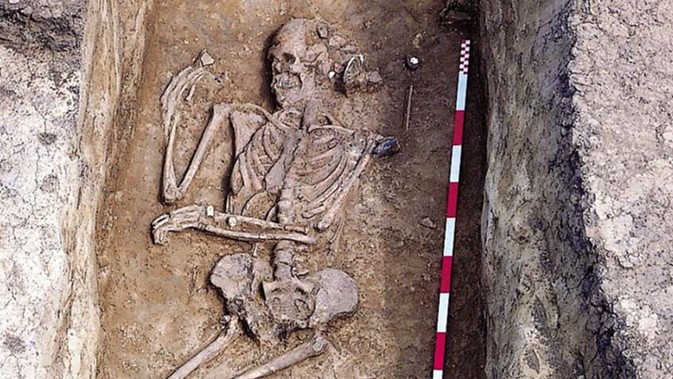
Stone Age woman was buried like a man, revealing flexible gender roles 7,000 years ago in Hungary

Stone Age woman was buried like a man, revealing flexible gender roles 7,000 years ago in Hungary

JWST’s ‘little red dots’ could be the ‘parents’ of the universe’s first supermassive black holes

JWST’s ‘little red dots’ could be the ‘parents’ of the universe’s first supermassive black holes

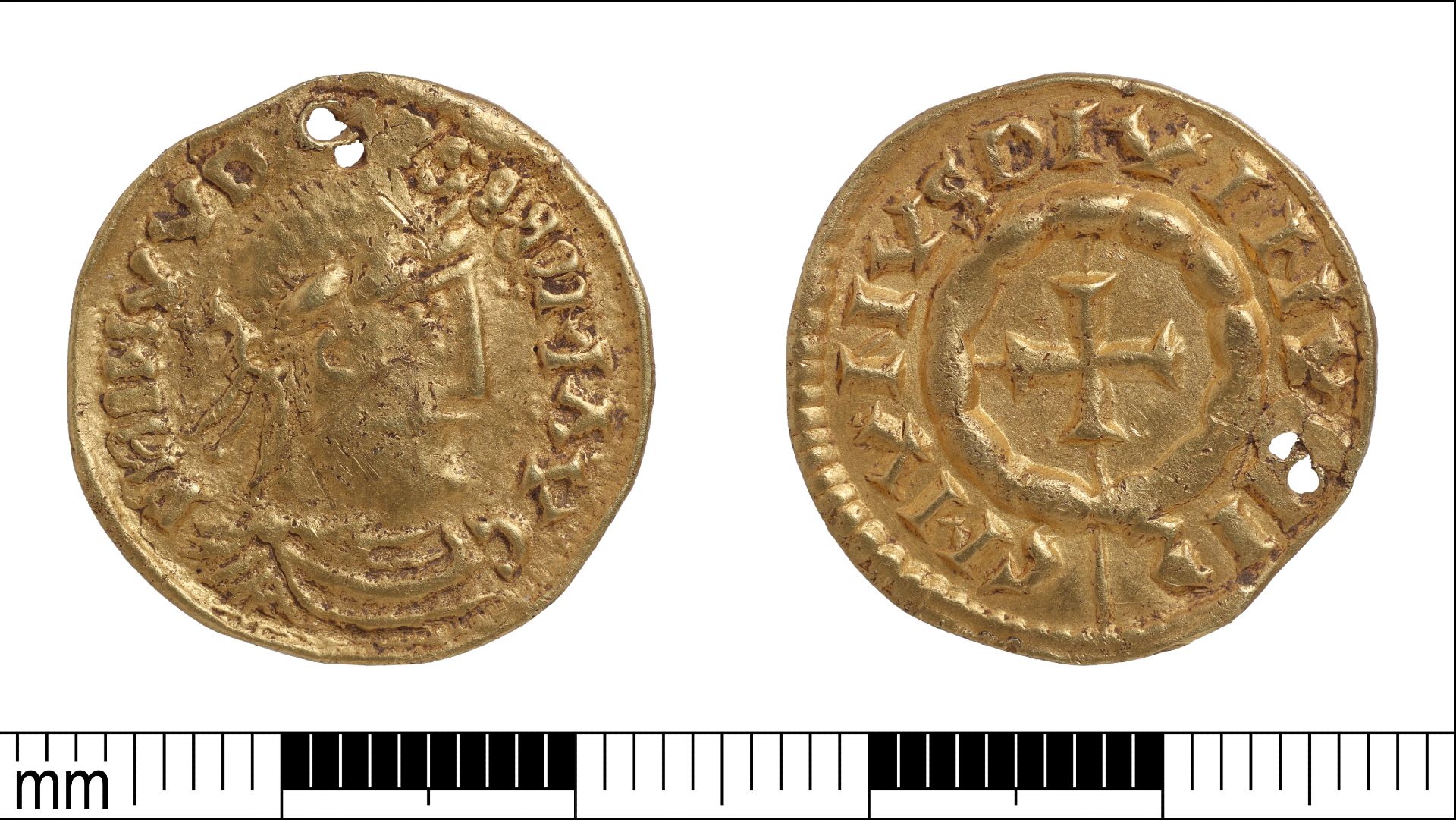
Gold coin discovered by a metal detectorist in the UK may have been dropped by a Viking invader from the Great Heathen Army

Gold coin discovered by a metal detectorist in the UK may have been dropped by a Viking invader from the Great Heathen Army

‘An entirely new tool for cosmology’: The gravitational wave background could mend our broken understanding of the universe

‘An entirely new tool for cosmology’: The gravitational wave background could mend our broken understanding of the universe

March 3 ‘blood moon’ total lunar eclipse dazzles millions around the world (photos)

March 3 ‘blood moon’ total lunar eclipse dazzles millions around the world (photos)

Vanuatu’s ‘barefoot volcanologist’ stands at ash- and sulfur-spewing Mount Yasur in award-winning photograph

Vanuatu’s ‘barefoot volcanologist’ stands at ash- and sulfur-spewing Mount Yasur in award-winning photograph

Every ant is a queen in this parasitic species — and they reproduce by cloning themselves and hijacking other ant colonies

Every ant is a queen in this parasitic species — and they reproduce by cloning themselves and hijacking other ant colonies

3 rivers merge into striking half-and-half waterway in Guyana — Earth from space

3 rivers merge into striking half-and-half waterway in Guyana — Earth from space

Add A Comment
Leave A Reply Cancel Reply

Editors Picks

Former Yankees World Series great Mark Teixeira wins GOP House primary race in Texas

Former Yankees World Series great Mark Teixeira wins GOP House primary race in Texas

March 4, 2026
Minnesota police sergeant dies 24 hours after brain infection

Minnesota police sergeant dies 24 hours after brain infection

March 4, 2026
NCIS’ Wilmer and Emily Reveal What Torres and Bishop’s Reunion Kiss Means: They’re ‘Intertwined’ (Exclusive)

NCIS’ Wilmer and Emily Reveal What Torres and Bishop’s Reunion Kiss Means: They’re ‘Intertwined’ (Exclusive)

March 4, 2026
Yankees catcher looking to make team belts second homer of spring

Yankees catcher looking to make team belts second homer of spring

March 4, 2026

Subscribe to News

Get the latest USA news and updates directly to your inbox.

Latest News
James Talarico takes down firebrand Jasmine Crockett in fierce Dem battle for Texas Senate

James Talarico takes down firebrand Jasmine Crockett in fierce Dem battle for Texas Senate

March 4, 2026
State Rep James Talarico wins Texas Democratic Senate primary election race

State Rep James Talarico wins Texas Democratic Senate primary election race

March 4, 2026
Hillary Clinton Doesn’t Object to Claim Jeffrey Epstein Thought She Was ‘Prettier in Person’

Hillary Clinton Doesn’t Object to Claim Jeffrey Epstein Thought She Was ‘Prettier in Person’

March 4, 2026
Facebook X (Twitter) Pinterest WhatsApp TikTok Instagram
© 2026 USA Times. All Rights Reserved.
  • Privacy Policy
  • Terms
  • Advertise
  • Contact

Type above and press Enter to search. Press Esc to cancel.