





Around 2,700 years ago, a partially cremated woman was buried with a mule — the oldest remains of the hybrid animal ever found in Western Europe, a new study reveals.
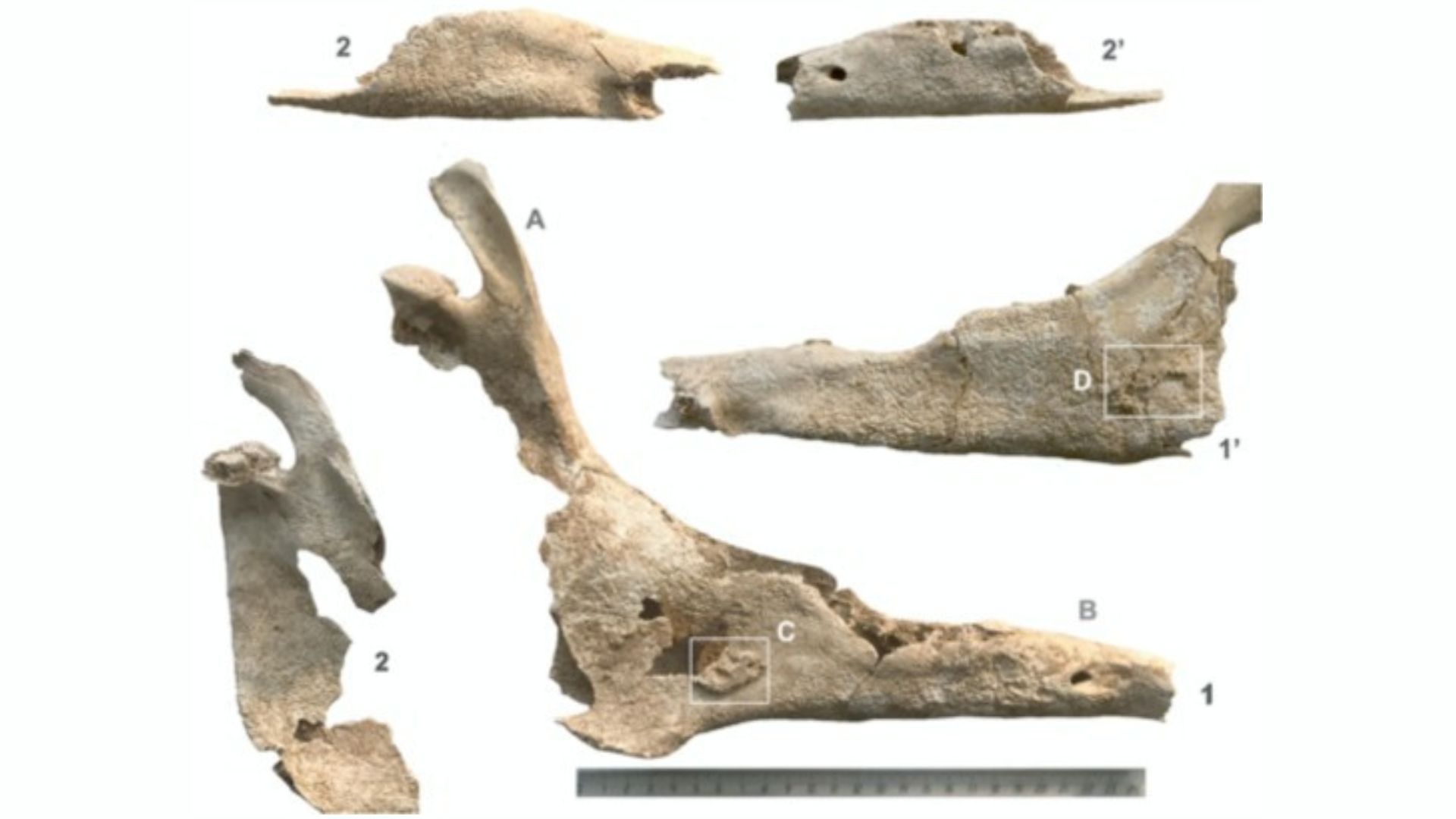
The mule and woman were interred inside an ancient rock-lined pit that served as a silo at the archaeological site of Hort d’en Grimau in northeastern Spain. Although the skeletons were discovered in 1986, genetic testing recently identified one set of remains as a mule.
Mules are usually sterile, and getting a male donkey to breed with a horse is challenging. Ancient people who bred them had to train donkey stallions “from a young age to mount mares,” the team wrote, noting that these difficulties made mules valuable throughout history.
The oldest mules on record date to more than 4,000 years ago and were found in the Middle East, F. Javier López Cachero, an archaeologist at the University of Barcelona and co-author of the paper, told Live Science in an email.
At the time this particular mule lived, seafaring people called the Phoenicians were active in Spain. They were based in the Middle East, and they may have brought their knowledge of how to breed a mule, the team noted in the paper.
The scientists examined the ratios of isotopes (atoms with varying numbers of neutrons in their nuclei) in the mule’s remains, as these chemical remnants can provide clues about the food it ate. They found that the mule was fed a diet rich in cultivated cereals, while an anatomical analysis of its bones indicated that the mule was used extensively for riding.
“The mule shows clear evidence of having been ridden and well‑fed, suggesting that it held considerable social value,” López Cachero said.
The woman buried with the mule was between 20 and 25 years old when she died, but little else is known about her.
“Unfortunately, the condition of the skeletal remains does not permit any assessment of the woman’s health nor determination of her cause of death,” López Cachero said. However, an analysis found that the woman had been partially cremated before her burial and that her remains were in pieces when they were put into the burial, rather than carefully laid out.
“The mule, however, shows no signs of cremation,” he noted. “This remains a challenging question.”
Horses in or near human burials sometimes indicated “warrior” status in the ancient world, but it’s unclear why this woman was buried with a mule.
The “funerary treatment of the human remains is ‘unconventional’, and the absence of grave goods prevents any firm conclusions regarding the woman’s social status,” López Cachero said.
Albizuri, S., Nadal, J., Cuervo, M. M., Grandal-D’Anglade, A., Orlando, L., Fages, A., Mercadal, O., Mestre, J., Farré, J., & Cachero, J. L. (2025). The oldest mule in the western Mediterranean. The case of the Early Iron Age in Hort d’en Grimau (Penedès, Barcelona, Spain). Journal of Archaeological Science Reports, 69, 105506. https://doi.org/10.1016/j.jasrep.2025.105506