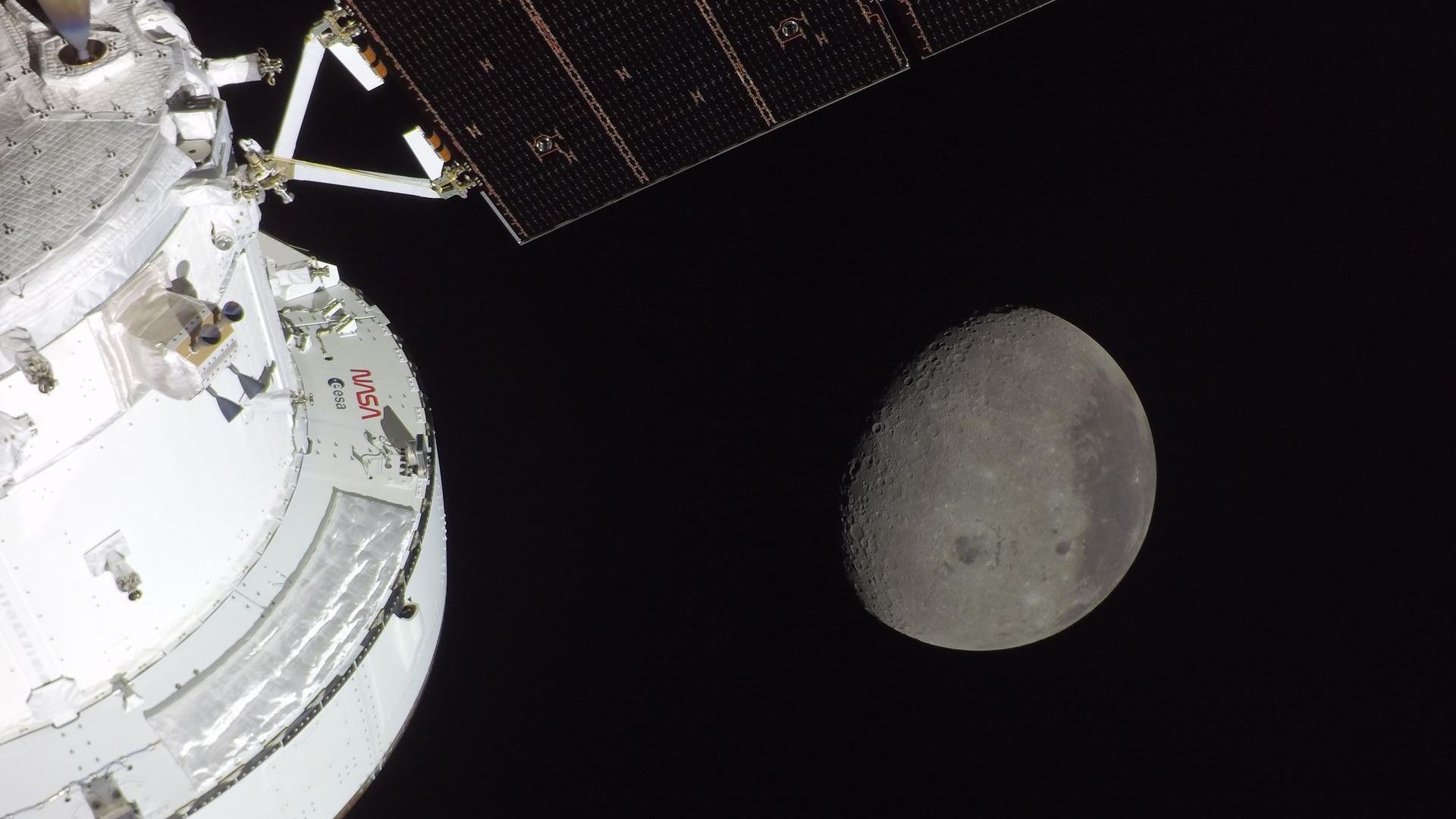


The four Artemis II astronauts will return to Earth on Friday (April 10) — delivering not only themselves but also a precious trove of images from their lunar journey. And the geologists supporting the mission can hardly wait to dive in.
“The images are spectacular, absolutely,” Gordon Osinski, a crater specialist and planetary geologist at Canada’s Western University who has been deeply involved in the Artemis II crew’s geology training, told Live Science after seeing the first photos of the crew’s seven-hour lunar flyby.
A green, brown and flashy moon
Two geological findings stand out so far. One of these is impact flashes — brief but bright flashes of light from when space rocks slam into the moon, leaving craters behind.
Artemis II astronauts Reid Wiseman and Jeremy Hanson reported seeing at least five of these flashes during their lunar flyby. Geologists hope to review the crew’s images, once they return to Earth, to potentially identify the craters associated with the impacts.
“The conditions that [the crew] had to view those was perfect,” Osinski said, referring to the crew’s passage over the lunar terminator — the stark dividing line between the moon’s bright day-side and dark night-side, where contrast is heightened and flashes are easier to spot.
Secondly, mission scientists are eager to investigate the crew’s descriptions of lunar colors. Geologists have only heard a few quick impressions from the crew so far, mainly over voice communications open to the public. But the Artemis II crew was recording more lunar flyby observations by voice and in notes in an archive that will take weeks to review.
The astronauts reported some intriguing things, such as patches of green and brown on the lunar surface.
“We do know there is color on the lunar surface,” Osinski said. The human eye, he added, is more sensitive to color than the cameras on board Artemis II, so “that’s definitely going to be something interesting to follow up.”
The human touch in space
For years, Osinski has been giving geologic training to Artemis II crew members. Hansen is a repeat contributor to Osinski’s remote Canadian crater expeditions, often done alongside Indigenous groups. During Artemis II preparation, mission specialist Christina Koch and Canadian Space Agency backup astronaut Jenni Gibbons joined Hansen and Osinski on a 2023 expedition to a moon-like crater in northern Labrador, Canada.
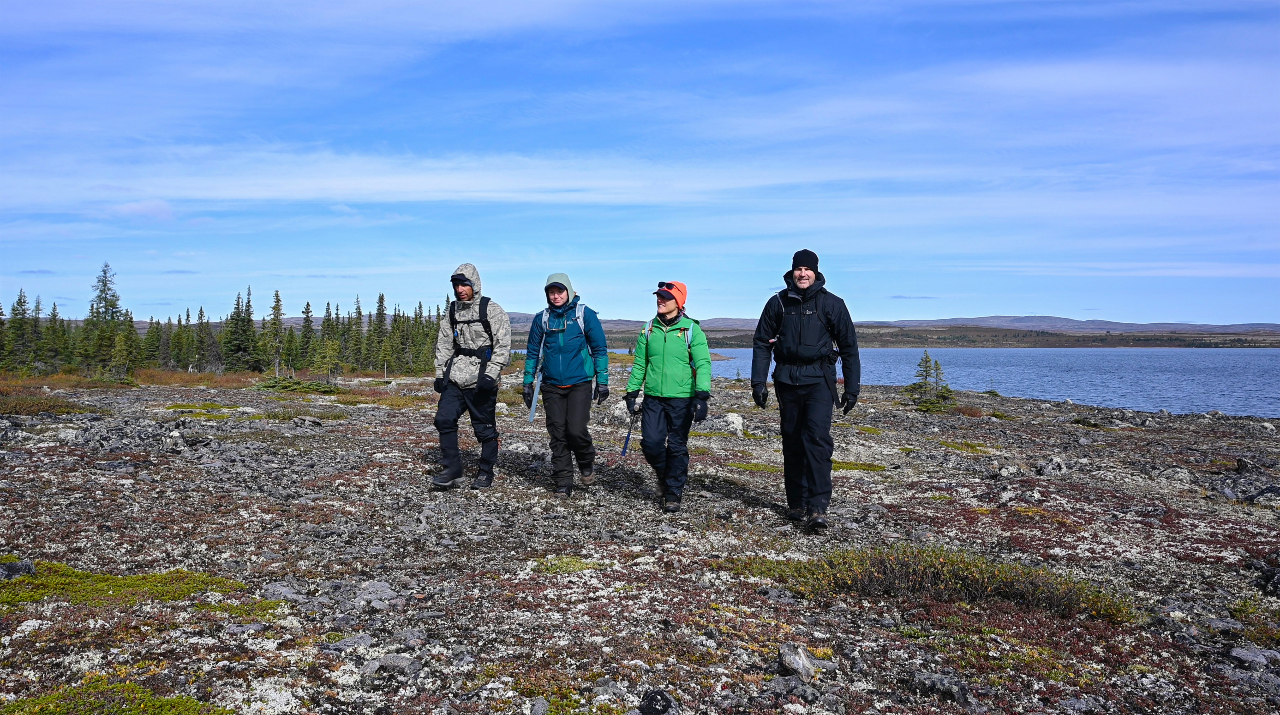

Because the Artemis II astronauts could not sample the lunar surface directly, they were trained on how to make descriptions. They also used “situational awareness” for some situations, such as distinguishing between volcanic and impact processes, although the bulk of the interpretation will require months of work on Earth by geologists after the mission is complete.
But there is more that the Artemis II astronauts can provide. The astronauts form part of a group of less than 30 people who have seen the moon close up in-person, enabling them to bring human eyes and experiences to observations.
What’s more, Artemis II is the first lunar astronaut mission in nearly two generations, enabling the astronauts (and their supporting scientists) to bring decades of insights into crater impacts, water ice and other features of the moon that Apollo officials did not have access to. The images Artemis II sent to Earth so far are just a subset of what’s on board. Osinski said that in particular, he is interested in seeing the high-resolution 400-milimeter (16 inches) lens images by the crew to compare with images taken by NASA’s Lunar Reconnaissance Orbiter.
Bringing the moon back home
After Artemis II returns, Osinski and other geologists will take what was learned from the astronaut observations to work on future lunar surface missions. Planning has been ongoing for the surface work for two years, with the team now working on items such as narrowing down which sites might be useful to land at, and announcing which participating scientists will join.
Jacob Bleacher, NASA’s chief exploration scientist, told Live Science the geology teams are working on landing products for the first astronauts on the surface, and are expecting to get more data from commercial landing missions supporting NASA. Firefly Aerospace’s Blue Ghost mission was the first to make it there, achieving 60 days of operations in 2025. “We procured a good bit of data from them,” Bleacher said, and the hope is that more companies will touch down before Artemis IV brings astronauts to the lunar surface in 2028.
For now, geologists are already hard at work making a plan for the moon-sample return.
Osinski is co-investigator of the geology team that will support the Artemis IV astronauts. Osinski said his team will likely be working with a lower-resolution live video feed that will enable, at least to an extent, the geologists on Earth to help the astronauts on site with observations.
That said, Artemis surface astronauts may also have to make quick decisions about sampling, which will be another training regime, Osinski said, requiring them to work independently.
“They might have to be making a split-second decision on the surface, if they’re running out of time at a station: you know, ‘Do I choose this one or this one?’ And there might not be time for the back and forth with the science team on Mission Control,” Osinski said.