





Quick Facts
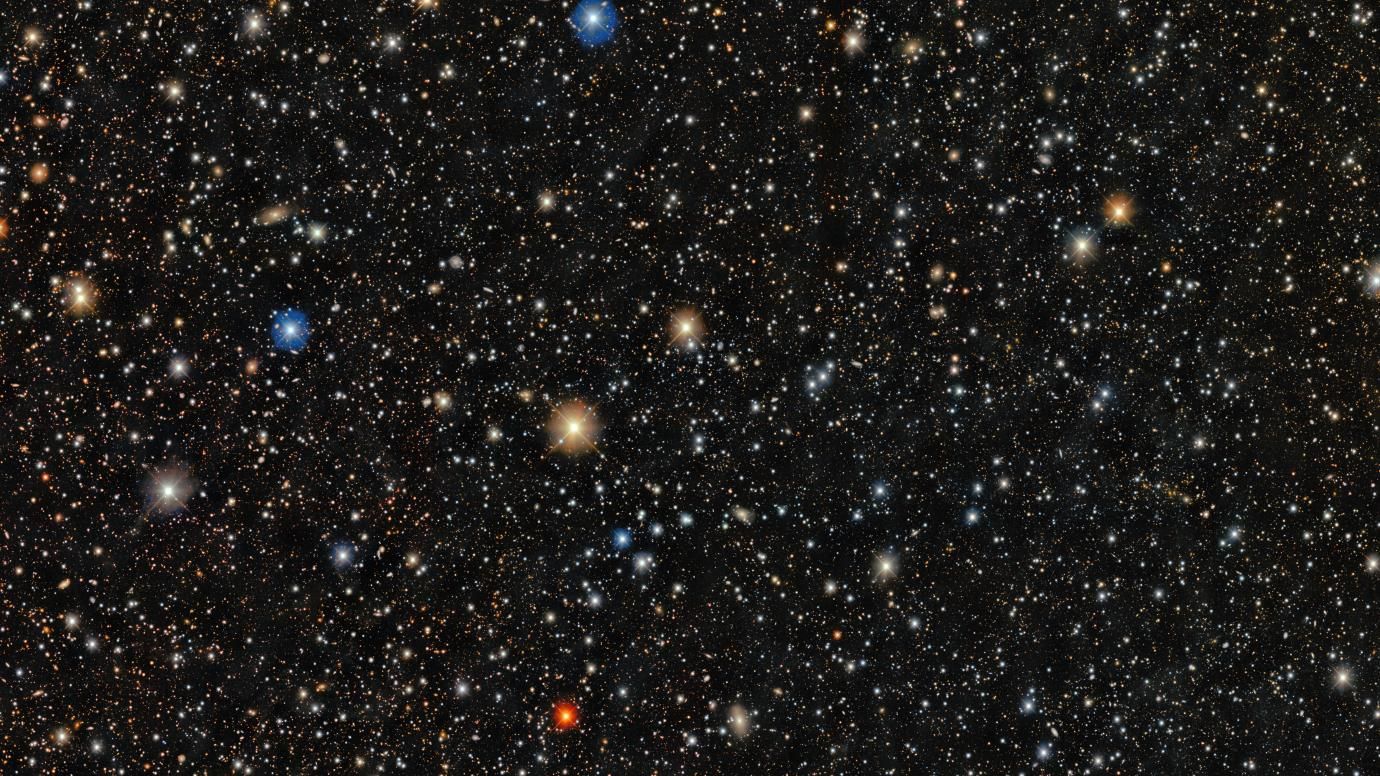
What it is: Star PicII-503 inside the Pictor II dwarf galaxy
Where it is: 150,000 light-years from Earth in the Pictor constellation
When it was shared: March 16, 2026
This gorgeous snap, taken by the Dark Energy Camera (DECam) mounted atop the Víctor M. Blanco 4-meter (13 feet) Telescope in Chile, shows a glistening field of stars inside the dwarf galaxy Pictor II, which is more than 10 billion years old.
Population II stars formed when the cosmos was young and stars had yet to fuse heavier elements into existence, meaning they are composed primarily of hydrogen and helium. This means that PicII-503 has roughly only 1-40,000th of the iron contained within our much younger sun.
Article continues below
But what the star lacks in iron it makes up for in carbon. Like many Pop II stars, PicII-503 is unusually rich in the stuff, having a carbon-to-iron ratio that’s more than 1,500 times the ratio in the sun, researchers said in a statement.
Astronomers have proposed many theories why this may be the case but because many Pop II stars are spotted after they’ve migrated away from their birthplaces, these suggestions have been hard to verify.
But PicII-503 is still located within its primordial dwarf galaxy, so astronomers acted as “stellar archeologists,” using the star’s composition to test their theories. The star’s carbon-rich makeup lends credence to an idea that, during the violent supernova explosion at the end of a star’s life, lightweight carbon in the star’s outer shell is flung farther away than other elements.
That could also explain why carbon ends up everywhere in the universe, making it an extremely suitable element to act as the key building block for life.