



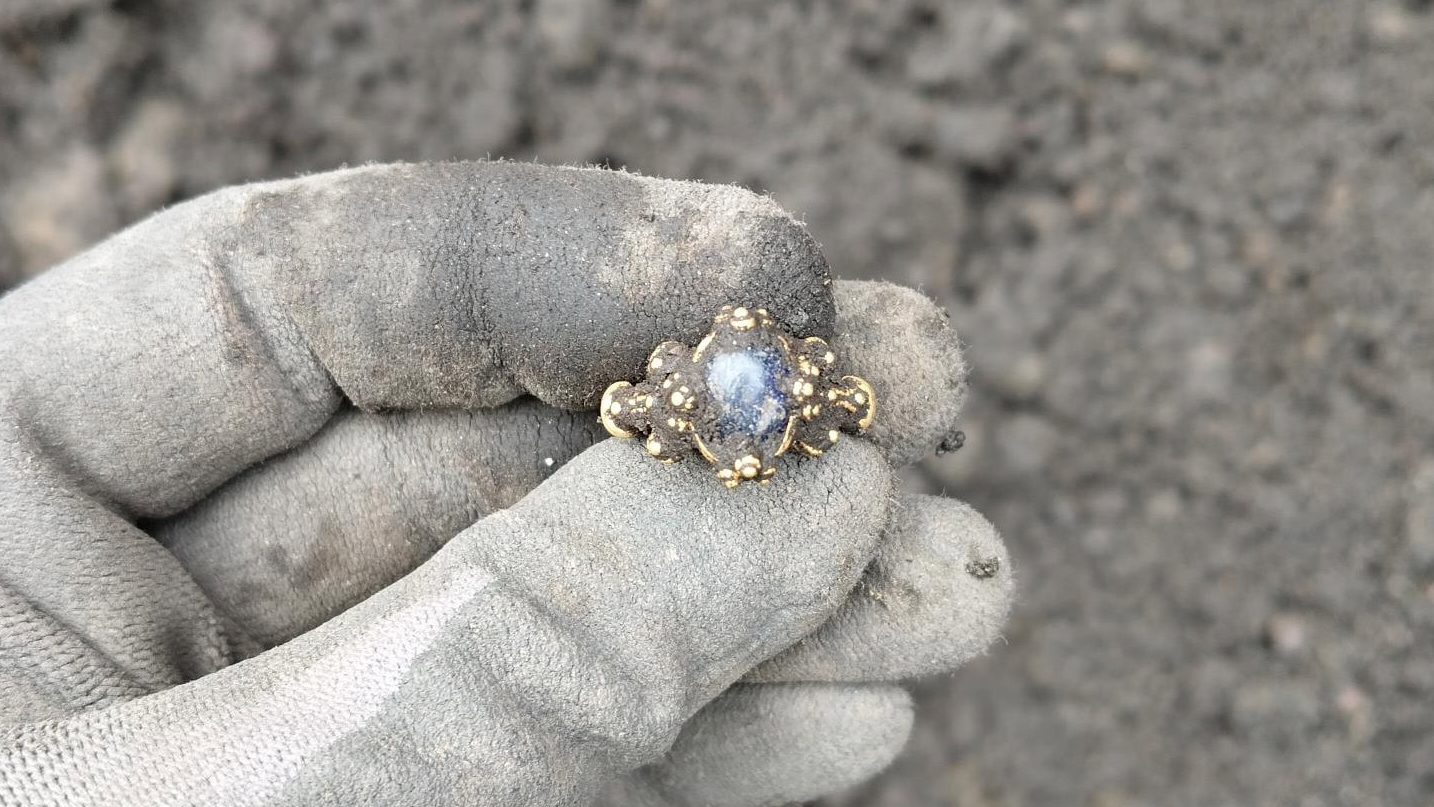


An archaeologist excavating a medieval town in southern Norway had an “out-of-body experience” when she stumbled upon a dream find: a delicate gold ring with a dazzling blue gemstone.
“I was completely shaken and had to ask the construction guys if they were messing with me,” Linda Åsheim, an archaeologist with the Norwegian Institute for Cultural Heritage Research (NIKU), said in a translated statement.
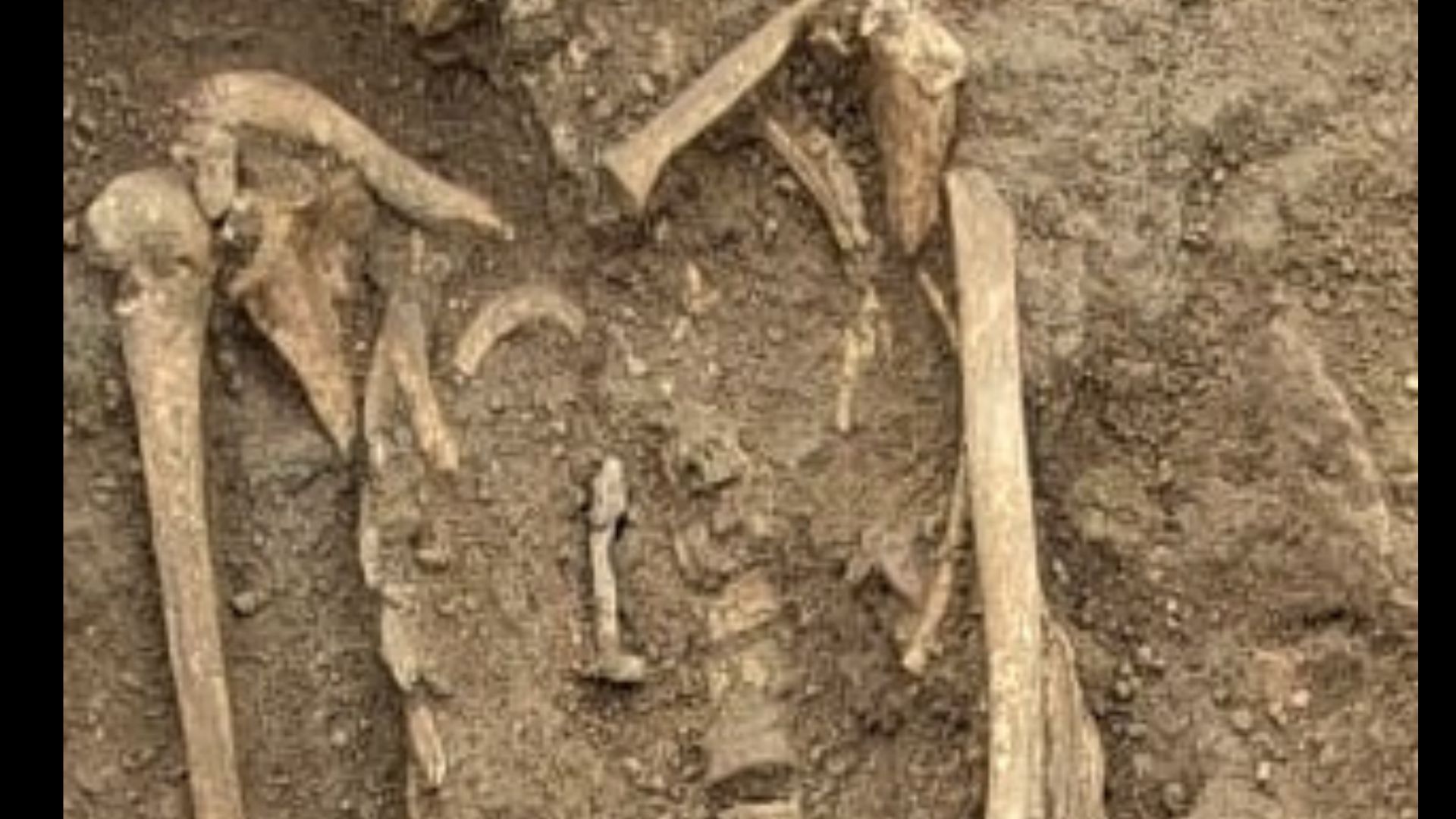
Last summer, Åsheim was working in the center of Tønsberg, Norway’s oldest city. Over the course of two seasons, archaeologists had begun to uncover houses, streets and other remnants of medieval Tønsberg, which was originally founded in the ninth century. The medieval town was located just below a royal castle complex erected by the Yngling dynasty of Scandinavian kings.
The gold ring holds an oval stone — possibly a sapphire, based on its deep-blue color. Thin, gold threads twisted into an intricate pattern flank the stone, and small, gold balls have been soldered on as additional decorations.
The combination of spirals and gold balls suggests the ring was made sometime in the ninth to 11th centuries, Marianne Vedeler, an archaeologist at the University of Oslo, said in the statement. This style of goldwork came to Norway from the Byzantine Empire in the early Middle Ages.
Based on its size, the Tønsberg ring likely belonged to a high-status woman, the team said. They estimated the ring would fit someone with a finger circumference between 50 and 55 millimeters, which is equivalent to a U.S. women’s ring size of 5 1/2 to 7 1/2.
Ring wearing may have been a symbol of the woman’s wealth and status, but the gemstone could have held additional meaning. Although it is not yet clear if the gem is a real sapphire or an imitation made from cobalt-colored glass, blue sapphires were known in the Middle Ages to symbolize divine power, to help the wearer maintain their chastity, and to cure boils, among other things, according to the NIKU.
“It has been 15 years since we last found a gold ring in Tønsberg, and this one is a fantastically beautiful and rare specimen,” NIKU archaeologist and project manager Hanne Ekstrøm Jordahl said.