



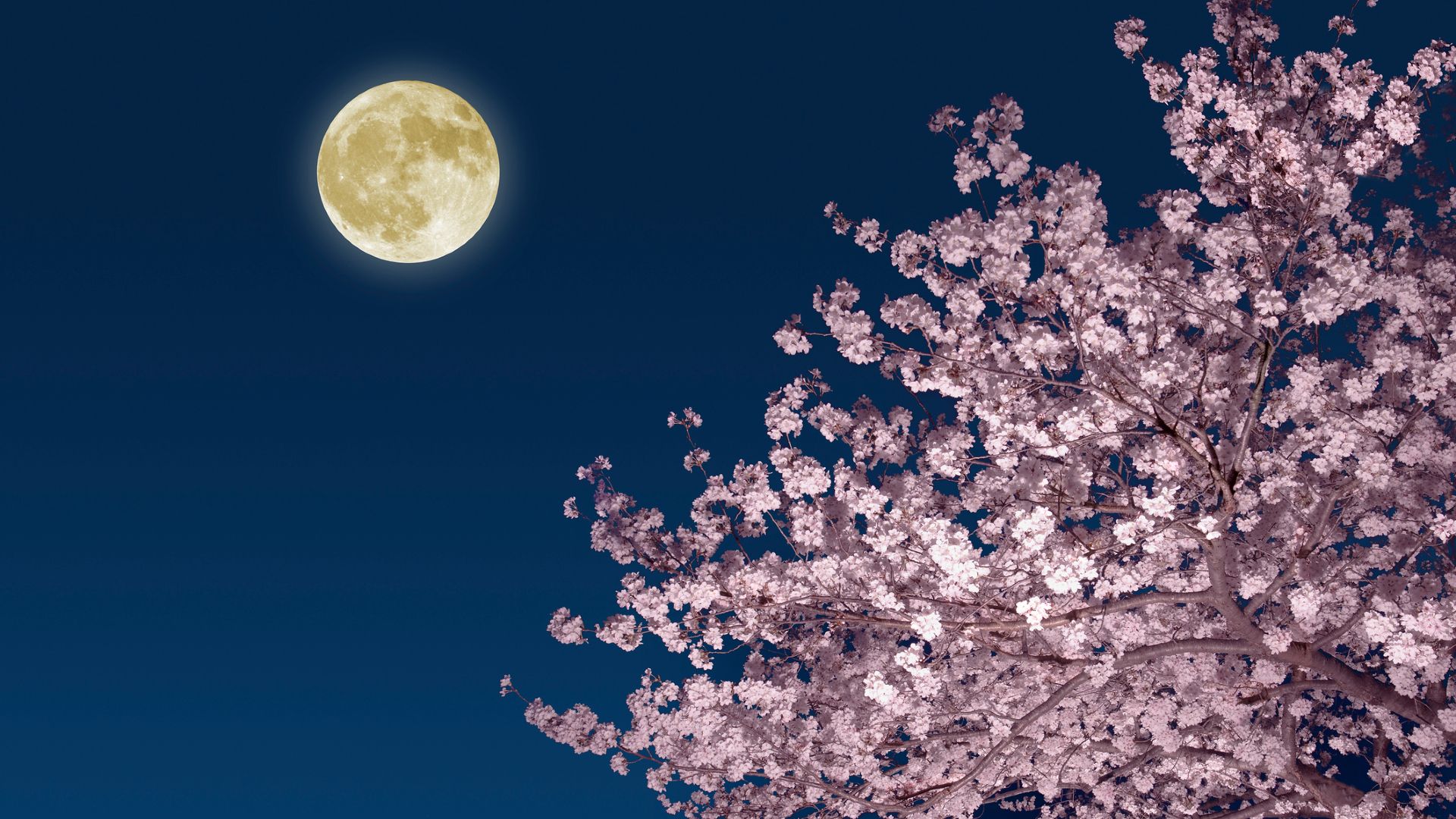


April’s full moon, known as the Pink Moon, is the first full moon of spring in the Northern Hemisphere. It will be at its fullest on Wednesday, April 1, but it will also look bright and full Tuesday and Thursday (March 31 and April 2). Only on Wednesday, though, will it appear close to the bright star Spica, offering a double skywatching treat.
April’s Pink Moon isn’t named for its color, which doesn’t change. Instead, the name comes from the pink phlox wildflowers that are native to North America and often bloom in April, according to The Old Farmer’s Almanac.
Article continues below
April’s Pink Moon also often has a role in Jewish and Western Christian traditions. Its rise marks the beginning of the Jewish festival of Pesach (Passover), which, this year, begins at sunset on April 1, the 15th day of the Hebrew month of Nisan. However, that’s purely because the Hebrew calendar is lunisolar.
In Christianity, the first full moon of spring is associated with Easter Sunday. According to the U.S. Naval Observatory, Easter falls on the first Sunday following the first ecclesiastical full moon that occurs on or after the day of the vernal equinox. The equinox was on March 20 this year, so with the next full moon on April 1, Easter Sunday will be on April 5. Easter in the Eastern Orthodox tradition will be a week later, on Sunday, April 12.
The best night to watch the full moon will be April 1, when it will rise in the eastern sky as the sun sets across North America. Check the times of moonrise and moonset for your location, and find a spot with a view of the low eastern horizon.
You’ll see Spica, the bright star in the constellation Virgo, beneath the Pink Moon. The following night, Thursday, April 2, the waning gibbous moon will be just 1.8 degrees from Spica, according to AstroPixels.
After the Pink Moon, the next full moon will be the Flower Moon, also called the Corn Planting Moon and the Milk Moon, on May 1. It will be the first of two full moons in May, with the second being a so-called Blue Moon (the second full moon in a single calendar month) on May 31.