





QUICK FACTS
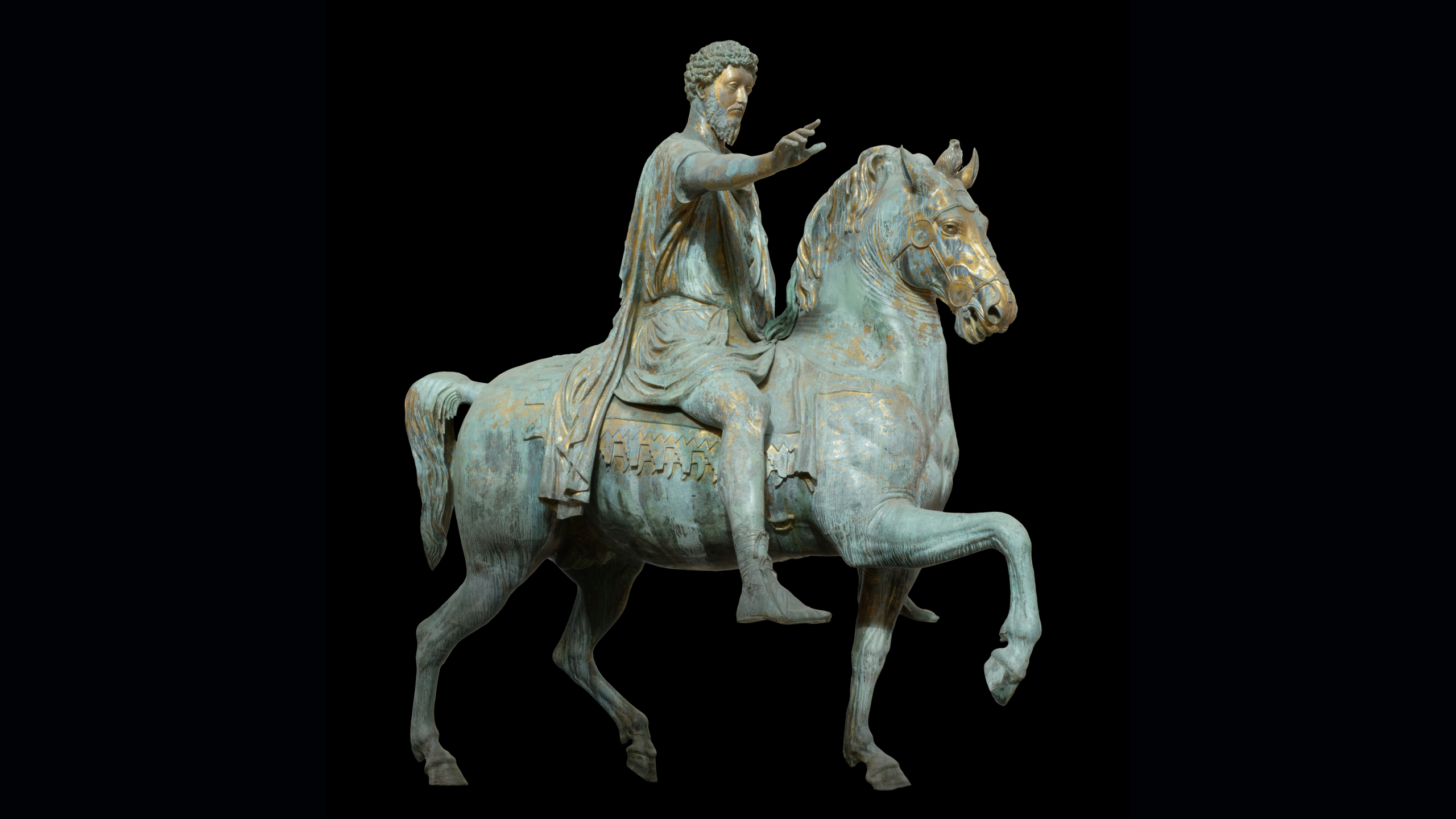
Name: Equestrian statue of Marcus Aurelius
What it is: A bronze statue of a Roman emperor on horseback
Where it is from: Rome, Italy
When it was made: Circa A.D. 175
According to the Capitoline Museums, the equestrian statue was likely erected in 176 to commemorate Marcus Aurelius’ victory over Germanic and Sarmatian tribes in the Marcomannic Wars, but it is possible it was erected in 180, shortly after his death.
Article continues below
Marcus Aurelius is depicted in a very specific pose called “adlocutio” — raising his right arm to show he is in the middle of giving an address to his troops. But unlike many other “adlocutio” sculptures that depict leaders wearing armor and carrying weapons, this equestrian statue shows Marcus in another light: Absent this military garb, he is portrayed as a bringer of peace rather than a victorious general. He also rides the horse without the help of stirrups, an invention that had not yet been introduced to the West by Central Asian horseback-riding peoples.
Although at least two dozen giant bronze equestrian statues — also called “equi magni” — are known to have decorated the public squares of ancient Rome, none of the other equestrian statues of pagan emperors survived, likely because they were melted down in the late Roman Empire or early Middle Ages for coins or other sculptures.
But the statue of Marcus Aurelius survived this purge, possibly because he was mistaken for Constantine the Great, the Roman emperor who legalized Christianity during his reign from 306 to 337. While both of these emperors are typically depicted with curly hair, Marcus Aurelius was also notable for wearing a full beard, which signified his intelligence and his role as a philosopher king. Marcus’ “Meditations” — a collection of his personal thoughts on self-improvement and other Stoic philosophy ideals — are still read today.
MORE ASTONISHING ARTIFACTS
The location of the Marcus Aurelius equestrian statue was first recorded in the 10th century, when historical records mentioned it in the Lateran Palace, which was originally a Roman structure but was later used as the main residence of the popes for 1,000 years. In the 16th century, the statue was moved to the Capitoline Hill in Rome, and Michelangelo was commissioned to refurbish the statue and to redesign the Piazza del Campidoglio.
Today, the equestrian statue is kept in the Capitoline Museums, while a replica made in 1981 stands in the middle of Michelangelo’s piazza.
For more stunning archaeological discoveries, check out our Astonishing Artifacts archives.