



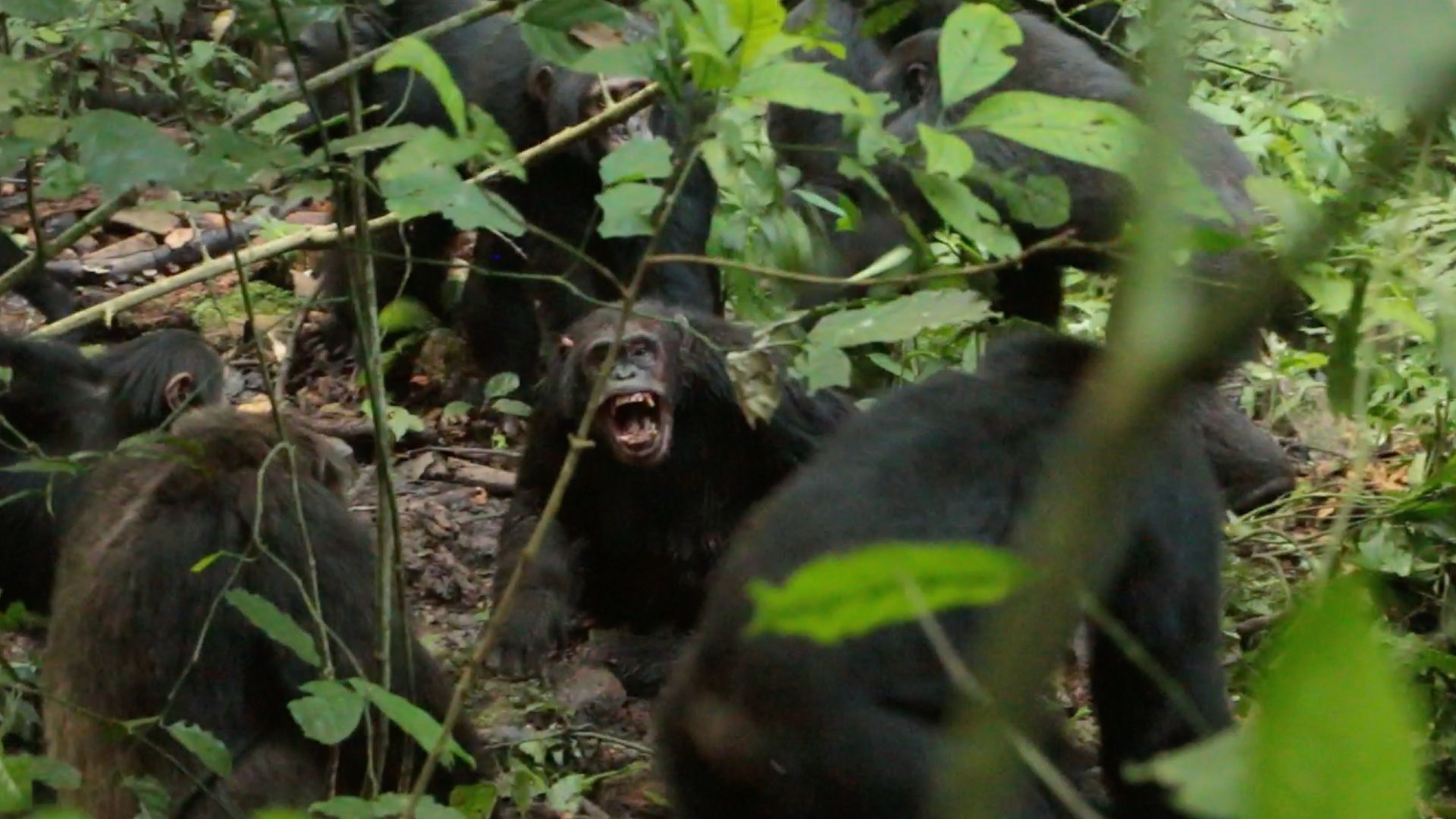


Wild chimpanzees in Uganda are fighting a rare “civil war,” which seems to have begun when a huge community divided, leading to sustained and deadly conflict between animals that had previously been allies and friends.
Conflicts between different groups of chimpanzees (Pan troglodytes) are relatively common as they compete for key resources, like fruit trees, water supplies and trees that provide suitable nesting material. However, conflicts within previously unified communities are much rarer.
Now, Aaron Sandel, an anthropologist at the University of Texas at Austin, and his colleagues have described another, much bigger, lethal conflict between the members of the Ngogo chimpanzee community in Kibale National Park, Uganda. The work was published Thursday (April 9) in the journal Science.
The chimpanzees there have been studied for about 30 years, providing extensive data on their interrelatedness and behavior. Although they were all part of a big group, they tended to form temporary “parties” that changed throughout the day as individuals moved about their territory.
But between 1998 and 2014, some of these groups became more regular cliques, such as three adult males that were consistently together.
Researchers revealed that from about 2015, the huge Ngogo community — which then numbered about 200 chimps — ruptured into two distinct clusters that lived and reproduced separately. The core of one of the groups was the clique of three adult males.
At this stage, there were still ties between many individuals in the two groups, and they still cooperated and bonded, but by 2018, the last social ties disintegrated and aggression grew during border patrols of their separate territories.
“After they split into two groups, chimps from one group began attacking and killing those from the other group and that turned into an escalated period of lethal violence,” Sandel told Live Science.
Deadly raids
Raids resulted in multiple killings of adult males and, beginning in 2021, the researchers also regularly observed infanticide. The true death toll of what the researchers term a civil war is likely to have been higher, because many other individuals disappeared without clear cause, Sandel added.
“I’m sort of nervous about calling it civil war,” he said. “Civil war means something very specific when we talk about humans, and chimps don’t have nations and things like that, but there’s an important conceptual point when thinking about war against strangers versus civil war. These are chimps that know each other.”
James Brooks, an evolutionary anthropologist at the German Primate Center in Göttingen who wasn’t involved in the study, told Live Science that he agrees this conflict isn’t the same as a human civil war, but said the term helps people to understand the general idea.
It’s still not clear why the division in the community led to such aggressive conflict, but Sandel suggested various factors that could have destabilized social ties. These include the unusually large group size, competition over food and reproduction, the deaths of five adult males and one adult female in 2014, a change from one alpha male to another in 2015 and a respiratory epidemic that killed 25 chimpanzees in 2017.
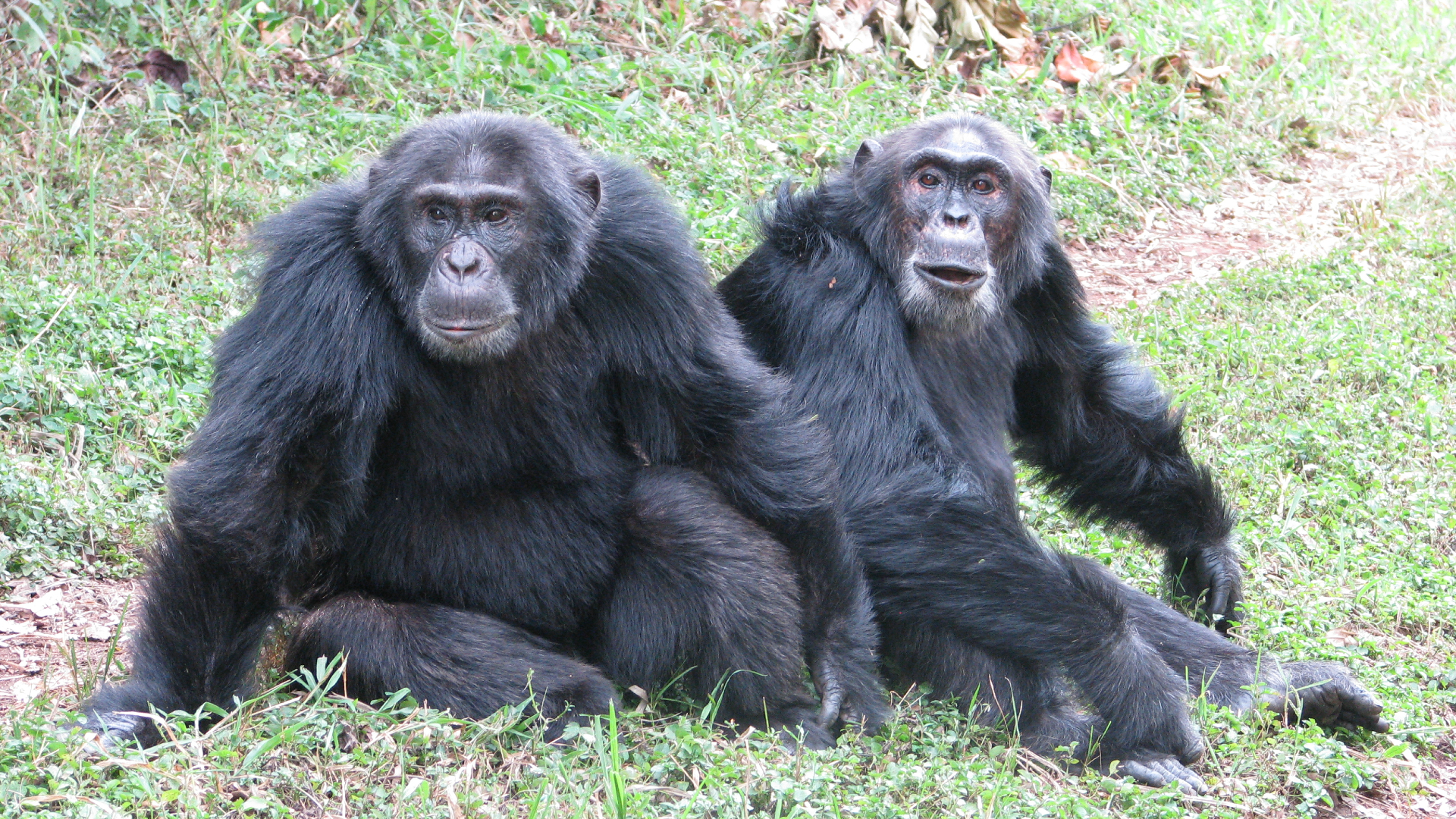

Brooks suggested the group’s size could have been a factor. “Maybe they were no longer facing such an abundance of resources and became too large a group to maintain cohesion,” he said.
Zoologist Liran Samuni, also at the German Primate Center and co-director of the Taï Chimpanzee Project, who wasn’t part of this study, said that the Ngogo community is one of the more aggressive ones that researchers know. “The Kibale National Park is considered quite a rich environment, with the chimps living at high densities and for long life spans. But even before this split, this was one of the chimpanzee communities that was most violent in terms of encroaching on neighbors,” she told Live Science.
Between 1998 and 2008, the Ngogo chimps killed at least 21 chimpanzees from neighboring groups, and expanded into their territory, resulting in population growth.
The civil war is still ongoing, Sandel said. The research paper covers data collected up to 2024, but he says further attacks have happened in 2025 and 2026.
He said the work shows that even without ethnicity, religion or political ideologies, social networks can divide, leading to collective violence.
Given that chimps are one of humans’ closest two relatives, the finding reiterates how group divisions can present a danger to human societies, Brooks said, but he adds that it doesn’t mean conflict is biologically determined. He pointed to bonobos (Pan paniscus) — our other closest relatives — which form stable and distinct groups. They are also aggressive, but unlike chimpanzees, they don’t engage in such lethal group conflicts but form tolerant, cooperative associations, so such conflicts aren’t evolutionarily determined.
“Our evolutionary past does not determine our future,” he said.
How much do you know about primates like chimpanzees? Test your knowledge with our primates quiz!