

Archaeologists have unearthed an intact bronze cannonball used at the Battle of the Alamo. They made the discovery one day before the 190th anniversary of the historic conflict between Mexican troops and white settlers in Texas.
The Alamo’s director of archaeology, Tiffany Lindley, announced the find in an episode of the Alamo’s podcast, “Stories Bigger than Texas,” on Thursday (March 19).
Article continues below
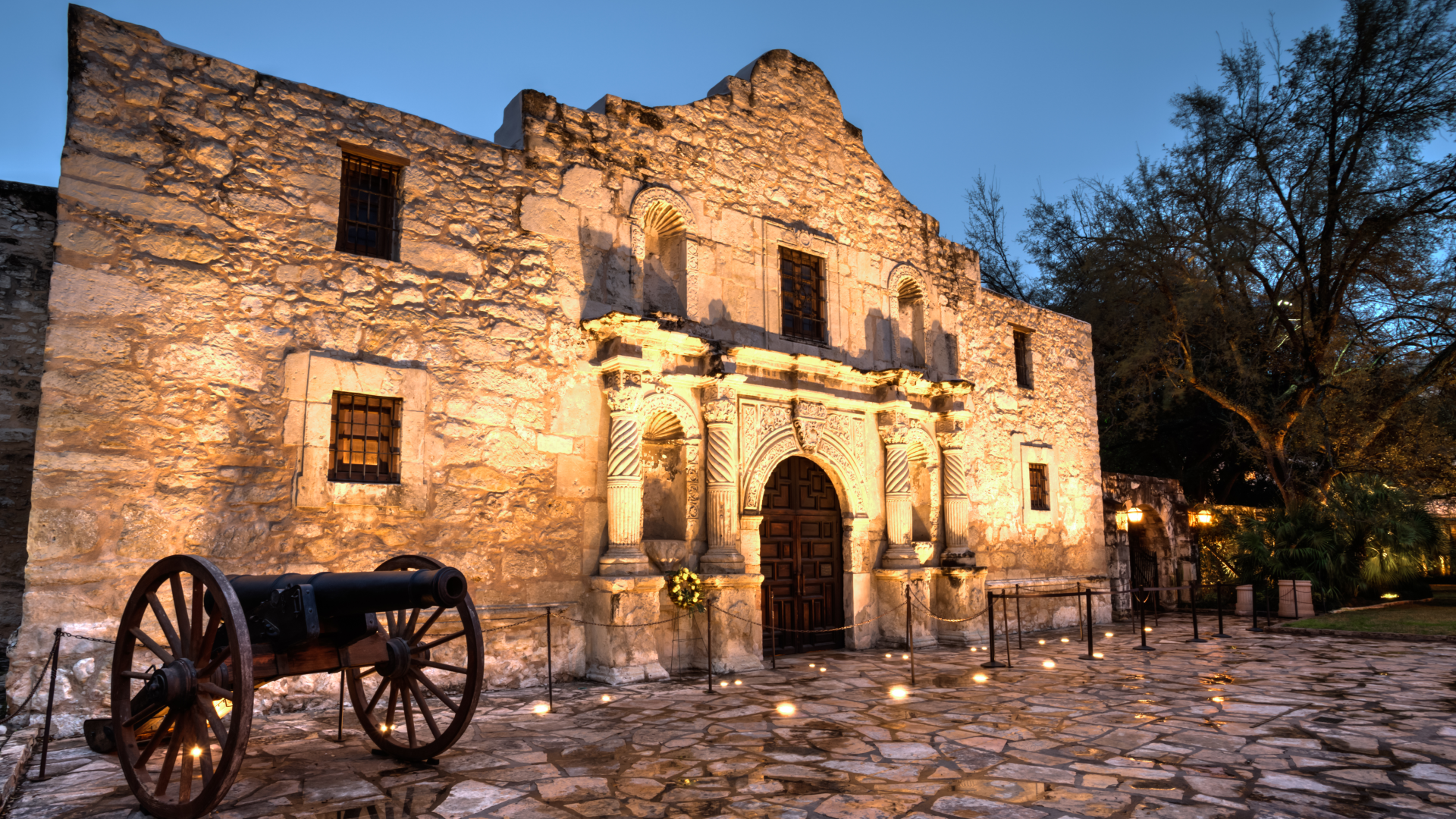
The Alamo is a historic Spanish mission and fortress that was built in 1718 in what is today San Antonio, Texas. It was the location of a key 1836 battle in the Texas Revolution, when Anglo-American settlers in Texas seceded from the Republic of Mexico.
During a 12-day siege, thousands of Mexican troops commanded by General Antonio López de Santa Anna surrounded the Alamo, which was defended by a small group of about 180 Texan rebels led by William Travis, James Bowie and Davy Crockett. The Mexican army launched an assault on March 6, 1836, killing all the Alamo’s defenders. During later skirmishes in the Texas Revolution, soldiers cried out “Remember the Alamo!” as they fought Mexican troops for independence.
In early March, the archaeology team was working near the northeast corner of the church, which had been a part of the Spanish mission, when they discovered the cannonball buried approximately 3 feet (0.9 meters) below the surface.
“I basically sprinted over to the unit,” Kolby Lanham, Alamo’s senior researcher and historian, said in the podcast. “That’s a literal artifact from the Battle of the Alamo and you’re holding it for the first time since the battle happened.”
Lanham noted the artifact is a 4-pound (1.8 kilograms) bronze ball, which is the kind of ammunition that the Mexican army used. The Texans, on the other hand, preferred iron cannonballs.
“I would say with a fair amount of certainty that this is a Mexican army cannonball and it was likely fired at the Battle of the Alamo or could have been during the 12-day siege,” Lanham said. “That artifact waited 190 years to be pulled out of the ground.”
In addition to the intact ball, the archaeologists recovered four cannonball fragments outside the church. At least one of those fragments is likely from the Battle of the Alamo, Lindley said. But the fragments are from hollow balls that were probably fired by the Mexican army from a short-barreled cannon called a howitzer, said Lanham, whose team is now working to piece the fragments back together.
Archaeological and historical work is ongoing at the Alamo, and researchers are regularly recovering new information and artifacts like the cannonballs. “Things like that change the Alamo’s story,” Lanham said.
The Alamo recently marked the 190th anniversary of the battle on March 6.
“We found this cannonball on March 5,” Lindley said, “the day before the commemoration. I have chills now just thinking about it.”