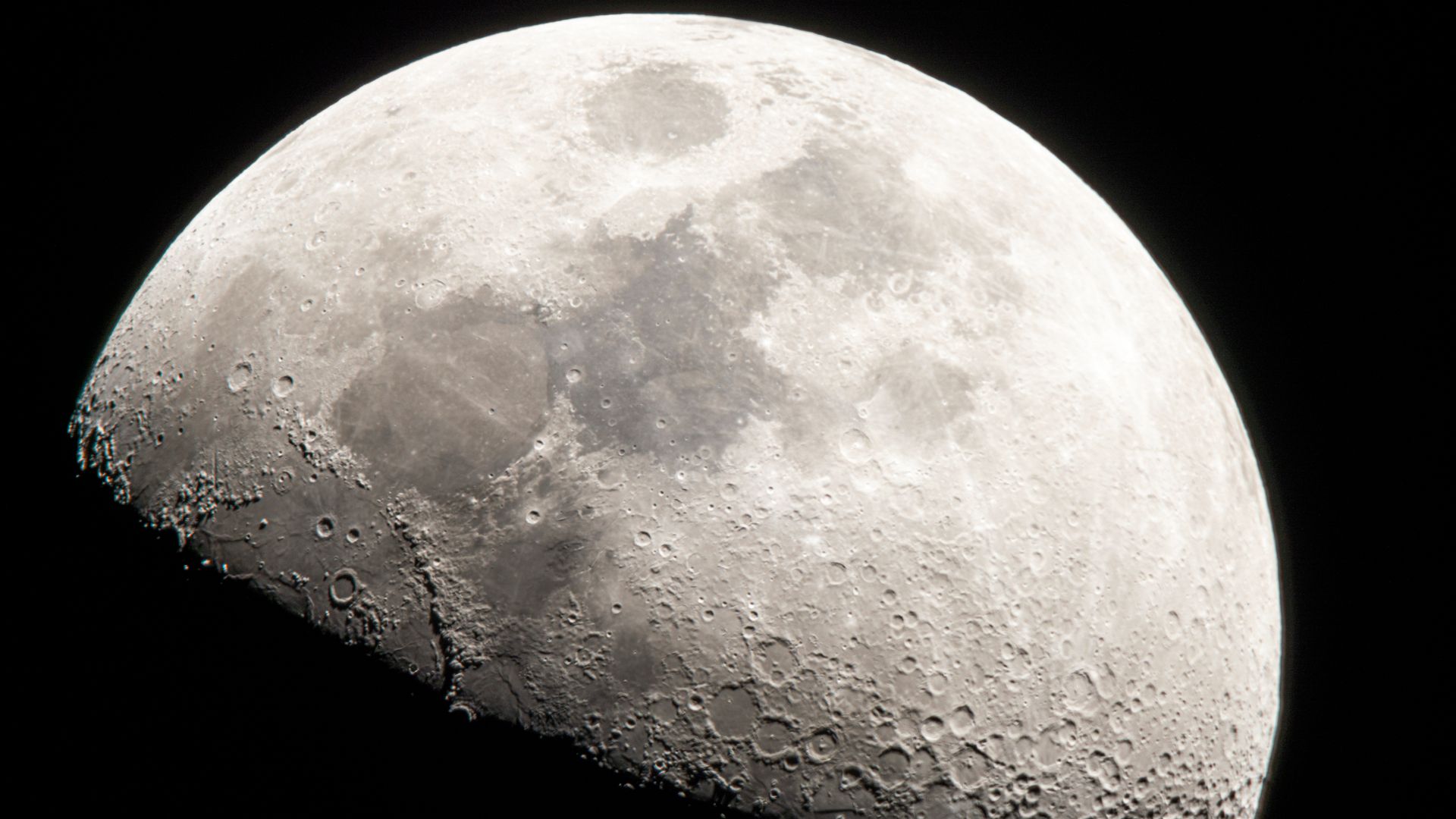




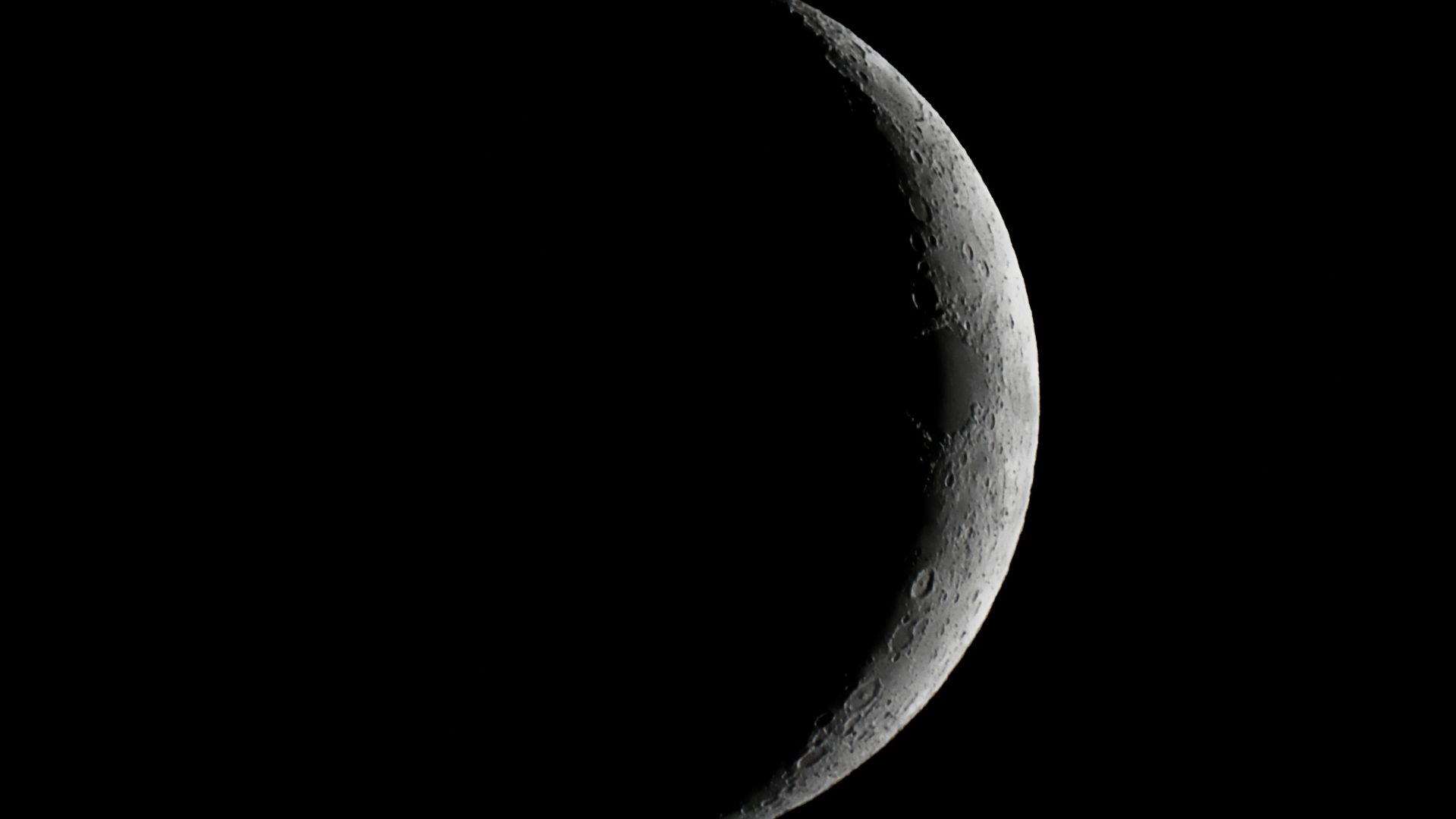


The Artemis II mission‘s four crewmembers have officially reached the moon system, and you can watch their historic lunar flyby live along with them.
The crew’s anticipated six-hour flyby of the moon begins at 2:45 p.m. EDT Monday (April 6). During this time, the astronauts — who are flying farther from Earth than any humans in history — will see the entire lunar disk outside their cabin window and have a rare chance to make up-close scientific observations of Earth’s natural satellite. NASA’s broadcast of the flyby begins at 1 p.m. EDT, and you can watch it right here or on the agency’s YouTube page.
Watch On
While the entire flyby promises to fascinate (we’ll catch views of the moon’s mysterious far side never seen before by human eyes), there are several key moments to watch for. Several hours into the flyby, the astronauts will swoop around the lunar far side, temporarily losing all radio contact with Earth and becoming the most remote group of humans in history. Shortly after the Orion capsule reemerges, the team will make their closest approach to the moon’s surface while reaching their maximum distance from our planet.
Here’s everything you need to know about the record-shattering Artemis II flight.
How far from Earth — and how close to the moon — will the astronauts get?
During their closest approach to the moon at approximately 7:02 p.m. EDT, the Artemis II crew will be about 4,066 miles (6,540 kilometers) from the lunar surface. This is significantly farther afield than the Apollo missions, which flew about 70 miles (112 km) over the surface, according to NASA.
Minutes after their closest approach to the moon, the astronauts will also reach their maximum distance from Earth. At 7:05 p.m. EDT, the crew will hit 252,757 miles (406,772 km) from the planet — surpassing the previous record, set by the Apollo 13 crew in 1970, by about 4,100 miles (6,600 kilometers).
The Artemis II crew’s communication blackout with Earth is expected to begin at 5:47 p.m. EDT Monday, according to NASA.The blackout is estimated to last 30 to 50 minutes as the moon blocks radio transmissions between the crew and NASA’s Deep Space Network. During this quiet time, the astronauts will focus on taking photos and observations of the lunar far side, which will be about 20% illuminated by the sun at that time.
When was the last time humans visited the far side of the moon?
The last time humans reached the far side of the moon was during the Apollo era, when NASA astronauts passed behind the moon on missions that entered lunar orbit. The mission that made history first was Apollo 8 in December 1968. It was the first crewed mission to leave Earth orbit, the first to reach the moon and the first to carry astronauts to the far side.
Humans continued to visit the far side during later Apollo missions that orbited the moon, the most recent of which was the last crewed Apollo mission, Apollo 17 in 1972. That means the lunar far side has not been seen by human eyes since the Apollo program ended more than 50 years ago.
Is it really lonely there?
Yes — at least, Apollo 11 astronaut Michael Collins thought so.
While his crewmates Neil Armstrong and Buzz Aldrin descended to the lunar surface to take their famous walk, Collins waited in the crew capsule as it drifted around the lunar far side. In an iconic Apollo 11 photo, Collins snapped Aldrin and Armstrong in their lunar lander with the blue Earth hanging in the distant background — simultaneously capturing every human in existence, except for Collins.
“I am alone now, truly alone, and absolutely isolated from any known life. I am it,” Collins wrote in his book “Carrying the Fire” (Cooper Square Press, 1974). “If a count were taken, the score would be three billion plus two over on the other side of the moon, and one plus God knows what on this side.” (At least the four Artemis II astronauts will have each other.)
What’s the view like on the far side of the moon?
Image 1 of 2

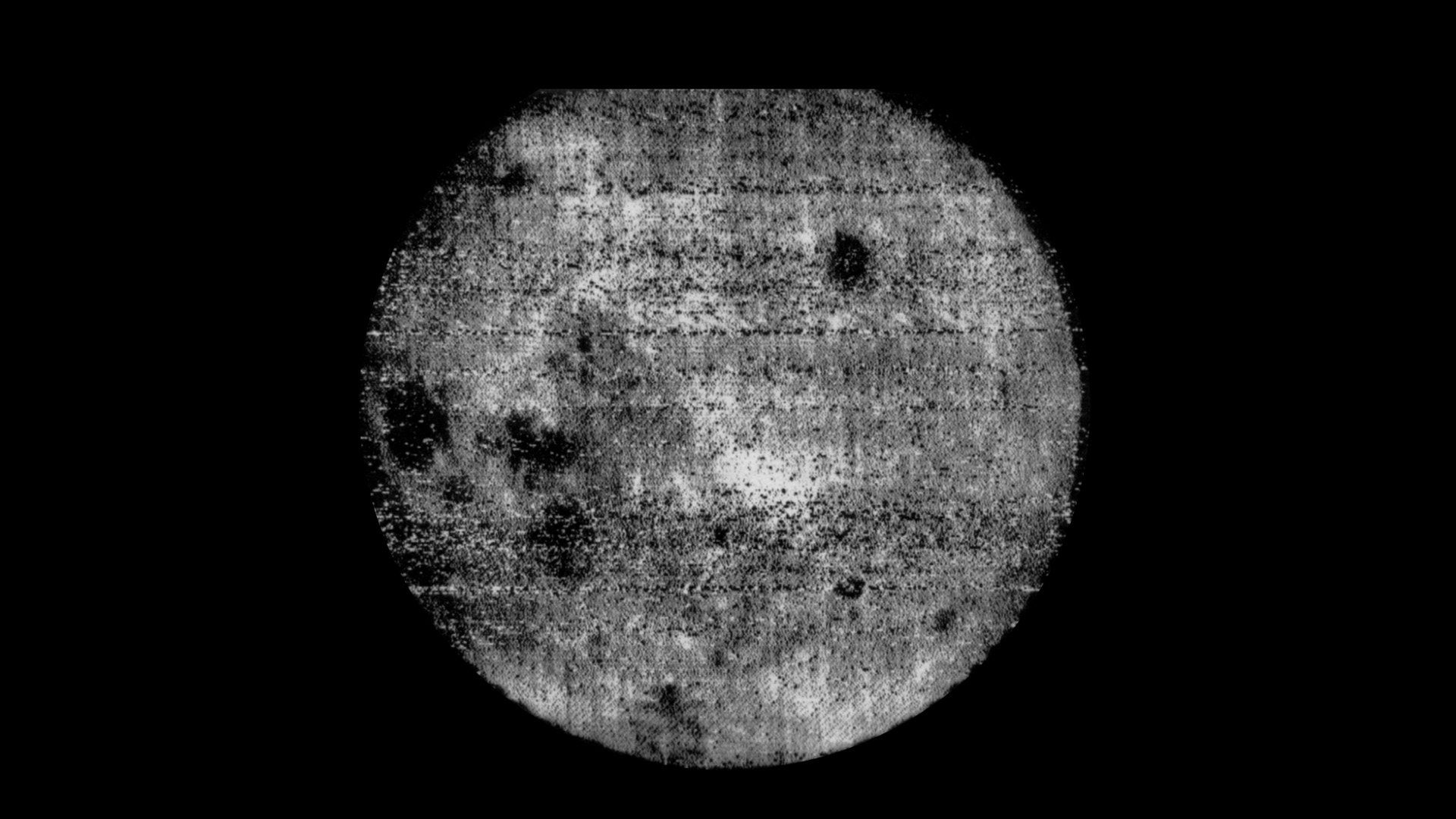
The first view of the moon’s far side taken by the Luna 3 probe in 1959.
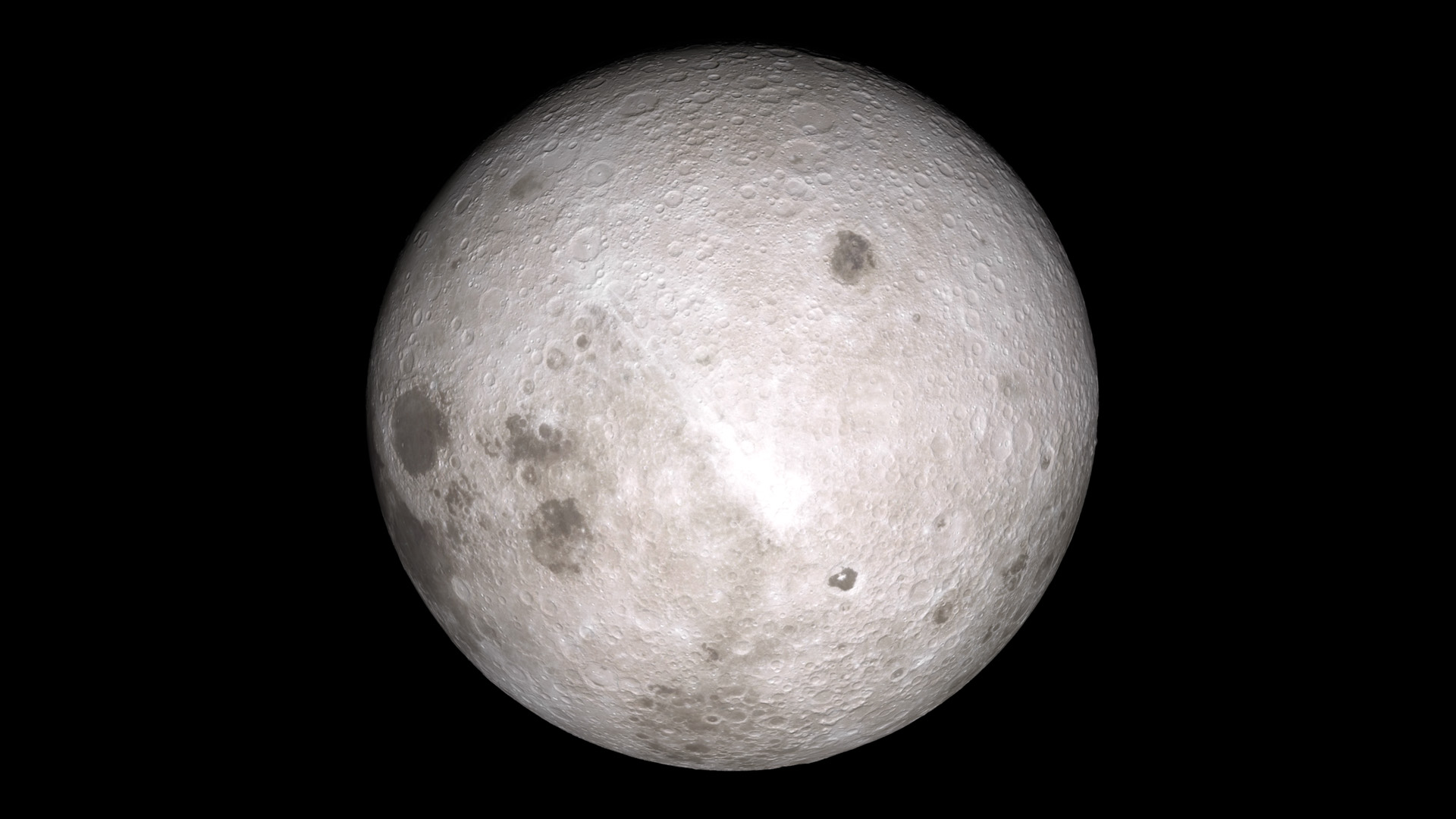
The lunar far side is rougher, brighter in many places, and more heavily cratered than the Earth-facing side we’re familiar with. Instead of the broad, smooth, dark patches (called “maria”) we observe from Earth, the astronauts are likely to see a rugged landscape of crater rims, lava fields and scarred terrain that shows the moon’s ancient history of being bombarded by asteroids.
The Artemis II crew will see about 20% of the lunar far side illuminated by the sun. A NASA visualization shows what their view will look like moment to moment.
Here’s a photo to look forward to: During the flyby, the astronauts will witness a total solar eclipse from space as the sun, moon and Orion capsule fall into perfect alignment. This will allow the team a rare chance to study the sun’s corona (its bright outer atmosphere) and to look for the flashes of meteorite impacts on the moon, according to NASA.
Why is there a “dark side” of the moon?
The moon’s far side is also called its “dark side,” but it is not permanently dark. The moon is tidally locked to Earth, which means we always see the same side of the moon. Sunlight still reaches both hemispheres of the moon over the course of a lunar month; when the near side is bright, the far side may be dark and vice versa.
What previous research has been done on the moon’s far side?
Research on the lunar far side began with robotic missions long before Artemis. The first came in 1959, when the Soviet Luna 3 mission returned the first photographs of the lunar far side. That was the first evidence that the far side had fewer maria and a much more cratered appearance, which raised major questions about how the moon formed and evolved.
Human observation began with Apollo 8 and subsequent Apollo missions. However, not all crewmembers on these missions observed the far side of the moon, because visibility depended on the orbit and lighting. This means the Artemis II astronauts may provide views of some areas no human has previously seen directly with the naked eye under those conditions.
Since the Apollo era, the most detailed far-side research has come from robotic orbiters. NASA’s Lunar Reconnaissance Orbiter, which launched in 2009, has produced high-resolution images, topographic maps, temperature data and measurements, as well as helped to identify future landing sites, potential resources and radiation conditions that could affect human missions.
What sort of data will the astronauts collect?
Artemis II’s crew will collect both lunar science data and spaceflight data. For the moon itself, the astronauts will analyze and photograph geological features on the far side, including impact craters and ancient lava flows, and practice describing subtle differences in shapes and textures. They will also record audio observations, which give scientists more context about what the crew saw in real time.
At the same time, the astronauts will collect data on themselves as the first humans to travel beyond low Earth orbit in decades. NASA says studies on the mission will examine sleep, stress, cognition, teamwork, immune responses, motion sickness, nutrition, heart health, muscle performance, eye and brain changes, and even shifts in the community of microbes living on their bodies. Data will come from monitoring devices on the astronauts’ wrists; preflight and postflight testing and surveys; and biological samples, including blood, urine and saliva.
When are the Artemis II astronauts coming home?
The Artemis II astronauts are expected to return 10 days after their April 1 launch, so they will splash down sometime Saturday, April 11.
What do you know about our moon? Test your knowledge with our moon quiz!